Table of Contents
Summary
Dry fruits are a highly beneficial addition to a pregnancy diet when consumed in the right quantity and form. They are rich in essential nutrients such as iron, calcium, fiber, and healthy fats that support both maternal health and fetal development. Options like almonds, walnuts, figs, pistachios, cashews, and raisins help improve energy levels, aid digestion, and support brain and bone development of the baby.
However, understanding which dry fruits to eat during pregnancy, along with proper portion control, is essential to avoid excess calorie intake and blood sugar spikes. Special care should be taken in conditions like gestational diabetes, allergies, or digestive sensitivity. By following a structured routine and choosing natural, high-quality dry fruits, pregnant women can maintain balanced nutrition and build a healthy, sustainable diet throughout all trimesters.
Key Takeaways
- Dry fruits are safe and beneficial when eaten in moderation
- Almonds, walnuts, and figs are among the best options
- Soaked dry fruits improve digestion and absorption
- Portion control is essential to avoid excess calories
- Raisins and dates should be limited due to sugar content
- Dry fruits support energy, digestion, and fetal development
- Choose natural, unprocessed, and high-quality dry fruits
- Adjust intake based on trimester and health conditions
- Avoid salted, flavored, and processed dry fruits
- A balanced mix provides better nutrition than a single type
Introduction
During pregnancy, every food choice matters more than ever. According to the World Health Organization, proper maternal nutrition is one of the most critical factors influencing fetal growth and long-term health outcomes. Yet, many women still feel confused about what is truly safe and beneficial.
One of the most common questions is: can I eat dry fruits in pregnancy?
According to Walter Willett, nutrient-dense foods like nuts and dried fruits can support steady energy levels and overall health when consumed in moderation. ( source )
When you are pregnant, dry fruits are a good snack to have. They contain a lot of things your body needs, like iron and calcium. Dry fruits are also full of fats. To really benefit from eating fruits when you are pregnant, you need to know which dry fruits are good for you.
You also need to know how to eat them and how many you should have at each stage of your pregnancy. Eating the dry fruits during pregnancy is a great way to keep you and your baby healthy. Dry fruits are a choice because they are easy to carry and eat anywhere..
Best Dry Fruits During Pregnancy (Benefits, Risks & Practical Use)
Choosing the right dry fruits during pregnancy is essential for maximizing nutritional benefits while avoiding unnecessary risks. While dry fruits are highly nutritious, they must be consumed in the correct form and quantity to support both maternal health and fetal development.
Below is a detailed breakdown of the best dry fruits during pregnancy, including their benefits, potential concerns, and how to consume them properly.
Almonds (Badam Benefits in Pregnancy)
Almonds are one of the most recommended dry fruits for pregnant women due to their rich nutrient profile.
Benefits
- High in Vitamin E, which supports baby’s brain and skin development
- Contains healthy fats that help maintain energy levels
- Supports fetal growth and maternal immunity
The badam benefits in pregnancy also include improved memory, better metabolism, and sustained energy throughout the day.
Why Soaked Almonds Are Recommended
Consuming soaked almonds in pregnancy improves digestion and enhances nutrient absorption by reducing anti-nutrients present in raw almonds.
Recommended Intake
- 5–8 soaked almonds daily (preferably in the morning)
Possible Concerns
- Excess intake may lead to unnecessary calorie consumption
- Can cause heaviness in some women during early pregnancy
Practical Insight
In many prenatal nutrition programs, almonds are recommended as a daily morning snack because they provide steady energy without causing sudden sugar spikes. Women who replaced processed snacks with almonds reported better energy stability and reduced cravings.
Figs (Anjeer Benefits in Pregnancy)
Figs are particularly beneficial for digestive health and calcium intake.
Benefits
- Rich in calcium, supporting baby’s bone development
- High fiber content helps prevent constipation
- Supports overall gut health
The anjeer benefits in pregnancy are especially useful during the second and third trimesters when digestion slows down.
How to Eat Anjeer During Pregnancy
If you are wondering how to eat anjeer during pregnancy, soaking 1–2 figs overnight and consuming them in the morning is the most effective method.
Recommended Intake
- 1–2 soaked figs daily
Possible Concerns
- High natural sugar content
- Overconsumption may affect blood sugar levels
Practical Insight
In real dietary practices, pregnant women experiencing constipation often benefit from adding soaked figs to their routine, as it improves bowel movement naturally without medication.
Cashews (Kaju in Pregnancy)
Cashew nuts during pregnancy provide essential minerals and energy support.
Benefits
- Rich in magnesium, which supports muscle and nerve function
- Provides healthy fats for fetal growth
- Helps maintain satiety and reduce unhealthy cravings
When considering kaju in pregnancy, they can be a good addition to your diet if consumed in moderation.
Recommended Intake
- 5–6 cashews per day
Possible Concerns
- High calorie content
- Overeating may lead to excessive weight gain
Practical Insight
Women who include small portions of cashews in mid-day snacks often report reduced hunger spikes and better control over unhealthy snacking.
Pistachios
A common concern is: can we eat pista in pregnancy? Yes, pistachios are safe and beneficial when consumed in their natural form.
Benefits
- Good source of protein and fiber
- Supports digestion and gut health
- Helps in maintaining healthy weight
Recommended Intake
- Small handful (20–25 grams)
Possible Concerns
- Salted pistachios can increase sodium intake
- Overeating may lead to calorie excess
Practical Insight
Pistachios are often included in pregnancy diets for women managing weight, as their fiber and protein content promote fullness and reduce overeating.
Raisins
Another common question is: can I eat raisins during pregnancy? Yes, but with moderation.
Benefits
- Rich in iron, supporting blood health
- Provides quick energy
- Helps reduce fatigue
Recommended Intake
- Small handful per day
Possible Concerns
- High natural sugar content
- May cause blood sugar spikes if consumed in excess
Practical Insight
Raisins are particularly helpful for women experiencing low energy levels, but they should be balanced with low-glycemic foods to maintain stable blood sugar.
Walnuts (Additional Important Dry Fruit)
Walnuts are often considered one of the most important dry fruits for pregnancy.
Benefits
- High in omega-3 fatty acids
- Supports baby’s brain development
- Helps reduce stress and fatigue
Recommended Intake
- 2–3 walnuts daily
Possible Concerns
- Slightly heavy for digestion in large quantities
Dry Fruits to Eat During Pregnancy (Trimester Approach)
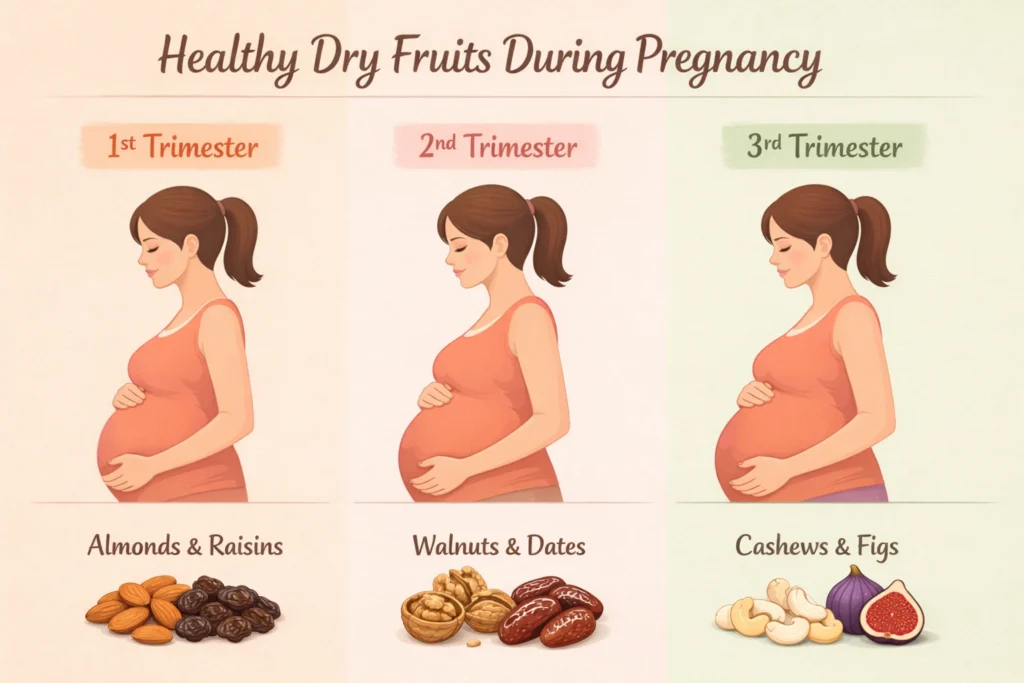
Understanding dry fruits to eat during pregnancy based on different stages can help you get better results.
- First Trimester: Light options like soaked almonds and raisins
- Second Trimester: Nutrient-rich choices like walnuts and cashews
- Third Trimester: Energy and fiber-focused options like dates and figs
This approach helps align nutrition with your body’s changing needs.
Dry Fruits Powder Benefits
In some cases, women may prefer easier ways to consume nutrients. This is where dry fruits powder benefits become useful.
Dry fruit powders can:
- Improve nutrient intake
- Help women with low appetite
- Be easily mixed with milk
This is a convenient option, especially during later stages of pregnancy.
Dry Fruits Pregnancy Checklist (Daily Use Guide)
| Category | What to Do | Checklist |
| Choosing Dry Fruits | Select natural, high-quality options | ☐ Choose fresh & premium quality ☐ Avoid added sugar ☐ Avoid salted/processed products |
| Best Dry Fruits to Include | Maintain a balanced mix | ☐ Almonds ☐ Walnuts ☐ Figs (Anjeer) ☐ Cashews ☐ Pistachios ☐ Raisins |
| Daily Portion Control | Prevent overeating | ☐ Almonds: 5–8 ☐ Walnuts: 2–3 ☐ Cashews: 5–6 ☐ Raisins: small handful ☐ Figs: 1–2 |
| Best Time to Eat | Improve absorption & digestion | ☐ Morning: Soaked almonds ☐ Mid snack: Walnuts/Pistachios ☐ Evening: Raisins (limited) |
| Soaked vs Raw | Improve digestion | ☐ Soak almonds overnight ☐ Soak figs if needed ☐ Use raw for convenience |
| Health Condition Check | Adjust based on your body | ☐ Monitor sugar levels ☐ Avoid excess if diabetic ☐ Check for allergies |
| Foods to Avoid | Reduce health risks | ☐ No flavored dry fruits ☐ No excess raisins/dates ☐ Avoid packaged mixes |
| Routine Building | Stay consistent | ☐ Follow daily plan ☐ Keep portions ready ☐ Avoid random snacking |
| Hydration Support | Improve digestion | ☐ Drink enough water ☐ Avoid dryness/constipation |
| Consultation | Ensure safety | ☐ Follow doctor advice ☐ Adjust diet if needed |
Is It Safe to Eat Dry Fruits During Pregnancy? (Doctor Perspective)

Dry fruits are generally considered safe during pregnancy when consumed in moderation and as part of a balanced diet. They are nutrient-dense and provide essential vitamins and minerals such as iron, calcium, fiber, and healthy fats, which support maternal health and fetal development.
However, safety depends on individual health conditions and proper consumption habits.
When Dry Fruits Are Safe
- When consumed in controlled portions
- When chosen in natural, unprocessed form
- When included as part of a balanced diet
Conditions to Consider
1. Gestational Diabetes
Women with gestational diabetes should be cautious while consuming dry fruits, especially those high in natural sugars such as raisins and dates. Low glycemic options like almonds and pistachios are generally more suitable, but portion control remains essential.
2. Allergies
If there is a history of nut allergies, it is important to consult a healthcare professional before including dry fruits in the diet. Allergic reactions can vary in severity and should not be ignored.
3. Digestive Sensitivity
Some women may experience bloating or discomfort when consuming dry fruits in excess. In such cases, soaking dry fruits like almonds and figs can improve digestion and reduce discomfort.
Clinical Recommendation
Dry fruits can be a beneficial addition to pregnancy nutrition when consumed thoughtfully. It is always advisable to consult a qualified healthcare provider for personalized dietary recommendations based on individual health conditions.
Sample Daily Dry Fruits Routine for Pregnancy
Following a structured routine helps ensure consistent nutrition without overeating. A simple daily plan can make dry fruits easier to include in your diet.
Morning (Empty Stomach)
- 5–8 soaked almonds
- 1 soaked fig (anjeer)
This supports better digestion and nutrient absorption while providing steady energy for the day.
Mid-Morning Snack
- 2–3 walnuts
Helps support brain development and provides healthy fats.
Afternoon Snack
- Small handful of pistachios (unsalted)
Keeps you full and helps maintain energy levels.
Evening Snack
- Small portion of raisins
Provides quick energy and helps reduce fatigue.
Key Guidelines
- Keep total intake within moderate limits
- Avoid combining all dry fruits in large quantities at once
- Adjust portions based on your appetite and medical condition
This routine helps maintain balance and prevents excessive calorie intake while ensuring consistent nutrient supply.
Source – Reddit
Myths vs Facts About Dry Fruits in Pregnancy
| Myth | Fact |
| Dry fruits are always safe in any quantity | Dry fruits are healthy but should be consumed in moderation due to high calorie content |
| Eating more dry fruits leads to better baby growth | Balanced nutrition is more important than excessive intake of any single food |
| All dry fruits are equally beneficial | Different dry fruits provide different nutrients; a combination is more effective |
| Dry fruits can replace regular meals | Dry fruits are supplements to a diet, not substitutes for balanced meals |
| Raisins and dates are completely safe for everyone | High natural sugar content means they should be limited, especially in gestational diabetes |
| Salted and flavored dry fruits are healthy | Added salt and preservatives can reduce their nutritional value and should be avoided |
| Dry fruits cause excessive weight gain | Weight gain occurs only when consumed in excess, not when eaten in proper portions |
About the Author
20-20 Dry Fruits is a trusted name in the dry fruits industry, backed by 15+ years of experience in sourcing and delivering premium-quality dry fruits across India. With a strong focus on freshness, quality control, and customer satisfaction, the brand ensures that every product meets high standards from origin to packaging.
Their carefully curated range of almonds, cashews, pistachios, raisins, and other dry fruits makes them one of the best choices for buying dry fruits in India. By combining traditional sourcing expertise with modern quality practices, 20-20 Dry Fruits continues to provide reliable, healthy, and high-quality nutrition for everyday consumption.
Whether you are looking for daily nutrition, pregnancy-friendly snacks, or premium dry fruits, 20-20 Dry Fruits aims to deliver consistency, purity, and trust in every pack.
FAQs
FAQs
Can I eat dry fruits in pregnancy?
Dry fruits are good for you when you are pregnant, as long as you do not eat too many. They have lots of things like iron and calcium, fiber, and good healthy fats, for you and your baby. Dry fruits help keep you and your baby healthy.
You should be careful not to eat too many dry fruits because they have a lot of calories. Always choose fruits that are natural and do not have added sugar or salt. Dry fruits are a choice when they are not processed.
Which dry fruits to eat during pregnancy?
The best dry fruits to eat during pregnancy include almonds, walnuts, figs (anjeer), pistachios, cashews, and raisins. Each of these provides different nutrients—almonds support brain development, walnuts provide omega-3 fatty acids, figs help with digestion, and raisins support iron levels. A combination of these ensures balanced nutrition.
Which dry fruit is best in pregnancy?
I do not think there is one fruit that stands out as the best. It is better to have a mix of dry fruits because each dry fruit has its own special benefits. For instance, almonds are good for giving you energy and helping your brain work well. Walnuts are good for helping a babys brain grow when it is still in its mother’s womb and figs are good for your stomach and helping you digest food. Eating a variety of fruits, like almonds, walnuts, and figs, makes sure you get all the nutrients you need.
Can I eat raisins during pregnancy?
Yes, raisins can be safely consumed during pregnancy. They are a good source of iron and natural sugars, which help improve energy levels and support blood health. However, since raisins are high in natural sugar, they should be eaten in limited quantities, especially if you have concerns related to blood sugar levels.
Can we eat pista in pregnancy?
Yes, pistachios are safe to eat during pregnancy, provided they are unsalted and consumed in moderation. They are a good source of protein, fiber, and healthy fats, which help maintain energy levels and support digestion. Avoid salted or flavored pistachios to reduce excess sodium intake.
Are soaked almonds good in pregnancy?
Soaked almonds are really good for you when you are pregnant. If you soak almonds in water overnight they are easier for your body to handle. You get more of the good stuff from them. This is because the things, in raw almonds that can stop you from getting all the nutrients are reduced. Eating soaked almonds, 5 to 8 of them in the morning, can give you energy that lasts and help you stay healthy overall. Soaked almonds can really help with this.
How many dry fruits should I eat daily during pregnancy?
A moderate intake is recommended. Typically, a small portion of mixed dry fruits—such as 5–8 almonds, 2–3 walnuts, 4–5 cashews, and a small handful of raisins—is sufficient. Overconsumption should be avoided to prevent excess calorie intake.
Are dry fruits safe in the first trimester?
Yes, dry fruits can be consumed during the first trimester, but in smaller quantities. Light and easy-to-digest options such as soaked almonds and raisins are preferred. This helps manage nausea while still providing essential nutrients.
Can dry fruits cause weight gain during pregnancy?
Dry fruits are calorie-dense, so excessive consumption can contribute to weight gain. However, when eaten in controlled portions, they can actually help maintain healthy weight and reduce cravings for unhealthy snacks.
Are dry fruits safe for gestational diabetes?
Yes, but with caution. Low glycemic options like almonds and pistachios are better choices. High-sugar dry fruits such as raisins and dates should be consumed in limited quantities. It is always advisable to consult a healthcare professional for personalized guidance.
Sources & References
1. Pregnancy Nutrition Guidelines
- World Health Organization
Topic: Healthy diet and nutrition during pregnancy
🔗 https://www.who.int/tools/your-life-your-health/life-phase/pregnancy–birth-and-after-childbirth/eating-healthy-food-during-pregnancy
✔ Use for: Introduction + importance of nutrition
👉 WHO recommends eating a variety of foods including nuts, fruits, and protein sources during pregnancy.
- American College of Obstetricians and Gynecologists
Topic: Healthy eating during pregnancy
🔗 https://www.acog.org/womens-health/faqs/healthy-eating-during-pregnancy
✔ Use for: Doctor perspective + safety section
👉 Healthy eating supports fetal growth and maternal health.
- Johns Hopkins Medicine
Topic: Balanced diet and calorie intake during pregnancy
🔗 https://www.hopkinsmedicine.org/health/wellness-and-prevention/nutrition-during-pregnancy
✔ Use for: Nutritional explanation + daily intake
👉 A balanced diet with protein, fruits, and nuts supports healthy pregnancy.
2. Nutritional Science & Food Recommendations
- World Health Organization
Topic: Nutrient intake and balanced diet
🔗 https://www.who.int/tools/elena/interventions/nutrition-counselling-pregnancy
✔ Use for: Benefits + nutrient explanation
👉 Proper nutrition during pregnancy improves birth outcomes and reduces risks.
- U.S. Food and Drug Administration
Topic: Safe food choices during pregnancy
🔗 https://www.fda.gov/food/people-risk-foodborne-illness/dietary-advice-moms-be
✔ Use for: Food safety + avoid section
👉 A balanced diet should include fruits, nuts, proteins, and whole foods.
3. Supporting Health Context
- World Health Organization
Topic: Importance of maternal nutrition
🔗 https://www.who.int/activities/promoting-healthy-pregnancy
✔ Use for: Authority + trust
👉 Proper maternal care and nutrition improve pregnancy outcomes.
Conclusion
Dry fruits are not just a convenient snack during pregnancy; they are a powerful source of essential nutrients that can support both maternal health and fetal development when used correctly. From improving energy levels to supporting brain and bone development, the right selection of dry fruits can make a meaningful difference in your daily diet.
The purpose of this guide is to simplify the confusion around pregnancy nutrition. Many women struggle to understand which dry fruits to eat during pregnancy, how much to consume, and what to avoid. This content is designed to provide clear, practical, and reliable information so that you can make informed choices with confidence.
The key to a pregnancy is finding a balance. You should eat dry fruits that are good for you. Make sure to eat a little at a time. You also need to think about how along you are in your pregnancy and what your body needs. If you do all these things, dry fruits can be very good for you and your baby.
When you eat fruits the right way, they can be a big part of a healthy pregnancy. Dry fruits can help you and your baby get the nutrients you need. They can also give you energy and make you feel better overall. Dry fruits are good for the mother and the baby.