Table of Contents
Summary
Heart issues become common after 40 years of age as the risk of high cholesterol, high blood pressure and cardiovascular issues increases. A balanced lifestyle and nutritious foods for a longer period play an important role in heart disease prevention and healthy aging. Dry fruits can be one of the convenient and most easy nutrient dense foods available that supports heart healthy diet.
Almonds, walnuts, pistachios, dates, and raisins provide beneficial nutrients such as healthy fats, fiber, Omega 3 fatty acids, Vitamin E, potassium, and antioxidants. These are the nutrients that can support cholesterol management, improve blood circulation, and contribute to overall cardiovascular health.
However, heart benefits depend on portion control and smart choices. Overeating, choosing salted or sugar-coated varieties, and ignoring portion sizes can reduce their benefits. Whether soaked or raw, dry fruits can become part of a healthy routine when consumed in the right quantity and combined with an overall balanced lifestyle.
Key Takeaways
✓ Heart health risks increase after 40, making preventive nutrition more important.
✓ Dry fruits support cardiovascular health through healthy fats, fiber, antioxidants, and essential minerals.
✓ Almonds may help support cholesterol management due to their Vitamin E and healthy fat content.
✓ Walnuts are rich in Omega 3 fatty acids that support heart protection and blood circulation.
✓ Pistachios may contribute to healthy blood pressure and support good cholesterol levels.
✓ Dates provide natural energy and fiber, but portion control is important.
✓ Raisins offer antioxidants and healthier snacking benefits compared to processed sugary snacks.
✓ Soaked and raw dry fruits both work consistency and moderation matter more than soaking.
✓ Dry fruits are calorie-dense, so small portions deliver the best heart benefits.
✓ Unsalted and non-fried dry fruits are the healthier choice for a heart-friendly lifestyle.
Introduction
After 40, maintaining heart health becomes more important than ever. Ageing naturally increases the risk of cholesterol imbalance, high blood pressure, and other cardiovascular concerns. The good news? Some everyday dry fruits for heart health can support cholesterol management, blood pressure, and overall cardiovascular health when eaten in the right quantity.
A balanced diet plays a direct role in heart disease prevention and healthy aging. Along with regular exercise and lifestyle changes, adding nutrient-dense heart friendly snacks like nuts and dry fruits may help improve blood circulation, support artery function, and promote a heart healthy diet.
Why Heart Health Needs More Attention After 40
As we age, the body undergoes several changes that can affect cardiovascular health. After 40, LDL cholesterol levels may rise, metabolism can slow down, and maintaining healthy blood pressure becomes more challenging.
Poor dietary habits, stress, inactivity, and processed foods can increase the risk of heart disease. This is why heart health after 40 requires a more mindful approach.
One of the simplest dietary upgrades is including anti-inflammatory foods and nutrient-rich dry fruits. These small snacks provide concentrated nutrition and can become a smart addition to a heart healthy diet.
How Dry Fruits Support Heart Health Naturally
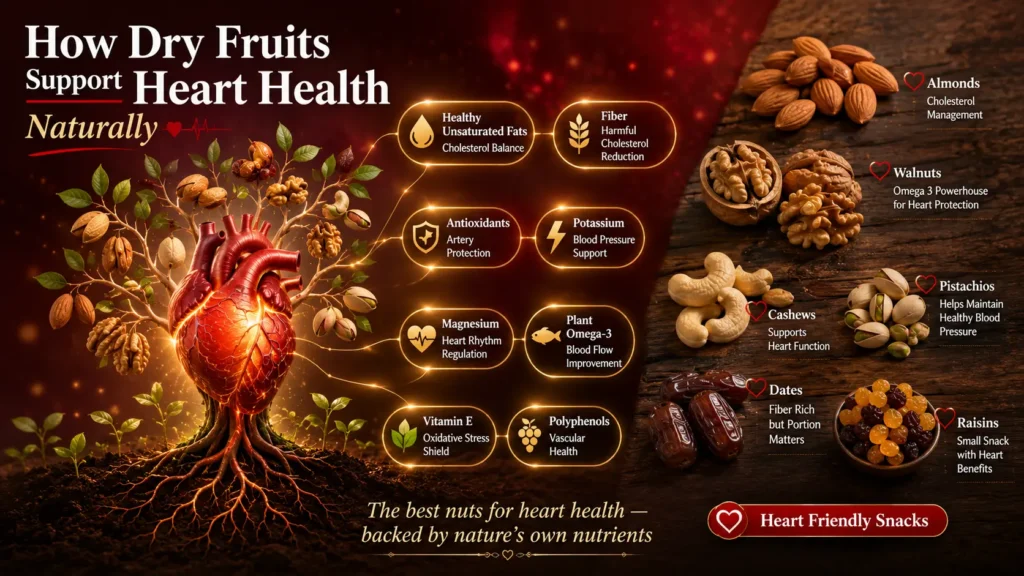
Many people ask whether dry fruits for heart health actually work. The answer lies in their nutritional profile.
The best nuts for heart health contain:
- Healthy unsaturated fats
- Fiber
- Antioxidants
- Potassium
- Magnesium
- Plant-based Omega 3
- Vitamin E
- Protective compounds like polyphenols
These nutrients contribute to cholesterol management, improve artery health, and support healthy blood flow.
Healthy fats help balance cholesterol levels, while fiber assists digestion and may support the reduction of harmful cholesterol. Minerals like potassium and magnesium are linked to healthier blood pressure, making dry fruits excellent heart friendly snacks.
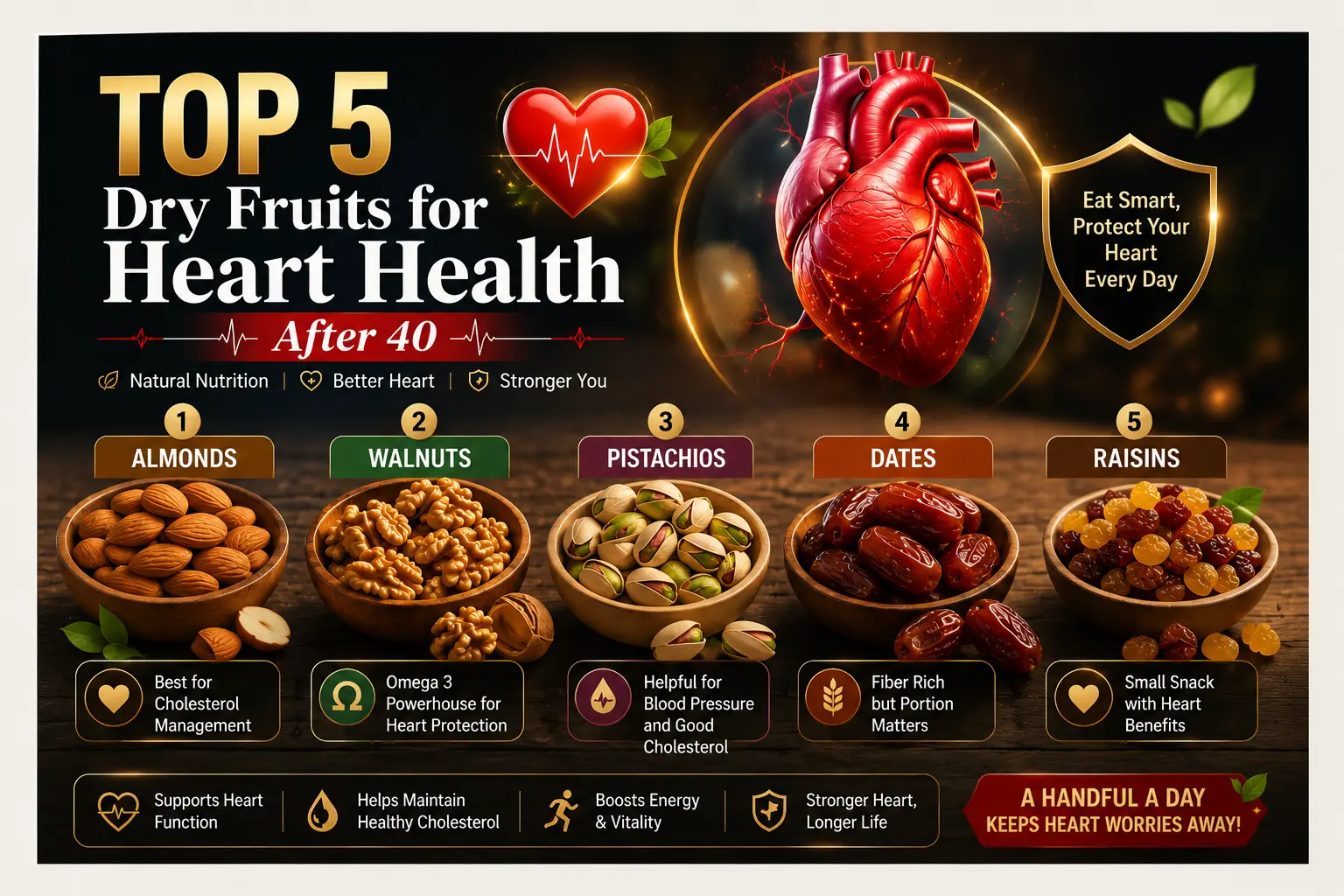
Top 5 Dry Fruits for Heart Health After 40
Almonds – Best for Cholesterol Management
When discussing almonds for heart health, they often rank at the top.
Almonds are one of the best sources of vitamin E, healthy fats, and are also known as the most popular fiber rich dry foods.
Almonds are commonly recommended for best dry fruit for cholesterol, as many people prefer to eat dry fruits to support their nutrition profile.
Benefits of Almonds:
- Rich in Vitamin E
- Good source of healthy fats
- Supports cholesterol balance
- Helps to reduce satiety
- A good part of balanced diet
People often ask about soaked almonds benefits. Soaking may improve texture and digestibility for some individuals, though both soaked and raw almonds provide similar nutrients.
Recommended Intake:
5–8 almonds daily
Walnuts – Omega 3 Powerhouse for Heart Protection
Among omega 3 nuts, walnuts stand out.
Walnuts for heart health are a good source of plant based omega-3 fatty acids. These nutrients help to reduce inflammation in the body due to its anti-inflammatory properties and promote better blood circulation.
It is proven in research also that walnut based nutrition diet plan has improved cardiovascular health and lowers the risk of coronary heart diseases.
Benefits of Walnuts:
- Rich in Omega 3 fatty acids
- Supports blood vessel function
- Encourages healthy circulation
- Contains antioxidants
- May assist cholesterol balance
This is why searches around walnuts and cholesterol continue to grow among health-conscious adults.
Recommended Intake:
2–4 walnuts daily
Pistachios – Helpful for Blood Pressure and Good Cholesterol
Pistachios benefits go beyond taste.
Pistachios are a good source of potassium and they can be fit into the heart healthy diet as a satisfying snack. Unsalted pistachios can be a healthier option in keeping the blood pressure in range and better HDL cholesterol, often known as good cholestrol
For adults searching for dry fruits for BP, pistachios can be a smart option.
Benefits of Pistachios:
- Good source of potassium
- Supports HDL cholesterol
- Unsalted one can decrease sodium
- Provides healthy fats and fiber
- Can be a easy heart-friendly snack
Many people searching pistachios and blood pressure choose unsalted varieties for maximum benefit.
Recommended Intake:
20–30 pistachios daily (unsalted)
Dates – Fiber Rich but Portion Matters
People often ask, are dates healthy for heart patients?
Dates contain natural sweetness along with potassium and are among popular fiber rich dry fruits. They can support digestion and provide natural energy, making them useful for healthy ageing when eaten mindfully.
However, portion control matters because dates are naturally calorie-dense and contain concentrated sugars.
Dates benefits for heart may include:
- Potassium support
- Fiber for digestion
- Quick natural energy
- Better alternative to refined sweets
The key is moderation.
Recommended Intake:
1–2 dates daily
Raisins – Small Snack with Heart Benefits
Despite their size, raisins for heart health deserve attention.
Raisins contains vital nutrients like polyphenols and other antioxidants that may support overall wellness. They contribute in improving digestion and maintain healthier blood pressure levels when included in balanced diet
People who have increased cholesterol are searching for raisins as they are naturally sweet and healthy option as compared to packaged sweet snacks.
Benefits of Raisins:
- Rich in antioxidants
- Contains polyphenols
- Supports digestion
- Promotes healthy snacking
- Better than many processed sweets
Recommended Intake:
1 tablespoon daily
Soaked vs Raw Dry Fruits – Which Is Better for Heart Health?
The debate around soaked vs raw dry fruits is common.
Many believe soaked dry fruits benefits are significantly superior, but the reality is more balanced.
Soaking, for dry fruits helps to easily absorb nutrition due to their texture becomes softer and can also improve digestion as they are easy on the stomach to digest
However, there is no magical difference for heart health.
Moderation is the key as both soaked and unsoaked dry fruits are good for a heart healthy routine.
A practical morning dry fruit routine may include soaked almonds if you enjoy them, but consistency and portion size matter more than soaking alone.
How Much Dry Fruit Should You Eat Daily After 40?
A common question is how many dry fruits daily are ideal.
Dry fruits are nutritious but also calorie dense foods.
The safest approach is the small handful rule.
For most adults:
- Almonds: 5–8
- Walnuts: 2–4
- Pistachios: 20–30
- Dates: 1–2
- Raisins: 1 tablespoon
One thumb rule for daily dry fruit intake is remember that more is not always better.
Balanced eating also depends on portion control and healthy choices.
Always choose raw unsalted dry fruits to get maximum health benifits
Mistakes to Avoid While Eating Dry Fruits for Heart Health
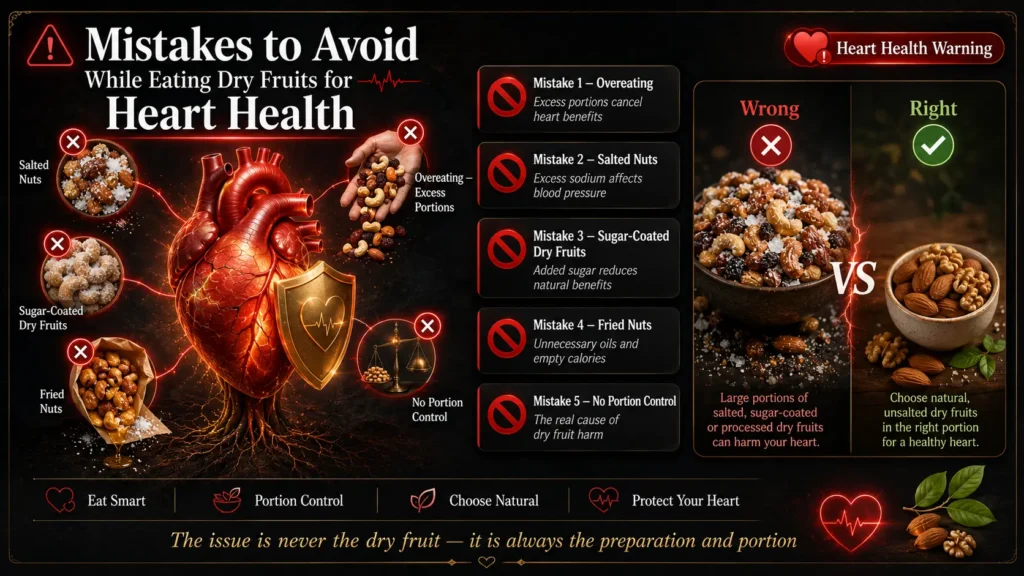
Many blogs overlook this section, yet these dry fruit mistakes can limit benefits.
1. Overeating
Even healthy foods become problematic in excess. Dry fruits support weight management after 40 only when portions remain controlled.
2. Choosing Salted Nuts
Excess sodium intake may affect blood pressure.
Avoid heavily salted options if your goal is heart healthy eating.
3. Eating Sugar-Coated Dry Fruits
Added sweeteners increase added sugar intake and reduce the natural benefits.
4. Choosing Fried Nuts
Fried products may contain unnecessary oils and calories.
5. Ignoring Portion Control
People searching for the worst dry fruits for heart health often discover the issue is not the dry fruit itself but overeating and poor preparation.
Best Time to Eat Dry Fruits for Heart Health
The best time to eat dry fruits depends on lifestyle.
A structured morning dry fruit routine works well for many people because it supports energy balance and may reduce unhealthy cravings later.
Ideal timings include:
- Morning breakfast add-on
- Mid-meal snack
- Afternoon healthy snack
Avoid mindless late-night eating, especially when trying to maintain a healthy lifestyle and balanced nutrition.
Who Should Be Careful with Dry Fruits?
Although dry fruits are healthy, they are not suitable for everyone without caution.
Diabetes
People managing blood sugar should monitor portions, especially dates and raisins.
Nut Allergy
Nut allergies require careful avoidance and professional guidance.
Weight Management
Dry fruits are calorie-dense and should fit within overall weight management goals.
Kidney Concerns
Some dry fruits are high in potassium, which may not suit certain kidney conditions.
This is why medical advice, dietary restrictions, and individual nutrition needs should always be considered.
About the Author
At 2020 Dry Fruits, we create nutrition and wellness content supported by credible research and trusted health sources. Our articles are designed to educate readers about the benefits of dry fruits, healthy eating habits, and lifestyle choices that support long-term wellbeing. We focus on delivering accurate, reader-friendly, and informative health content.
FAQs
Are dry fruits good for heart health?
Yes, many dry fruits contain healthy fats, fiber, antioxidants, and minerals that support heart function when consumed in moderation.
Which dry fruit is best for cholesterol?
Almonds and walnuts are commonly associated with cholesterol management.
Which nuts are best after 40?
Almonds, walnuts, and pistachios are among the best nuts for heart health after 40.
Can dry fruits reduce cholesterol naturally?
They may support healthier cholesterol levels as part of an overall balanced diet and healthy lifestyle.
How many almonds should I eat daily?
Most adults can consume 5–8 almonds daily.
Are walnuts good for the heart?
Yes, walnuts provide Omega 3 fatty acids that support heart wellness.
Which dry fruits help blood pressure?
Pistachios, raisins, and potassium-rich options may support healthy blood pressure.
Can I eat dry fruits every day after 40?
Yes, daily intake is usually fine when portions remain moderate.
Are dates healthy for heart patients?
Dates can fit a heart-conscious diet in limited quantities.
Which is the healthiest dry fruit for heart health?
There is no single winner. A balanced mix usually works best.
Conclusion
It is not necessary to maintain heart health after 40 by taking extreme steps. Someone can also make a little change to their diet and lifestyle that can support healthy well-being for the long term. And for a heart healthy diet the choice always be nutrition dense foods with a balanced lifestyle are good steps to looking forward for better cardiovascular health and overall healthy aging.
The most commonly available and simple dry fruits like almonds, walnuts, pistachios, dates and raisins can be very effective to support your daily nutrition profile. These dry fruits have all the essential nutrients like healthy fats, omega 3 fatty acids, anti oxidants and potassium which are very good in contributing to better cholesterol management, improved heart function, and a more balanced heart healthy diet.
It is always about smart choices. How you choose your food, you should select natural and raw dry fruits rather than unsalted ones, always look after your portion sizes that should be in moderation. All of these combined with regular exercise, better sleep, balanced nutrition and a dense diet becomes a practical and sustainable part of heart disease prevention. Over a period of time, these habits helps protect your heart, support energy and encourage healthier living after 40.