Table of Contents
Summary
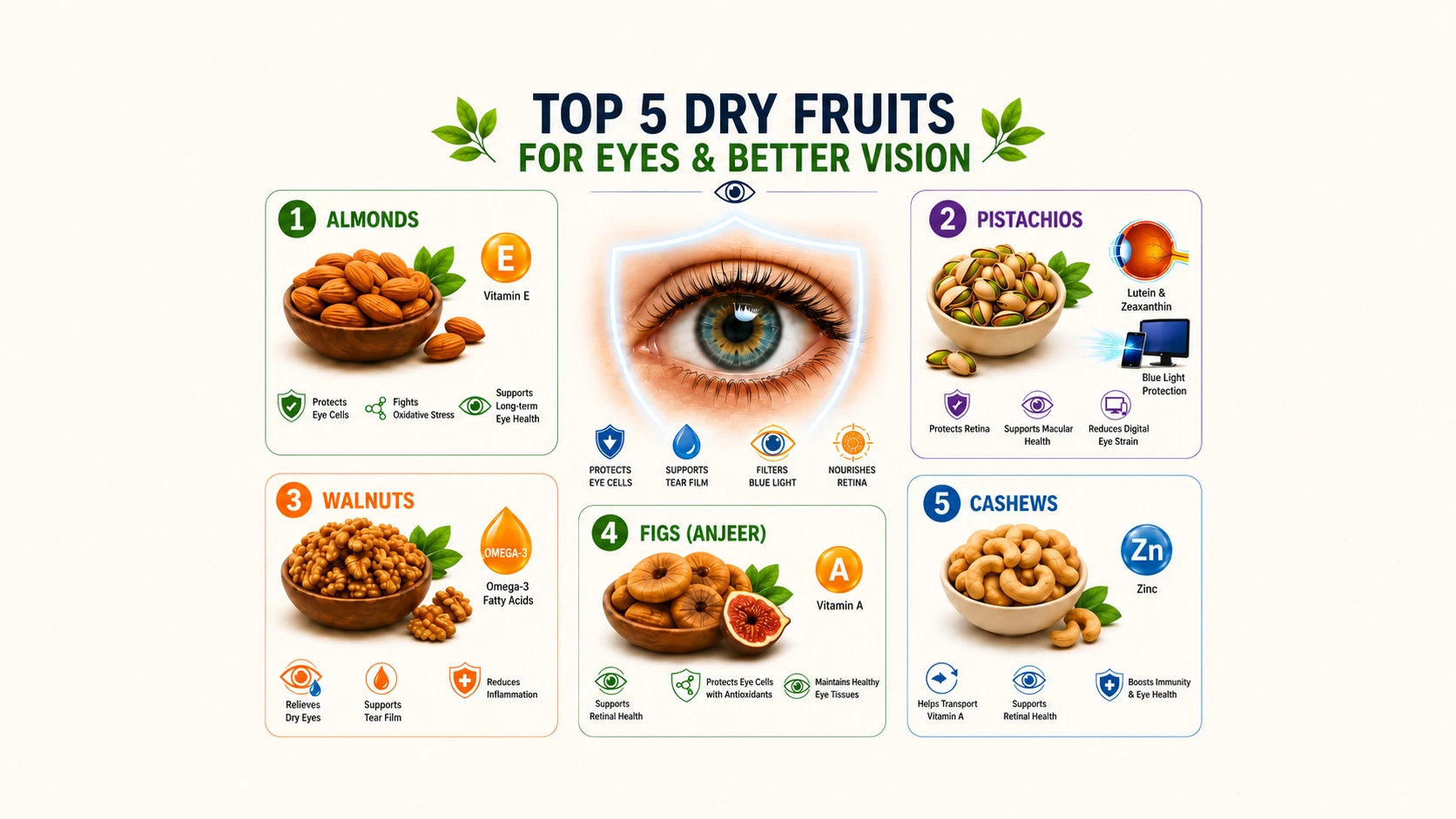
Our Eye is a very sensitive organ of our body it should be under our very crucial care to keep it healthy and utmost care. Eye health does not only depend on one thing like nutrition, it is on a higher side but eye health depends upon the combination of several good things like proper nutrition, lifestyle habits and regular eye care. In addition to this dry fruits can easily provide some essential nutrients such as vitamin E, vitamin A, omega-3 fatty acids lutein, zeaxanthin, zinc and antioxidants that help protect the retina and macula from oxidative damage. These top 5 dry fruits for eye health provide – almonds, walnuts, figs, pistachios and cashews – helps protect the eye from blue light and maintain eyes to stay moisturized. One thing should be kept in mind that dry fruits cannot cure eyesight problems. With a balanced diet including dry fruits and a healthy lifestyle they can play an important role in maintaining vision and the risk of age related problems.
Key Takeaways
- Almonds are rich in vitamin E, which helps protect eye cells from oxidative stress and free radical damage.
- Pistachios contain lutein and zeaxanthin, important antioxidants that support macular health and blue light protection.
- Walnuts provide omega-3 fatty acids, which help improve tear production and support dry eye management.
- figs are an excellent source of vitamin A, essential for retinal function and night vision support.
- Cashews contain zinc, a mineral that helps transport vitamin A to the retina and supports healthy vision.
- Antioxidants found in dry fruits help combat oxidative stress, one of the leading contributors to age-related eye damage.
- Dry fruits support eye health but do not cure vision problems such as nearsightedness, farsightedness, or astigmatism.
- Moderation is important, as excessive consumption of dry fruits can increase calorie intake and affect overall dietary balance.
- Combining dry fruits with leafy greens, fish, eggs, and citrus fruits provides a broader range of nutrients for optimal eye health.
- Regular eye checkups, hydration, quality sleep, and reduced screen strain remain essential alongside good nutrition for long-term eye wellness.
Introduction
Nowadays, there is a big problem emerging that is increased screen time. It is a major concern for eye health as it disturbs the eyes too much as all the day our eyes are working whether we are working on computers, watching television, and scrolling through smartphones. It;s become our daily habit to be on screen all the time. Due to this longer exposure to the screens can lead to eye strain, fatigue, dryness and discomfort. So we should always make sure that we have regular healthy eye care habits, in which nutrition plays an important role in maintaining healthy vision.
There is different aspects for different people some focus on vegetables and fruits for eyesight, and some believe that eye exercise can help in improving eye health but dry fruits for eye health can be a great option as it is packed with antioxidants, vitamins, minerals, omega-3 fatty acids, and other essential nutrients, these nutrients helps in protecting the retina and macula from oxidative damage while supporting the vision
The top 5 dry fruits for eyes provide nutrients such as vitamin E, vitamin A, lutein, zeaxanthin, zinc, and omega-3 fatty acids that contribute to healthy eyesight. Adding these nutrient-dense foods to your daily diet may help reduce eye strain, support retinal health, and promote long-term eye wellness.
In this guide, we’ll explore the best dry fruits for eyesight, their nutritional benefits, and how they contribute to better eye health naturally.
How Dry Fruits Support Eye Health Naturally
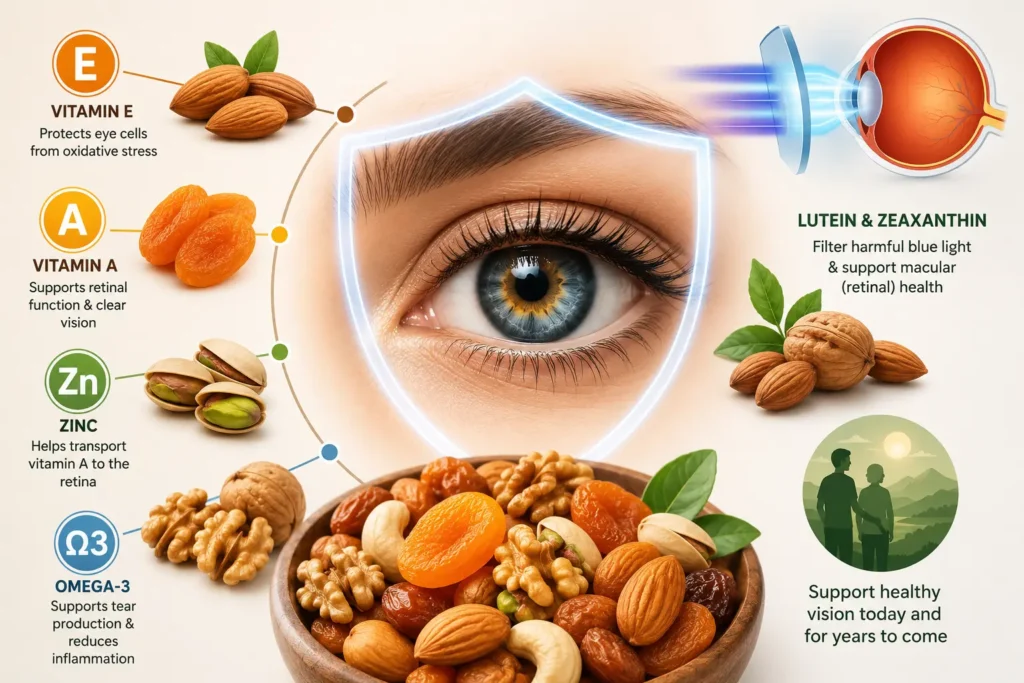
Dry Fruits for vision can play a crucial role in maintaining and improving the overall eye health as it is packed with the nutrition that is very good for our eyes. They contain powerful antioxidants that cut all the free radicals that are responsible for the damage in the eyes tissues.
Dry fruits contain vitamin E which is responsible for the protection of eyes from oxidative stress as it is a great antioxidant. They contain vitamin A, another one which helps in supporting retinal function and helps maintain clear vision, especially in the low lights. And minerals like zinc, which is a great mineral for our body, performs many important functions in our body, helping in transporting vitamin A from the liver to the retina , while omega-3 fatty acids support tear production and reduced inflammation.
Some dry fruits also contain lutein and zeaxanthin, natural pigments that accumulate in the macula and help filter harmful blue light. These nutrients may contribute to retinal health and reduce the risk of age-related vision issues.
A balanced diet that includes nuts for eyesight can help combat oxidative damage, improve eye nutrition, and support healthy vision over time.
Top 5 Dry Fruits for Eyes and Better Vision
1. Almonds – Rich Source of Vitamin E for Eye Protection
Among all the dry fruits almonds contain high amount of vitamin E due to this they considered as one the best dry fruits for eyes
Nutritional Profile
- Rich in vitamin E
- Healthy fats
- Magnesium
- Protein
- Antioxidants
Eye Health Benefits
Vitamin E helps protect retinal cells from oxidative stress caused by environmental pollutants and aging. It neutralizes free radicals that may damage eye tissues and contribute to vision decline.
Research suggests that adequate vitamin E intake may support long-term eye health and reduce the risk of age-related eye conditions. Almonds for eyesight are particularly beneficial for individuals exposed to excessive screen time and blue light.
Recommended Daily Intake
Consume about 20-25 almonds daily, preferably soaked overnight for improved digestion and nutrient absorption.
2. Pistachios – Packed with Lutein and Zeaxanthin
Pistachios are among the few nuts naturally rich in lutein and zeaxanthin, making them exceptional for eye health.
Why Lutein and Zeaxanthin Matter
These carotenoids accumulate in the macular pigment of the eye and serve as natural blue light filters. They help protect retinal tissues from oxidative stress and support age-related vision health.
Protection Against Blue Light Exposure
With increasing screen usage, blue light protection has become important. Pistachios for eye health provide lutein-rich compounds that may help reduce the harmful effects of prolonged digital exposure.
Scientific Support
Studies have shown that lutein and zeaxanthin contribute to macular degeneration prevention and support healthy visual function.
3. Walnuts – Omega-3 Powerhouse for Dry Eyes
Walnuts are one of the richest plant-based sources of omega-3 fatty acids.
Benefits for Dry Eye Management
Omega-3 fatty acids play a vital role in maintaining eye moisture and supporting tear production. Individuals suffering from dry eye syndrome may benefit from regular walnut consumption.
Supporting Tear Film Health
A healthy tear film helps keep eyes lubricated and comfortable. Walnuts for dry eyes provide essential fats that support tear quality and eye hydration.
Anti-Inflammatory Properties
Chronic inflammation can negatively affect vision. Walnuts possess anti-inflammatory properties that help protect eye tissues and support overall eye wellness.
4. Figs (Anjeer) – Vitamin A and Antioxidants for Healthy Vision
Figs (Anjeer) are rich in vitamin A, antioxidants, and essential nutrients that help support healthy eyesight and overall eye function.
Role of Vitamin A in Eyesight
Vitamin A is essential for retinal health and clear vision. It helps the eyes adjust to different lighting conditions and supports the proper functioning of the retina.
Benefits for Eye Protection
Figs contain antioxidants that help combat oxidative stress and protect eye cells from damage caused by free radicals. This may support long-term eye health and vision preservation.
Eye Cell Maintenance
The nutrients in figs help maintain healthy eye tissues and support retinal function, contributing to overall eye wellness and vision support.
5. Cashews – Zinc and Antioxidants for Eye Function
Cashews contain zinc, antioxidants, and healthy fats that support various aspects of vision.
Importance of Zinc in Vision
Zinc plays a crucial role in transporting vitamin A to the retina, where it helps produce melanin, a protective pigment in the eyes.
Supporting Retinal Health
Adequate zinc intake supports retinal health and may contribute to maintaining healthy eyesight as we age.
Daily Consumption Recommendations
A serving of 15-20 cashews per day can be included as part of a balanced diet for eye nutrition and immune support.
Nutritional Comparison Table of the Top 5 Dry Fruits for Eyes
| Dry Fruit | Key Nutrient | Eye Benefit |
| Almonds | Vitamin E | Protects eye cells from oxidative stress |
| Pistachios | Lutein & Zeaxanthin | Supports macula and blue light protection |
| Walnuts | Omega-3 Fatty Acids | Helps manage dry eyes |
| Figs | Vitamin A | Supports vision and night vision |
| Cashews | Zinc | Maintains retinal health |
How Many Dry Fruits Should You Eat Daily for Eye Health?
While dry fruits offer numerous benefits, moderation is essential.
Recommended daily intake:
- Almonds: 20-25
- Pistachios: 20-30
- Walnuts: 2-4 halves
- Figs: 3-5 pieces
- Cashews: 15-20
Following appropriate portion sizes helps maintain balanced nutrient intake without excessive calorie consumption.
For optimal results, combine dry fruits with other eye-friendly foods such as leafy greens, eggs, and fish.
Other Foods That Improve Eye Health Along with Dry Fruits
Although dry fruits for eye health are highly beneficial, they should be part of a diverse and balanced diet.
Foods good for eyesight include:
- Spinach
- Kale
- Carrots
- Sweet potatoes
- Eggs
- Citrus fruits
- Fatty fish
- Bell peppers
- Broccoli
These foods provide vitamin C, vitamin A, lutein, zeaxanthin, and omega-3 fatty acids that support healthy vision and eye wellness.
A comprehensive eye-friendly diet helps maintain retinal health and supports long-term vision protection.
Can Dry Fruits Improve Eyesight?
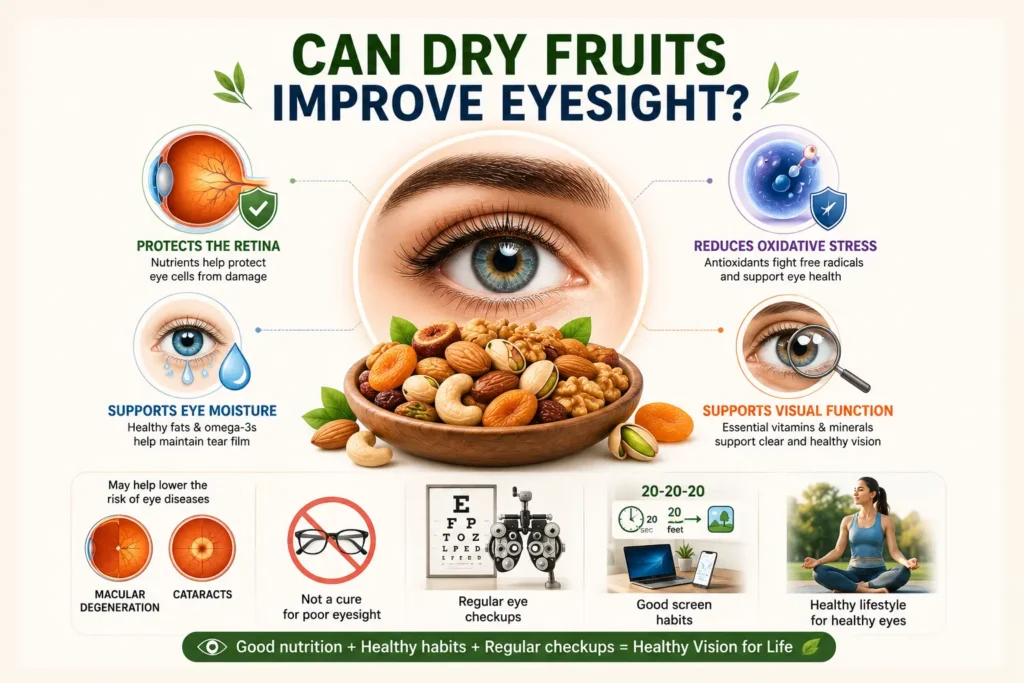
Many people ask, “Do dry fruits improve eyesight naturally?”
The answer is that dry fruits support vision health but are not a cure for poor eyesight. Their nutrients help protect the retina, reduce oxidative stress, support eye moisture, and contribute to healthy visual function.
Regular consumption of nutrient-rich dry fruits may help lower the risk of certain eye diseases, including age-related macular degeneration and cataracts. However, they cannot reverse existing vision problems or eliminate the need for corrective lenses.
Combining good nutrition with regular eye checkups, proper screen habits, and overall healthy lifestyle practices remains the best approach for maintaining eye health.
Common Mistakes People Make When Eating Dry Fruits for Eye Health
Eating Excessive Quantities
Overconsumption can lead to excessive calorie intake and digestive discomfort.
Ignoring Portion Sizes
Even healthy foods should be consumed in moderation to maintain balanced nutrition.
Assuming Dry Fruits Alone Can Improve Vision
Dry fruits support eye health but work best when combined with an overall healthy diet and lifestyle.
Choosing Sugar-Coated Varieties
Many packaged dry fruits contain added sugars that may reduce their nutritional value.
Neglecting Other Eye-Friendly Habits
Regular sleep, hydration, reduced screen exposure, and routine eye examinations are equally important for healthy eyesight.
Frequently Asked Questions (FAQ)
Which dry fruit is best for eyes?
Almonds are often considered one of the best dry fruits for eyes because they are rich in vitamin E, which helps protect eye cells from oxidative damage.
Are almonds good for eyesight?
Yes. Almonds for eyesight provide vitamin E and antioxidants that support retinal health and vision protection.
Can walnuts help with dry eyes?
Yes. Walnuts contain omega-3 fatty acids that support tear production and may help reduce symptoms of dry eyes.
How many dry fruits should I eat daily for eye health?
A balanced serving of almonds, walnuts, pistachios, cashews, and Figs can be consumed daily in moderate quantities for vision support.
Do dry fruits improve eyesight naturally?
Dry fruits support eye health and healthy vision but cannot permanently improve refractive errors or replace medical treatment.
Which dry fruits contain lutein and zeaxanthin?
Pistachios are among the best dry fruits containing lutein and zeaxanthin, which support macular health and blue light protection.
Are pistachios good for eye health?
Yes. Pistachios provide lutein, zeaxanthin, antioxidants, and healthy fats that contribute to eye wellness.
What nutrients are important for healthy vision?
Important nutrients include vitamin E for eyes, vitamin A for vision, lutein, zeaxanthin, omega-3 fatty acids, zinc, and antioxidants for eye health.
Conclusion
The top 5 dry fruits for eyes-almonds, pistachios, walnuts, figs (anjeer), and cashews are packed with essential nutrients that support healthy eyesight and long-term eye wellness. Rich in vitamin E, vitamin A, omega-3 fatty acids, lutein, zeaxanthin, zinc, and antioxidants, these nutrient-dense foods help protect the retina, support the macula, reduce eye strain, and promote overall vision support.
In today’s screen-focused lifestyle, giving your eyes the right nutrition is more important than ever. Adding a handful of these dry fruits to your daily diet is a simple and natural way to support eye health while also benefiting your overall well-being. Although dry fruits cannot cure vision problems or replace medical treatment, they can play an important role in maintaining healthy eyes and reducing the risk of age-related eye issues.
For the best results, combine these dry fruits with other eye-friendly foods such as leafy greens, carrots, eggs, fish, and citrus fruits. Along with regular eye checkups, proper sleep, hydration, and reduced screen strain, a balanced diet can go a long way in keeping your vision healthy for years to come.
About the Author
2020 Dry Fruits Editorial Team
The 2020 Dry Fruits Editorial Team is dedicated to creating evidence-based nutritional content that helps readers make informed dietary choices. Our articles are researched using trusted health and nutrition sources, with a focus on the health benefits of dry fruits, nuts, seeds, and natural foods.
We aim to provide practical, science-backed information on topics such as eye health, heart health, immunity, weight management, and overall wellness. Every article is written with a commitment to accuracy, readability, and user-focused guidance, helping readers incorporate nutritious foods into their daily lifestyle.
At 2020 Dry Fruits, we believe that small dietary changes can contribute significantly to long-term health and well-being. Our mission is to educate consumers about the nutritional value of premium dry fruits and their role in supporting a healthier life.