Table of Contents
Summary
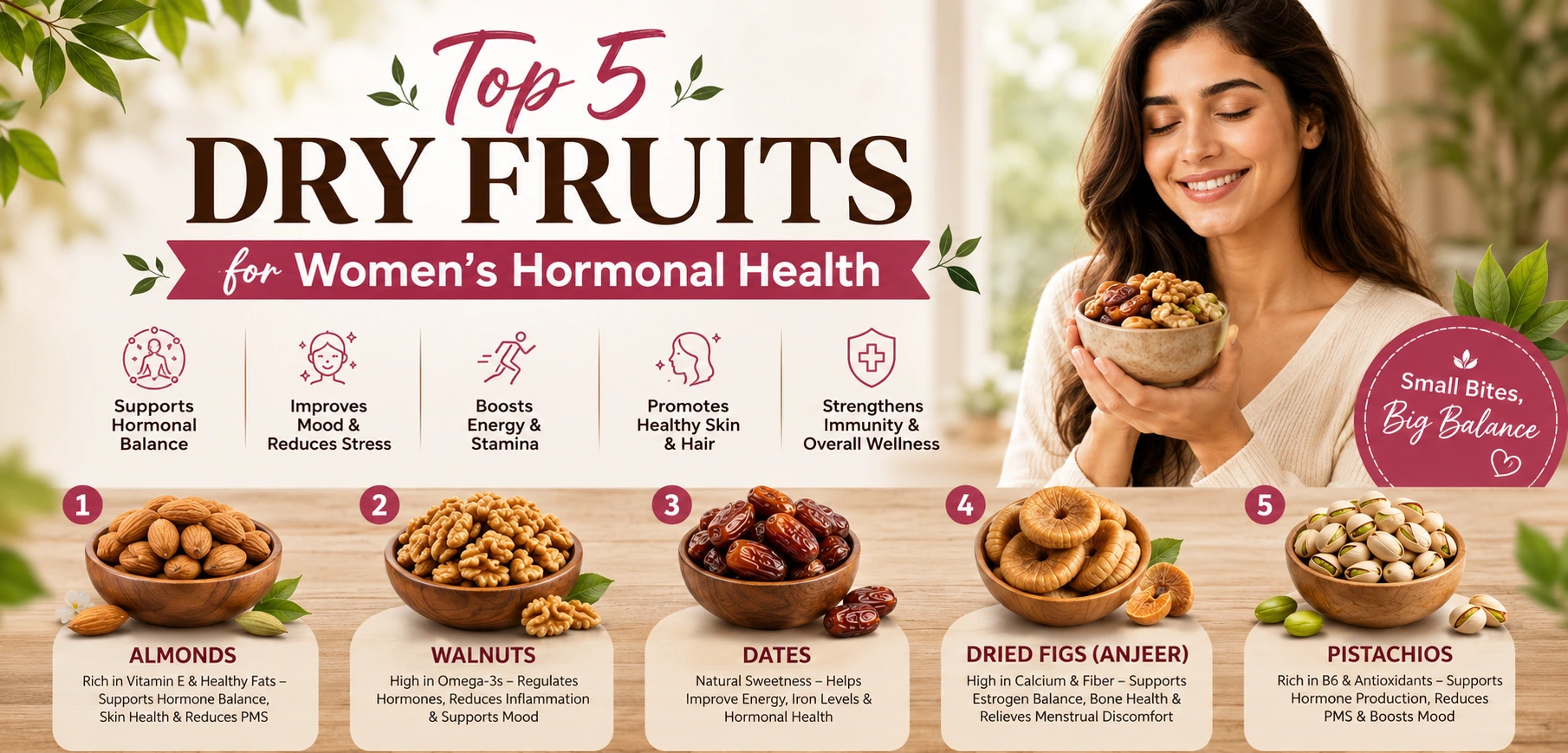
This guide explains which dry fruits actually help balance women’s hormones, and why. Almonds, walnuts, dates, dried figs, and pistachios each support different parts of the hormone system, from progesterone and estrogen production to blood sugar control and bone health. The guide breaks down exact daily amounts, soaking tips, and which dry fruits work best at each life stage, including the teen years, PCOS, pregnancy, and menopause. It also covers a dry fruit and seed cycling combo, an Ayurvedic perspective on hormonal balance, common mistakes women make, and expert guidance on realistic timelines for results. Readers finish this guide with a clear, practical plan they can start following from tomorrow morning.
At 2020 Dry Fruits, we source premium almonds, walnuts, dates, figs and pistachios for everyday wellness. Many women write to us asking the same question. Which dry fruits actually help with hormonal balance? This guide answers that question in detail, using real science, expert opinion, and simple daily habits you can start using today.
Hormonal health is not a small topic. It touches your mood, your skin, your sleep, your weight, and your periods. Instead of giving you a short surface level list, this guide walks you through the full picture, from the science of hormones to exact daily amounts, life stage advice, and common mistakes to avoid.
Key Takeaways
- Almonds, walnuts, dates, figs and pistachios are the top 5 dry fruits for women’s hormonal health.
- These dry fruits support hormone production, reduce inflammation, and help manage PCOS, period pain, and menopause symptoms.
- Figs contain around 162mg of calcium per 100g, the highest among common dry fruits.
- Vitamin B6, magnesium and zinc found in these dry fruits directly support the production and regulation of key hormones like estrogen and progesterone.
- Almonds and walnuts help lower cortisol and support better sleep, both of which have a strong effect on overall hormone balance.
- Pistachios and walnuts are especially useful for women with PCOS, since they support steadier blood sugar and help reduce inflammation.
- Pairing dry fruits with seed cycling, using flaxseed, pumpkin, sesame and sunflower seeds, can strengthen hormonal support across different phases of the menstrual cycle.
- Soaking dry fruits improves mineral absorption and makes them easier to digest.
- Dry fruits work best as part of a balanced diet, not as a standalone cure for hormonal disorders.
- Small daily habits, followed consistently for several weeks, create the biggest hormonal improvements.
Introduction
Do you feel tired even after a full night of sleep? Do your moods swing without warning? Do your periods feel irregular, heavy, or painful? These are some of the most common signs of hormonal imbalance in women, and millions of women experience them every single day.
Hormones are chemical messengers that control almost every function in your body. They manage your metabolism, your mood, your sleep cycle, your skin health, and your reproductive system. When hormone levels rise too high or fall too low, your whole body feels the effect. You might notice fatigue, cravings, acne, hair thinning, or irregular cycles.
The good news is that food plays a direct and powerful role in hormone health. Nutrition experts and gynaecologists often point out that what you eat every day slowly shapes how your hormones behave over weeks and months. Dry fruits, in particular, offer a natural and concentrated source of the nutrients your body needs to keep hormones balanced.
In this guide, we explore the top 5 dry fruits for women’s hormonal health, the science behind each one, how to use them at different life stages, and the mistakes most women unknowingly make. By the end, you will have a clear, simple plan you can start following today.
The Science: How Dry Fruits Support Female Hormones
To understand why dry fruits help, it helps to understand what your hormones actually need. Your body builds hormones like estrogen and progesterone using specific vitamins, minerals, and healthy fats. When these nutrients run low, hormone production slows down or becomes unbalanced.
Vitamin B6 plays an important role in helping your body increase progesterone while keeping estrogen levels in check. Women who lack enough vitamin B6 often report worse PMS symptoms, including irritability and mood swings.
Magnesium supports progesterone production and also helps calm your nervous system. Since stress hormones and reproductive hormones are closely connected, low magnesium often shows up as both anxiety and hormonal symptoms together.
Zinc supports your ovaries directly. It plays a role in the release of eggs during ovulation and also supports the balance between estrogen and testosterone in your body. Low zinc levels are commonly seen in women dealing with PCOS.
Healthy fats, found generously in nuts like almonds and walnuts, act as the raw material for hormone production. Hormones like estrogen and progesterone are built from fat based compounds, so a diet too low in healthy fats can directly slow hormone production.
Some dry fruits, including dates, figs, and dried apricots, also contain natural plant compounds called phytoestrogens. These compounds have a gentle, adaptive effect. When your estrogen levels are low, phytoestrogens offer mild support. When estrogen levels run too high, the same compounds can help block excess estrogen activity. This dual action makes them especially useful across different hormonal conditions.
According to India’s National Institute of Nutrition, dry fruits and nuts remain among the richest natural sources of these hormone supporting nutrients within a typical Indian diet. This makes them an easy and culturally familiar addition for most Indian women, rather than an expensive imported supplement.
Nutrition experts frequently remind their patients that no single food fixes hormonal imbalance overnight. Registered dietitians commonly explain that hormones respond to patterns, not single meals. A handful of almonds eaten once will not change your hormone levels. The same handful eaten daily for eight to twelve weeks, alongside good sleep and movement, often does.
Top 5 Dry Fruits for Women’s Hormonal Health
1. Almonds
Almonds are one of the most popular and most researched dry fruits for women’s hormonal health as they are the good source of vitamin E, protein, fiber and magnesium
Vitamin E acts as an antioxidant, protecting your cells from oxidative stress that naturally increases during your menstrual cycle. Many women report smoother skin and reduced period related breakouts after adding almonds consistently to their diet.
It also has magnesium that plays more than one role. It supports progesterone production, this micronutrients helps in lowering the cortisol, that is the primary stress hormone. As the reproductive system gets disturbed by high cortisol, magnesium rich foods like almonds help indirectly in hormonal support.
How much to eat: Six to eight soaked almonds daily works well for most women.
Best for: General hormone support, period related mood swings, and skin health.
2. Walnuts
Walnuts are the good and the primary vegetarian source of omega-3 fatty acids along with natural melatonin, and polyphenols. So it becomes one of the best dry fruits for women’s hormonal health.
It is seen that women going through PCOS or menopause are struggling to get sleep at night. So the melatonin present in the walnuts helps in sleep as it is known that the sleep hormone can play a supporting role in these conditions.
Copper present in walnuts are known to be as the thyroid function supporting.
Some research also suggests that walnuts help reduce oxidative stress inside the ovaries, which may support better egg quality over time. This makes walnuts particularly relevant for women planning pregnancy or managing PCOS.
How much to eat: Four to six walnut halves daily.
Best for: Sleep support, thyroid health, and reducing inflammation linked to PCOS.
3. Dates
Dates contain nutrients like iron, potassium and vitamin B’s. They can be good for offering fast natural energy all wrapped like in a sweet natural snack.
Here iron is one of the most important of all of them to look upon. Women didn’t realize that due to the heavy periods they are running on low iron. They don’t understand why they feel fatigue, dizziness and poor concentration are a result of low iron but they take it as the general tirednessDates offer a simple, food based way to support healthy iron levels.
Some other minerals that dates have are phytoestrogens, known to support the natural estrogen balance in women. A common complaint that women goes through during the period is water retention, so the high potassium content contained in dates are helpful in reducing water retention.
How much to eat: Two to four dates daily, ideally paired with a few nuts to slow down sugar absorption and avoid energy crashes.
Best for: Energy, iron support, and mild estrogen balance.
4. Dried Figs (Anjeer)
Out of all the dry fruits dried figs hold one of the most important nutrient advantages. They contain nearly 162mg of calcium per 100g, due to this they are one of the best plant based calcium sources among all the dry fruits
This matters more than most women realise. As estrogen levels decline during perimenopause and menopause, bone density naturally drops as well, increasing the risk of weak bones and fractures later in life. Building strong calcium habits early, well before menopause begins, offers real long term protection.
Figs also provide fibre, which supports healthy digestion. Since your gut plays a role in clearing excess estrogen from your body, good digestion indirectly supports better hormone balance too.
How much to eat: Two to three dried figs daily, ideally soaked overnight for easier digestion.
Best for: Bone health, menopause support, and menstrual discomfort.
5. Pistachios
Pistachios are a good source of vitamin B6 , magnesium and zinc, all combination of all these nutrients directly giving support to women’s hormone regulation
Women need vitamin B6 to reduce the PMS symptoms, particularly mood swings, irritability and bloating as it plays a very crucial role. It is also seen that women who have vitamin B6 in their diet reports calmer, more manageable premenstrual weeks
Pistachios also have a lower, gentler spike in blood sugar but they have a lower glycemic index compared to many other snacks. This makes them especially valuable for women managing PCOS or insulin resistance, since blood sugar spikes often worsen hormonal symptoms like acne and irregular cycles.
How much to eat: A small handful, around five to seven pistachios daily.
Best for: Mood balance, blood sugar control, and PCOS support.
Hormonal Stage Breakdown
Every woman’s hormonal needs shift with age and life stage. Instead of following one generic diet, it helps to adjust your dry fruit choices based on where you are right now.
Teens and 20s
At this stage, the main goal is regulating your cycle and supporting steady, stable energy through school, college, or early career life. Almonds and dates work particularly well here. Almonds support steady progesterone production, while dates provide clean, natural energy without the sugar crashes that come from processed snacks.
PCOS
PCOS involves a combination of high androgens and insulin resistance, and it affects a large number of women during their reproductive years. Pistachios help here by supporting steadier blood sugar levels, while walnuts reduce inflammation and support better ovarian function.
Pairing these dry fruits with seeds like flaxseed and pumpkin seed often improves results further. A notable case study followed a group of women with PCOS over a twelve week period. The women who added ground flaxseed to their daily diet showed a measurable drop in testosterone levels, along with better cycle regularity, compared to a group that made no dietary changes. This case study highlights an important point. Small, consistent dietary additions, followed for several weeks, can create real, measurable hormonal shifts, not just anecdotal improvement.
Gynaecologists who treat PCOS patients often stress that diet works alongside medication, not instead of it. Dry fruits support the process, but women with PCOS should continue following their doctor’s guidance for medication and monitoring.
Pregnancy and Postpartum
During pregnancy, your body’s nutritional needs rise sharply, particularly for iron, folate, and healthy fats. Dates support healthy iron levels, figs provide calcium for the baby’s developing bones, and almonds offer steady energy along with healthy fats needed for the baby’s brain development.
After delivery, postpartum hormonal shifts can feel overwhelming. Continuing a habit of soaked almonds and dates during this period offers gentle, consistent nutritional support during a time when new mothers often have little time or energy for elaborate meal planning.
Perimenopause and Menopause
As estrogen levels decline during this stage, two issues tend to appear together, weaker bone density and disturbed sleep. Figs directly support calcium intake, helping protect bone strength during a vulnerable period. Walnuts support better sleep through their natural melatonin content, addressing one of the most commonly reported menopause complaints.
Many gynaecologists recommend combining these dietary habits with regular weight bearing exercise, such as walking or light strength training, for the best results during perimenopause and menopause.
Dry Fruit and Seed Cycling Combo
Seed cycling is a popular natural method where women eat specific seeds during different phases of their menstrual cycle to support hormone balance. Pairing this method with dry fruits can strengthen the overall effect.
During the first half of your cycle, known as the follicular phase, combine flaxseed and pumpkin seed with a few almonds. During the second half, known as the luteal phase, combine sesame seed and sunflower seed with a few walnuts. This combination gives your body a steady, phase appropriate supply of the nutrients it needs throughout your entire cycle.
It is worth being honest here. Seed cycling does not yet have large scale clinical trials directly proving its effectiveness. However, the individual nutrients found in these seeds and dry fruits are well researched for hormone support on their own. This means the combination is considered safe for most women and worth trying, even while more research on the specific practice of cycling continues to develop.
Soaking and Preparation Tips
Soaking dry fruits before eating them significantly improves how well your body absorbs their minerals. This happens because soaking removes a natural compound called phytic acid, which otherwise blocks your body from properly absorbing zinc, magnesium, and other important minerals.
Soak almonds for eight to twelve hours. Soak walnuts for six to eight hours. Soak dates for one to two hours. Soak dried figs overnight for the best texture and easiest digestion. Always discard the soaking water afterward and eat the dry fruits fresh, ideally within the same day.
Many nutritionists recommend preparing your soaked dry fruits the night before, so they are ready to eat first thing in the morning without any extra effort.
Ayurvedic Perspective on Hormonal Balance
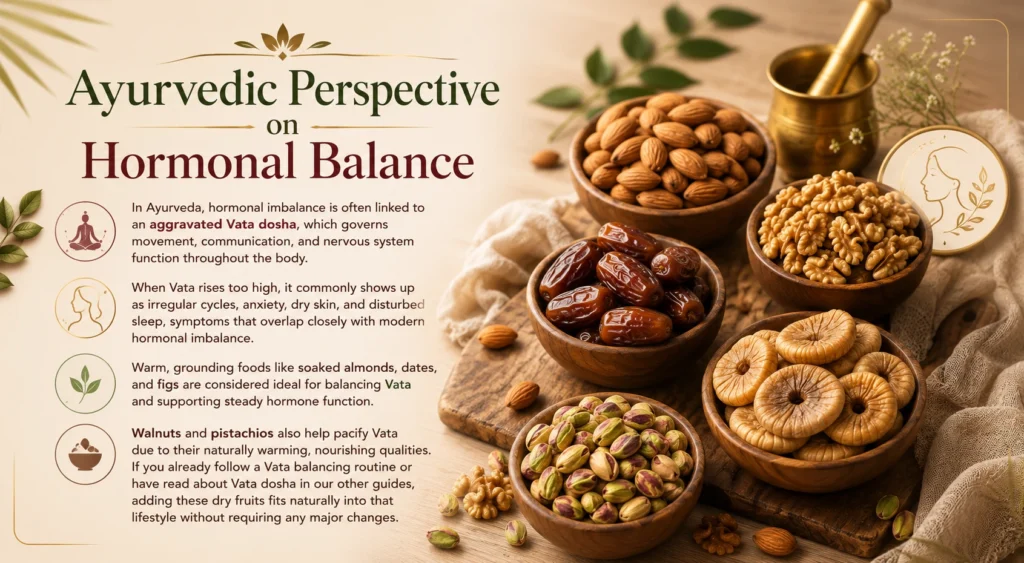
In Ayurveda, hormonal imbalance is often linked to an aggravated Vata dosha, which governs movement, communication, and nervous system function throughout the body. When Vata rises too high, it commonly shows up as irregular cycles, anxiety, dry skin, and disturbed sleep, symptoms that overlap closely with modern hormonal imbalance.
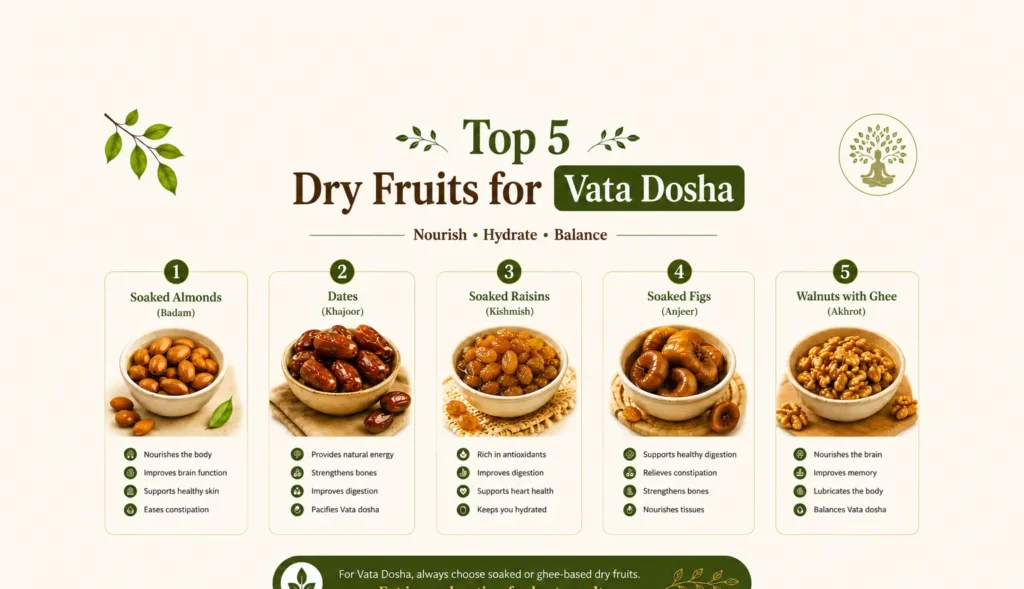
Warm, grounding foods like soaked almonds, dates, and figs are considered ideal for balancing Vata and supporting steady hormone function. Walnuts and pistachios also help pacify Vata due to their naturally warming, nourishing qualities. If you already follow a Vata balancing routine or have read about Vata dosha in our other guides, adding these dry fruits fits naturally into that lifestyle without requiring any major changes.
Best Time and Way to Eat Dry Fruits
Morning is generally considered the best time to eat soaked dry fruits, since digestion tends to be strongest early in the day. Eating them on an empty stomach, or alongside a light breakfast, allows your body to absorb their nutrients more effectively.
A small handful, around thirty to forty grams total across all five dry fruits, is a safe and effective daily amount for most women. Women managing PCOS or blood sugar concerns should stay closer to the lower end of this range, since dry fruits are naturally calorie dense and contain natural sugars.
Nutrient Comparison Table
| Dry Fruit | Highest In | Key Benefit |
| Almonds | Vitamin E and Magnesium | Supports cell protection and progesterone production |
| Walnuts | Omega 3 fats and Melatonin | Supports sleep and thyroid health |
| Dates | Iron and natural sugars | Supports energy and healthy blood levels |
| Dried Figs | Calcium (highest among dry fruits) | Supports bone health |
| Pistachios | Vitamin B6 and Zinc | Supports mood balance and blood sugar control |
Common Mistakes and Myths
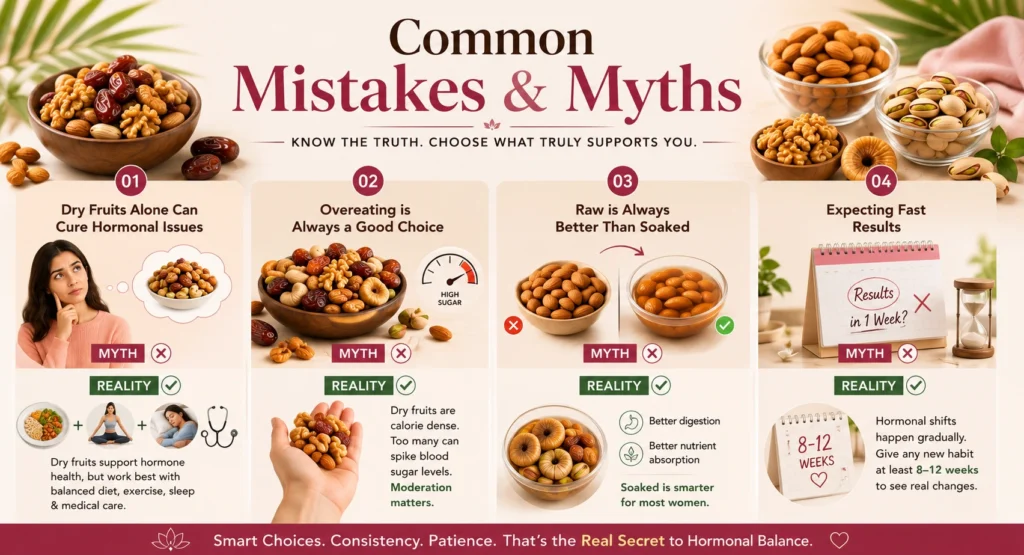
Many women believe dry fruits alone can cure serious hormonal disorders like PCOS or thyroid conditions. This belief, while understandable, is not accurate. Dry fruits genuinely support your hormone health, but they work best as one part of a bigger picture that includes balanced meals, regular movement, good sleep, and medical care when needed.
Another common mistake involves overeating dry fruits simply because they feel healthy. Since dry fruits are calorie dense and naturally sweet, eating too many at once can raise blood sugar levels quickly, especially for women dealing with PCOS or insulin resistance. Moderation matters just as much as consistency.
Some women also believe raw dry fruits are always superior to soaked ones. In reality, soaking often improves digestion and mineral absorption significantly, making soaked dry fruits the smarter everyday choice for most women, particularly those with sensitive digestion.
Finally, many women expect fast results and give up after a week or two when nothing changes. Hormonal shifts happen gradually. Most nutrition experts recommend giving any new dietary habit at least eight to twelve weeks before expecting noticeable changes in your cycle, mood, or energy levels.
Who Should Be Careful
Women with diabetes or insulin resistance should monitor their portion sizes closely, since dates and dried figs are naturally high in sugar and can affect blood glucose levels quickly. Women with nut allergies should avoid almonds, walnuts, and pistachios entirely and speak with a doctor about safe alternative sources of the same nutrients. Women currently taking hormone related medication should always check with their doctor before making significant dietary changes, since food can sometimes interact with how medication works in the body.
Expert Note
Nutrition experts consistently recommend a food first approach to hormonal health. Registered dietitians often explain to their patients that no single dry fruit acts like a magic pill capable of instantly fixing hormonal problems. Instead, small, consistent daily habits, like eating a handful of soaked almonds and walnuts each morning, gradually build up real hormonal benefits across weeks and months.
Gynaecologists who specialise in women’s hormonal health frequently add that diet works best when paired with adequate sleep, regular movement, and stress management. Food alone rarely solves a hormonal problem in isolation, but it plays a meaningful, supportive role within a bigger, sustainable lifestyle.
If you experience ongoing symptoms like irregular periods, severe mood swings, unexplained weight changes, or signs of thyroid imbalance, always consult a doctor or gynaecologist alongside making any dietary changes. Dry fruits support your health journey, but they do not replace proper medical guidance.
Frequently Asked Questions
How many almonds should I eat daily for hormone balance?
Most women benefit from six to eight soaked almonds per day, ideally eaten in the morning.
Which dry fruit is best for PCOS?
Pistachios and walnuts are especially helpful for PCOS, since they support steadier blood sugar levels and help reduce inflammation linked to the condition.
Can dry fruits help with menopause symptoms?
Yes. Dried figs support bone health through their high calcium content, while walnuts support better sleep, addressing two of the most common menopause complaints.
What is the best time to eat dry fruits for hormonal balance?
Morning, after soaking overnight, is generally the best time for maximum nutrient absorption and digestion.
Are dry fruits safe daily for women with PCOS or insulin resistance?
Yes, in small, controlled portions. Aim for around thirty grams a day, and lean toward lower sugar options like almonds, walnuts, and pistachios more often than dates or figs.
Do dry fruits work faster than medication for hormonal problems?
No. Dry fruits offer gradual, supportive benefits over weeks and months. They work alongside medical treatment, not as a replacement for it, especially for diagnosed conditions like PCOS or thyroid disorders.
Can dry fruits help with hormonal acne?
Yes, to some extent. Almonds and walnuts contain healthy fats and antioxidants that help reduce inflammation, which is often linked to hormonal acne. Pistachios also support steadier blood sugar levels, and stable blood sugar helps reduce breakouts caused by hormonal spikes.
Which dry fruit helps with irregular periods?
Dates and almonds are especially helpful for irregular periods. Dates support healthy iron and energy levels, while almonds support steady progesterone production, both of which play a role in maintaining a regular cycle.
Can dry fruits help balance hormones during pregnancy?
Yes. Dates support healthy iron levels, figs support calcium for the baby’s bone development, and almonds provide healthy fats and energy needed during pregnancy. Always confirm exact portions with your doctor during pregnancy.
Do soaked dry fruits work better than raw dry fruits for hormone health?
Yes, in most cases. Soaking removes a natural compound called phytic acid, which otherwise blocks the absorption of minerals like zinc and magnesium. This makes soaked dry fruits easier to digest and more effective for hormone support.
Conclusion
Your hormones influence nearly every part of how you feel each day, from your energy and mood to your skin and your menstrual cycle. Almonds, walnuts, dates, figs, and pistachios each bring their own unique set of nutrients that support your hormonal health at every life stage, from your teenage years through menopause.
The key lies in consistency, not perfection. Start with small, realistic daily habits. Soak a handful of almonds and walnuts the night before. Add a couple of dates or figs to your breakfast. Give your body eight to twelve weeks to respond, and pair these habits with good sleep and regular movement for the best results.
Explore our range of premium almonds, walnuts, dates, figs, and pistachios at 2020 Dry Fruits, sourced for freshness and quality to support your everyday wellness journey, at every stage of life.
About the Author
2020 Dry Fruits is a trusted name in premium dry fruits, sourcing and delivering high quality almonds, walnuts, dates, dried figs, pistachios and more directly to health conscious households across India. The brand focuses on freshness, purity and honest sourcing, working closely with growers to bring naturally rich, nutrient dense dry fruits to everyday customers.
The content on this blog is created by the 2020 Dry Fruits team in collaboration with nutrition research and wellness resources, with the goal of helping readers make informed, practical choices about their daily diet. Every article combines simple, easy to understand guidance with real nutritional science, so customers can build healthy habits without confusion or guesswork.
To explore our range of premium dry fruits, visit Our Store.