In a world full of synthetic supplements and wellness trends, some of the most effective health boosters have always been sitting quietly in your kitchen — dry fruits. Packed with essential vitamins, minerals, antioxidants, and healthy fats, these natural powerhouses offer real, long-term benefits for your immunity, digestion, and even brain function.
Let’s break down how specific dry fruits work in the body, how to consume them, and why making them a part of your daily routine is a smart, science-backed choice.
Almonds: The Immunity Shield
Why Almonds?
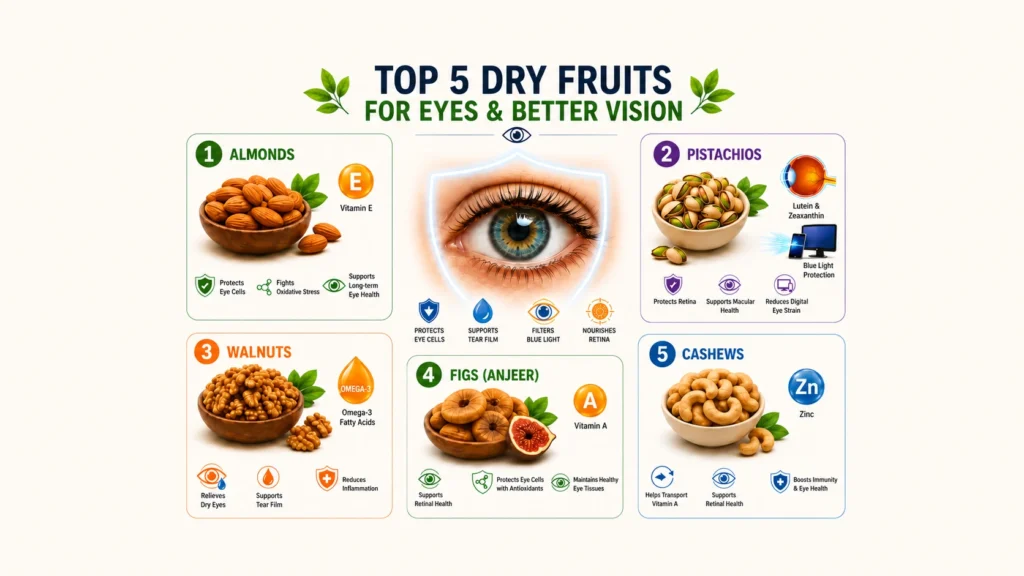
Almonds are rich in vitamin E, zinc, and antioxidants — all of which are crucial in building a strong immune system. Vitamin E helps protect cells from oxidative stress, while zinc plays a key role in the development and function of immune cells.
How to Consume for Immunity:
- Soak 5–6 almonds overnight and eat them first thing in the morning. Soaking helps in better nutrient absorption.
- Add sliced almonds to porridge, salads, or homemade energy bars.
- Use almond powder in warm milk, especially during the winter months.
Bonus:
Almonds also help regulate blood sugar levels and reduce inflammation — both of which are important for overall immune health.
Figs (Anjeer): Your Gut’s Best Friend
Why Figs?
Figs are high in dietary fiber, which makes them excellent for digestive health. The soluble fiber helps regulate bowel movements, while prebiotics in figs support the healthy bacteria in your gut. They’re also packed with antioxidants, calcium, and iron.
How to Consume for Digestion:
- Soak 2–3 dried figs in water overnight and eat them the next morning for gentle relief from constipation.
- Add chopped figs to your yogurt or muesli for a fiber-rich breakfast.
- Simmer dried figs in warm water with a bit of cardamom for a light digestive tea.
Bonus:
Figs also support healthy cholesterol levels and may help reduce bloating when consumed regularly.
Walnuts: Food for the Brain
Why Walnuts?
Walnuts are famously brain-shaped — and for good reason. They’re one of the richest plant-based sources of omega-3 fatty acids, especially alpha-linolenic acid (ALA), which helps reduce inflammation and improve brain function. They’re also high in vitamin B6 and polyphenols that support memory, mood, and cognition.
How to Consume for Brain Power:
- Eat 2–3 walnuts in the morning or as an afternoon snack.
- Crush them over breakfast cereals, add to smoothies, or mix into homemade laddoos.
- Combine walnuts with dates for a quick energy-and-focus booster.
Bonus:
Walnuts are also linked to improved sleep due to their natural melatonin content.
The Science Behind the Benefits (Simplified)
- Vitamin E (in almonds): Acts as an antioxidant, protecting your cells from damage and boosting immunity.
- Fiber (in figs): Supports digestive regularity and feeds gut bacteria, which are linked to immune response and mood.
- Omega-3s (in walnuts): Crucial for brain development, reducing oxidative stress in neurons, and keeping mental fatigue at bay.
A Simple Weekly Routine
If you’re wondering how to build these into your diet without overthinking it:
| Time of Day | What to Eat | Why |
| Morning | Soaked almonds + figs | Immunity + digestion |
| Mid-morning snack | 2–3 walnuts | Brain power + satiety |
| Evening | Warm milk with almond powder | Recovery + immune boost |
| Weekend treat | Figs and walnut mix | Clean indulgence |
Tips to Maximize Nutrient Absorption
- Soaking: Soaking nuts and dry fruits removes enzyme inhibitors and improves digestion.
- Portion Control: They’re nutrient-dense, so you don’t need too many. A handful a day is plenty.
- Storage: Keep them in airtight containers in cool, dry places. Refrigeration helps extend shelf life.
Final Thoughts
Dry fruits aren’t just snackables — they’re functional foods with real impact on your health. From almonds that strengthen your body’s defenses, to figs that help your digestion flow easily, to walnuts that sharpen your mind, these age-old ingredients deserve a spot in your daily lifestyle.
Start with small habits. A few soaked almonds with breakfast. A fig before bed. A walnut when the brain fog hits. Let food be your first medicine — just like it used to be.