Dry fruits are known for their long shelf life and nutritional benefits, which is why many households keep them stocked in the kitchen. From almonds and cashews to raisins and pistachios, these nutrient-rich snacks can stay fresh for months when stored properly. However, like any food product, dry fruits can eventually spoil if they are exposed to moisture, heat, or improper storage conditions.
Knowing how to identify spoiled dry fruits is important for maintaining food safety and ensuring you enjoy their best taste and quality. In this guide, we’ll explore the common signs that dry fruits have gone bad and when it’s best to discard them.
Why Dry Fruits Can Spoil
Although dry fruits have low moisture content, they are still sensitive to environmental conditions. Their natural oils, especially in nuts like almonds and walnuts, can turn rancid over time.
Several factors can lead to spoilage, including:
- Exposure to air and moisture
- High storage temperatures
- Improper packaging
- Long storage periods
- Contamination from insects or mold
Understanding these risks can help you store dry fruits better and recognize when they are no longer safe to eat.
Unpleasant or Rancid Smell
One of the first signs that dry fruits have gone bad is an unusual smell.
Fresh dry fruits typically have a mild, nutty, and pleasant aroma. When they spoil, their natural oils begin to break down, producing a sour or rancid odor.
Signs to watch for include:
- A sharp or sour smell
- A paint-like or chemical odor
- Musty or stale aroma
If dry fruits give off an unpleasant smell when you open the container, it’s usually best to discard them.
Bitter or Unusual Taste
Taste is another strong indicator of spoilage. While dry fruits normally have a slightly sweet or nutty flavor, spoiled ones may taste bitter or unpleasant.
Common taste changes include:
- Sharp bitterness
- Sour flavor
- Metallic or stale taste
If the taste seems noticeably different from usual, avoid eating them and discard the batch.
Visible Mold or Discoloration
Mold growth is a clear sign that dry fruits are no longer safe to consume. This usually occurs when dry fruits absorb moisture during storage.
Look for the following signs:
- White, green, or black mold spots
- Powdery or fuzzy growth on the surface
- Dark or uneven discoloration
Even a small amount of mold can spread quickly, so it’s safer to throw away the affected dry fruits rather than trying to salvage them.
Sticky or Clumpy Texture
Dry fruits should generally feel dry and firm to the touch. If they start feeling sticky, clumped together, or overly soft, moisture may have entered the container.
This can happen due to:
- Humid storage environments
- Improperly sealed containers
- Exposure to air for long periods
Moisture not only affects texture but also encourages mold growth, so such dry fruits should be discarded.
Presence of Insects or Larvae
Another clear sign that dry fruits have gone bad is the presence of insects or small larvae inside the container.
Indicators may include:
- Tiny holes in nuts
- Small insects moving inside the container
- Web-like strands or powdery residue
If you notice any insect activity, it’s best to discard the entire batch immediately and thoroughly clean the storage container.
Shrinking or Excessive Dryness
Sometimes dry fruits may not spoil but instead become overly dry due to prolonged storage. While this does not always make them unsafe to eat, it can significantly affect taste and texture.
Signs include:
- Hard or shriveled nuts
- Loss of natural flavor
- Extremely tough texture
In such cases, they may still be safe to consume but may not provide the same enjoyable eating experience.
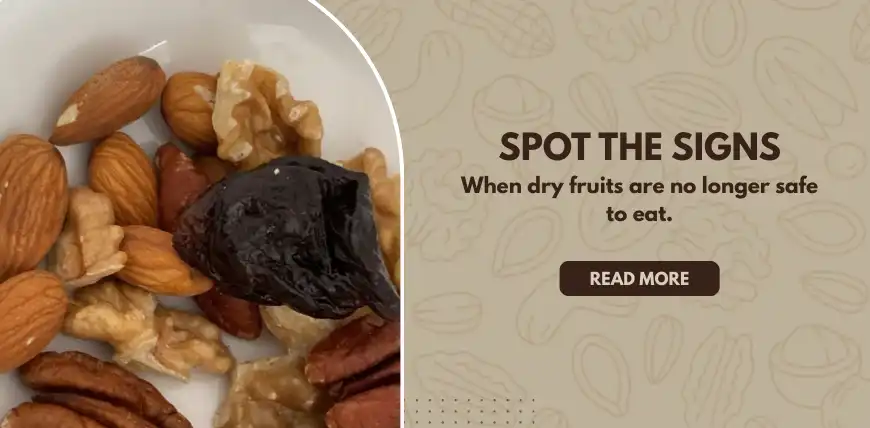
Changes in Color
Color changes can also signal that dry fruits have started deteriorating.
For example:
- Almonds turning darker than usual
- Pistachios losing their natural green color
- Walnuts appearing dull or greyish
While slight color variation is normal, dramatic or uneven discoloration may indicate spoilage.
Shelf Life of Common Dry Fruits
Knowing the general shelf life of dry fruits can help you determine when they should be replaced.
Approximate shelf life when stored properly:
- Almonds: 6–12 months
- Cashews: 6–9 months
- Pistachios: 6–12 months
- Walnuts: 3–6 months at room temperature, longer if refrigerated
- Raisins: 6–12 months
Refrigeration can often extend shelf life, especially for nuts that contain higher oil content.
Tips to Keep Dry Fruits Fresh Longer
Preventing spoilage starts with proper storage. Here are some practical tips to help maintain freshness:
Store in Airtight Containers: Use airtight jars or containers to prevent exposure to air and humidity.
Keep in a Cool, Dry Place: Store dry fruits away from heat sources such as stoves or direct sunlight.
Refrigerate High-Oil Nuts: Nuts like walnuts, pistachios, and almonds stay fresh longer when stored in the refrigerator.
Buy in Reasonable Quantities: Avoid purchasing very large quantities unless you consume dry fruits regularly.
Check Periodically: Inspect stored dry fruits occasionally for signs of spoilage.
When You Should Definitely Discard Dry Fruits
To stay safe, discard dry fruits if you notice:
- Rancid or sour smell
- Bitter or unusual taste
- Mold growth or discoloration
- Sticky texture caused by moisture
- Presence of insects or larvae
Consuming spoiled dry fruits can lead to digestive discomfort and should always be avoided.
Conclusion
Dry fruits are a healthy and convenient snack with a naturally long shelf life, but they still require proper storage and regular checks to maintain their quality. Recognizing early signs of spoilage—such as rancid smell, mold, discoloration, or insect presence—can help you avoid consuming unsafe food.
By storing dry fruits correctly and purchasing them in manageable quantities, you can ensure that they remain fresh, flavorful, and nutritious for longer. When in doubt about their freshness, it’s always safer to discard them and replace them with a fresh batch.