Table of Contents
- Summary
- Key Takeaways
- Introduction
- Why Dry Fruits Are Important for Brain Health
- 9 Best Dry Fruits for Brain Health
- 1. Almonds – The Memory Booster
- 2. Walnuts – Brain-Shaped Superfood
- 3. Cashews – Stress & Anxiety Reducer
- 4. Pistachios – Improves Brain Oxygen Flow
- 5. Raisins – Natural Energy Booster
- 6. Dates – Instant Brain Fuel
- 7. Figs (Anjeer) – Nerve Strengthener
- 8. Hazelnuts – Boosts Brain Power
- 9. Peanuts – Affordable Brain Food
- Best Dry Fruits for Students (Brain Focus)
- How to Include Dry Fruits in Your Diet
- How Dry Fruits Support Brain Function (Scientific Explanation)
- Nutrient Comparison Table (Quick Understanding)
- Side Effects of Eating Too Many Dry Fruits
- Who Should Limit Dry Fruits
- Complete Daily Routine for Brain Health
- Real-Life Case Study: Before vs After Adding Dry Fruits
- Scientific & Trusted Sources
- Frequently Asked Questions (FAQs)
- About Author
- Conclusion
Summary
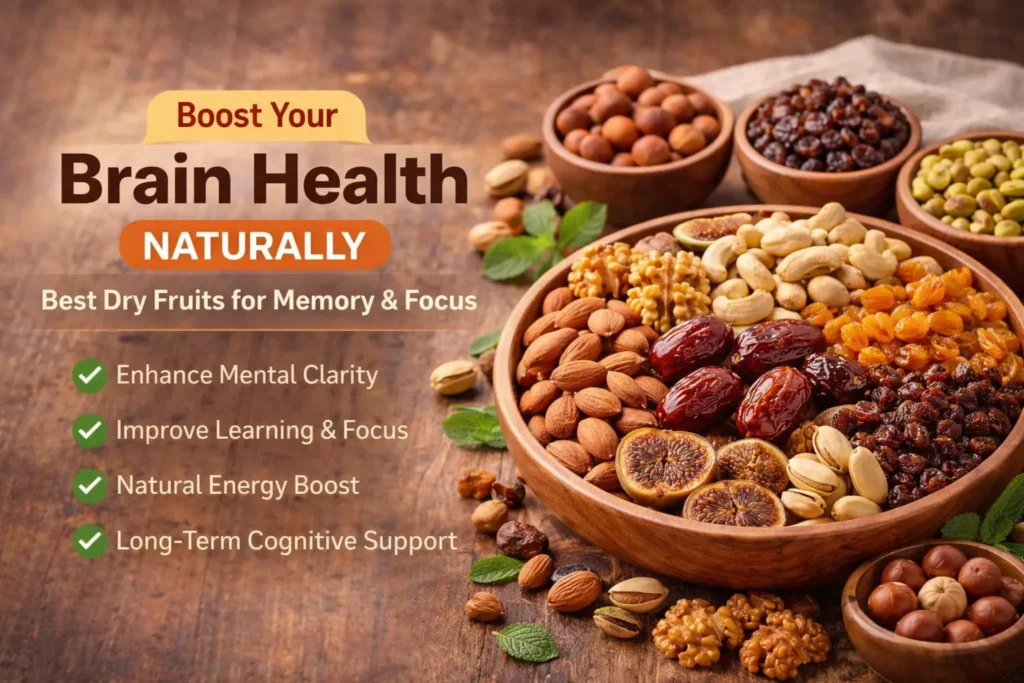
It’s been proven historically that if you want to improve brain health, memory and focus in a natural and effective way you should include Dry Fruits in your diet. For a good cognitive function our body requires some necessary nutrients like antioxidants, omega-3 fatty acids and vitamins that support cognitive function for example, almonds, walnuts, dates, figs, pistachios and cashews.
Meanwhile, raisins and dates provide quick energy and help in reduction of mental fatigue. A small mixture of dry fruits daily can boost mental performance, maintain long term health and enhance concentration for students and working professionals. How you should eat them and how much is the daily intake for all the people whether they are students or working professionals are also covered in this guide.
Key Takeaways
- Dry fruits are rich in omega-3 fatty acids, antioxidants, and essential vitamins that directly support brain health.
- Almonds and walnuts are among the best for improving memory and cognitive function.
- Raisins and dates provide quick, natural energy that helps reduce mental fatigue.
- Cashews and pistachios support focus by reducing stress and improving brain activity.
- Regular consumption of dry fruits can help enhance concentration, learning ability, and mental clarity.
- A simple daily mix of nuts can deliver balanced nutrition for sustained brain performance.
- These are especially beneficial as the best dry fruits for students (brain focus) during study or exams.
- Consistency matters more than quantity—small daily intake leads to long-term cognitive benefits.
Introduction
Scientific research has shown that regular consumption of nuts and dry fruits is linked to improved cognitive performance, better memory retention, and reduced risk of age-related mental decline. The brain requires a constant supply of essential nutrients such as omega-3 fatty acids, antioxidants, vitamin E, and minerals to function efficiently, and dry fruits naturally provide many of these in concentrated form.
According to Walter Willett, incorporating nutrient-dense foods like nuts and dried fruits into the daily diet can support long-term brain health, stable energy levels, and overall cognitive function. These foods not only nourish brain cells but also help improve focus, reduce mental fatigue, and enhance clarity.
Understanding which dry fruits to include, how to consume them, and the right quantity can help you build a simple yet effective routine for better mental performance.
Why Dry Fruits Are Important for Brain Health
Dry fruits are rich in:
- Omega-3 fatty acids – crucial for brain cell structure
- Antioxidants – protect the brain from oxidative stress
- Vitamin E – slows cognitive decline
- Magnesium & Zinc – improve nerve signaling
Including them in your daily diet can improve concentration, reduce brain fog, and support long-term mental health.
9 Best Dry Fruits for Brain Health
1. Almonds – The Memory Booster
- Benefits:
Almonds are known to be one of the best nuts for enhancing brain power and cognitive strength. They are the powerhouse of vitamin E, which are helpful in slow ageing and protect nerve cells from damaging, regular consumption can increase concentration, learning capabilities and long term mental clarity - Nutritional Value:
Almonds are packed with vitamin E, healthy monounsaturated fats, protein, magnesium, and antioxidants. These nutrients support brain cell repair, improve nerve function, and enhance neurotransmitter activity. - Best Way to Consume:
Soak 5–6 almonds overnight and consume them in the morning. This improves nutrient absorption and digestion.
2. Walnuts – Brain-Shaped Superfood
- Benefits:
Walnuts are widely known for their brain-like shape and brain-boosting properties. they helps in improving brain and also heart health as they contains good amount of omega-3 fatty acids, walnut also supports in reducing inflammation in the body and long term well being - Nutritional Value:
High in omega-3 fatty acids (ALA), antioxidants, polyphenols, and vitamin E. These nutrients support brain signaling and protect neurons. - Best Way to Consume:
Eat 1–2 walnuts daily, preferably soaked or raw for maximum benefits.
3. Cashews – Stress & Anxiety Reducer
- Benefits:
Cashews help reduce stress and anxiety, which directly impacts brain performance. They support better focus, improve mood, and enhance mental clarity by regulating neurotransmitters. - Nutritional Value:
Rich in magnesium, iron, zinc, and healthy fats. Magnesium plays a key role in relaxing the brain and improving nerve function. - Best Way to Consume:
Consume 2–4 cashews daily, either raw or lightly roasted.
4. Pistachios – Improves Brain Oxygen Flow
- Benefits:
Pistachios help increase blood circulation to the brain, ensuring better oxygen supply. This improves alertness, concentration, and overall cognitive performance. - Nutritional Value:
Loaded with antioxidants, vitamin B6, protein, and healthy fats that support brain activity and energy levels. - Best Way to Consume:
Eat a small handful (8–10 pistachios) daily, preferably unsalted.
5. Raisins – Natural Energy Booster
- Benefits:
Raisins provide instant energy to the brain due to their natural sugar content. They help reduce fatigue, improve memory, and keep the brain active during long work or study sessions. - Nutritional Value:
Rich in natural sugars (glucose, fructose), iron, potassium, and antioxidants that support brain energy and blood flow. - Best Way to Consume:
Soak 6–8 raisins overnight and eat them in the morning for sustained energy.
6. Dates – Instant Brain Fuel
- Benefits:
Dates are an excellent source of quick energy, making them ideal for boosting brain function. They support memory, reduce mental fatigue, and help improve focus. - Nutritional Value:
High in natural sugars, potassium, magnesium, and antioxidants that support brain energy and reduce inflammation. - Best Way to Consume:
Eat 1–2 dates in the morning or before mentally demanding tasks.
7. Figs (Anjeer) – Nerve Strengthener
- Benefits:
Figs help strengthen the nervous system and improve communication between brain cells. They also support cognitive function and reduce oxidative stress in the brain. - Nutritional Value:
Rich in calcium, potassium, iron, and antioxidants that support nerve health and brain function. - Best Way to Consume:
Soak 1–2 figs overnight and consume in the morning.
8. Hazelnuts – Boosts Brain Power
- Benefits:
Hazelnuts help enhance brain function, improve memory, and protect against cognitive decline. They support long-term brain health and improve mental performance. - Nutritional Value:
Packed with vitamin E, healthy fats, antioxidants, and folate, which are essential for brain health. - Best Way to Consume:
Consume a small handful (5–6 hazelnuts) raw as a snack.
9. Peanuts – Affordable Brain Food
- Benefits:
Peanuts are a budget-friendly option that supports brain health. They improve focus, enhance memory, and support overall cognitive function. - Nutritional Value:
Rich in niacin (vitamin B3), protein, healthy fats, and antioxidants that support brain activity and energy. - Best Way to Consume:
Eat a handful of roasted peanuts daily, preferably unsalted.
Best Dry Fruits for Students (Brain Focus)
Students need sustained focus, memory retention, and mental stamina. The best options include:
- Almonds + Walnuts → Memory + cognitive strength
- Raisins + Dates → Instant energy during study sessions
- Cashews + Pistachios → Stress control + focus
Pro Tip:
Create a daily brain mix:
4 almonds + 2 walnuts + 5 raisins + 2 cashews + 1 fig
This combination delivers balanced nutrition for optimal brain performance. After using this combination of dry fruit you feel like how the energy sustains in your body all day. You will stay active , aware and ready to do any number of tasks like your studies all day without feeling fatigue.
How to Include Dry Fruits in Your Diet
- Add them to morning smoothies
- Eat soaked nuts on an empty stomach
- Mix with oatmeal or yogurt
- Carry as a healthy snack
Consistency is key, daily intake delivers the best results.
How Dry Fruits Support Brain Function (Scientific Explanation)
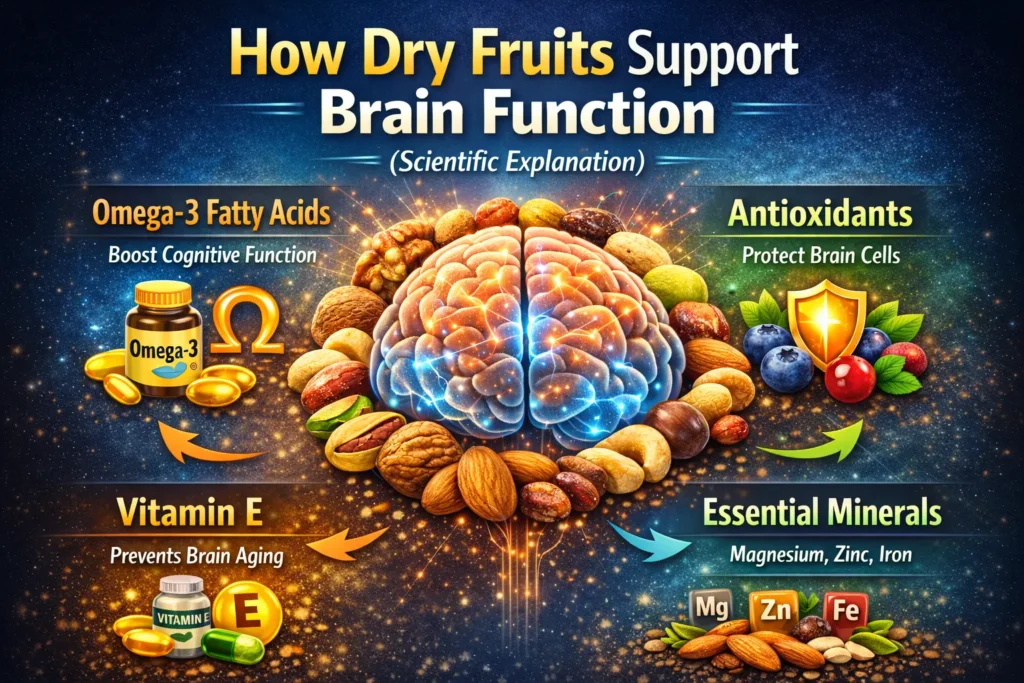
Dry fruits are not just nutritious, they directly influence how your brain functions at a biological level. The key nutrients present in dry fruits play specific roles in improving cognitive performance.
Omega-3 Fatty Acids (Walnuts)
Omega-3 fatty acids are essential for brain cell structure and communication. They help improve neuron signaling, which enhances memory, learning ability, and overall cognitive performance. Regular intake supports long-term brain health and reduces the risk of cognitive decline.
Antioxidants (Almonds, Pistachios, Raisins)
Antioxidants protect brain cells from oxidative stress caused by free radicals. Oxidative stress is one of the major reasons for memory loss and mental fatigue. By reducing this damage, antioxidants help maintain clarity, focus, and long-term brain function.
Vitamin E (Almonds, Hazelnuts)
Vitamin E plays a critical role in protecting brain cells from ageing and degeneration. It helps preserve memory and slows down cognitive decline, especially in high-stress and mentally demanding environments.
Minerals (Magnesium, Zinc, Iron)
Minerals found in dry fruits improve nerve signaling and oxygen flow to the brain. This helps reduce brain fog, improve alertness, and maintain mental energy throughout the day.
Nutrient Comparison Table (Quick Understanding)
| Dry Fruit | Key Nutrient | Brain Benefit |
| Almonds | Vitamin E | Supports memory and protects brain cells |
| Walnuts | Omega-3 fatty acids | Improves brain development and function |
| Raisins | Iron | Boosts energy and reduces mental fatigue |
| Pistachios | Vitamin B6 | Supports brain activity and mood balance |
| Cashews | Magnesium | Reduces stress and improves focus |
| Figs (Anjeer) | Calcium & antioxidants | Supports nerve strength and brain health |
Side Effects of Eating Too Many Dry Fruits
While dry fruits are highly beneficial, excessive consumption can lead to certain issues.
- Weight Gain: Dry fruits are calorie-dense, and overeating can increase daily calorie intake significantly
- Digestive Issues: Excess intake may cause bloating, discomfort, or heaviness
- Blood Sugar Spikes: Dry fruits like raisins and dates contain natural sugars that can affect blood sugar levels if consumed in large amounts
Moderation is essential to ensure maximum benefits without unwanted side effects.
Who Should Limit Dry Fruits
lthough dry fruits are generally safe, certain individuals should be cautious.
- People with Nut Allergies: Should avoid or consult a healthcare professional before consumption
- Individuals Managing Calorie Intake: Should control portion sizes to avoid excess calorie consumption
- People with Digestive Sensitivity: May need to consume soaked dry fruits or limit intake
Understanding your body’s needs is important for safe and effective consumption.
Complete Daily Routine for Brain Health

A structured routine helps maximize the benefits of dry fruits and ensures consistent nutrition.
Morning (Best Absorption Time)
- 5 soaked almonds
- 2 walnuts
Why:
Morning consumption improves nutrient absorption and provides steady energy for the day. It supports memory and mental clarity from the start.
Midday (Sustained Focus Phase)
- Small handful of pistachios
Why:
Helps maintain focus, supports brain activity, and prevents mid-day energy crashes.
Evening (Energy Recovery Phase)
- Small portion of raisins
Why:
Provides quick energy, reduces fatigue, and helps maintain alertness during late work or study hours.
Key Guidelines
- Maintain portion control (20–30g total daily)
- Avoid consuming all dry fruits at once
- Stay consistent for long-term results
Real-Life Case Study: Before vs After Adding Dry Fruits
Case 1: Student Preparing for Exams
Before:
- Difficulty concentrating for long hours
- Frequent mental fatigue
- Low energy during study sessions
After (4–6 weeks of daily dry fruits routine):
- Improved focus and concentration
- Better memory retention
- Reduced fatigue and more stable energy levels
Case 2: Working Professional
Before:
- Brain fog during long working hours
- Dependence on caffeine for energy
- Reduced productivity in the afternoon
After:
- More consistent energy throughout the day
- Improved mental clarity
- Reduced need for caffeine
Case Insight
Regular inclusion of dry fruits in daily diet patterns is often associated with:
- Better cognitive performance
- Improved mental stamina
- More stable energy levels
These changes are commonly observed when dry fruits replace processed snacks and are consumed in balanced portions.
Scientific & Trusted Sources
1. Cohort Study (Cognitive Impairment Risk)
👉https://pmc.ncbi.nlm.nih.gov/articles/PMC9045130/
✔ What it proves:
- Higher nut intake is associated with:
- Lower risk of cognitive impairment
- Better long-term brain health
2. Harvard-Based Insight (Health Benifits)
👉 https://www.health.harvard.edu/healthbeat/foods-linked-to-better-brainpower
✔ What it proves:
- Higher walnut intake is linked to better cognitive test scores
- Omega-3 fats in nuts support brain and heart health
Frequently Asked Questions (FAQs)
1. Which dry fruit is best for brain health?
Almonds and walnuts are considered the best due to their high content of vitamin E and omega-3 fatty acids, which support memory and cognitive function.
2. How many dry fruits should I eat daily for brain health?
A small handful (about 20–30 grams) is ideal for daily consumption to get maximum benefits without excess calories.
3. Are soaked almonds better for the brain?
Yes, soaked almonds improve nutrient absorption and digestion, making them more effective for brain health.
4. Which dry fruits are best for students (brain focus)?
Almonds, walnuts, raisins, and cashews are excellent for improving focus, memory, and sustained energy during study sessions.
5. Can dry fruits improve memory and concentration?
Yes, dry fruits contain nutrients like omega-3s, antioxidants, and vitamins that enhance memory, concentration, and overall cognitive performance.
6. What is the best time to eat dry fruits for brain health?
Morning is the best time, especially on an empty stomach, as it helps with better absorption and energy throughout the day.
7. Do dry fruits help reduce brain fog?
Yes, they provide essential nutrients and natural energy that help reduce fatigue and improve mental clarity.
8. Can I eat dry fruits at night?
Yes, but in small quantities. Avoid heavy portions at night as they are calorie-dense.
9. Are walnuts really good for the brain?
Yes, walnuts are rich in omega-3 fatty acids and antioxidants that support brain function and may improve cognitive performance.
10. Are there any side effects of eating too many dry fruits?
Overconsumption can lead to weight gain, digestive issues, or excess calorie intake. Moderation is key.
About Author
This content is created and reviewed by the team at 20-20 Dry Fruits, backed by 15+ years of expertise in the dry fruits and nutrition industry. The team combines practical sourcing knowledge with research-based insights to provide accurate and reliable information.
Each article is developed using trusted global nutrition guidelines and scientific research related to food, health, and dietary habits. The goal is to simplify complex nutrition topics into easy, practical guidance that readers can apply in their daily routine.
The content focuses on safety, balance, and long-term health benefits, ensuring that readers receive trustworthy and actionable information.
Conclusion
Including dry fruits daily/ in your diet as they came to be a superfood especially for your brain health and cognitive function. It contains almost all the essential vital nutrition from memory increasing almonds and fatty acids to energy booster dates and rasins, each one dry fruit plays a vital role in improving mental health, focus and strengthens the cognitive function of the body.
If you are in the early stages of your life this is the perfect time for you to start eating dry fruits daily instead of eating junk food that is bad for your body. Give yourself the right fuel your body truly needs to enhance all of the functions of the body and mind.
Also need to make sure how much and how you should take the dry fruits handful, soaked or unsoaked, and when to eat them to take the maximum benefits. Because the key is consistency, your diet plan should be well planned with all the nutrition as if to improve your health then you should also take proper sleep, hydration, eat fruits and vegetables and do some physical exercise.
When all these things got combined you can achieve your fitness goals both mentally and physically. If you want to buy high-quality and fresh dry fruits you can visit the shop.