Table of Contents
Summary
As per the studies, dry fruits can be one of the best daily foods for people who are suffering from Vata dosha, but they only work when they are eaten the right way. As per Ayurveda, Vata dosha has qualities like dryness, coldness, and lightness, so it benefits from foods that are warm, nourishing, and naturally oily. Soaked almonds, dates, raisins, figs, and walnuts are some of the best choices because they mainly provide healthy fats, fiber, vitamins, minerals, and natural sweetness that helps in balancing the Vata dosha.
Preparation should be as important as the selection of dry fruits. Soaking dry fruits makes them softer, easier to digest, and gentler that will be easier on the stomach. Combining them with ghee, warm milk, or digestive spices like cardamom, ginger, and cinnamon further supports healthy digestion (Agni) and it reduces the chances of forming Ama (toxins). Also if you start eating in moderation in the morning, adjusting your intake according to the season, and also avoiding dry-roasted or refrigerated nuts can make a big difference in digestion, energy levels, maintaining skin health, and overall well-being.
According to ayurveda, long-term health comes from simple basic daily habits rather than quick fixes. By choosing high-quality dry fruits and preparing them correctly, you can naturally support healthy digestion, nourish your body, calm the nervous system, and maintain a balanced Vata dosha every day.
Key Takeaways
- Soaking softens dry fruits, improves digestion, and makes nutrients easier for the body to absorb.
- Eating 5-10 soaked and peeled almonds daily helps nourish the body, support healthy skin, and improve brain function.
- Two to four soaked dates are a great way to increase energy, reduce dryness, and support healthy blood formation.
- Both are rich in fibre and natural moisture, making them excellent choices for improving digestion and regular bowel movements.
- Eating 2 soaked walnuts with a little ghee can help reduce dryness, improve memory, and calm the mind.
- More is not always better. Small daily portions are easier to digest and help prevent the formation of Ama (digestive toxins).
- Warm milk, ghee, or spices like cardamom, cinnamon, and ginger improve digestion and help balance Vata’s naturally cold and dry qualities.
- These foods can increase dryness and make digestion more difficult, especially for people with high Vata.
- Eat more nourishing nuts like almonds and walnuts during winter, and choose lighter options such as raisins and dates during summer and the monsoon.
- Following these simple Ayurvedic habits every day can help improve digestion, skin health, energy levels, sleep quality, and overall balance over time.
Introduction
Dry fruits are often considered one of the healthiest foods, but according to Ayurveda, simply eating them isn’t enough. If you have a Vata dosha, the way you prepare and consume dry fruits is just as important as the type you choose. Vata is made up of the air and space elements and has qualities like dryness, coldness, lightness, and roughness. When Vata becomes imbalanced, it can lead to dry skin, constipation, gas, bloating, anxiety, poor sleep, joint stiffness, and low energy. Choosing the right foods can help restore balance naturally.
The good news is that certain dry fruits are especially beneficial for Vata because they are naturally nourishing, rich in healthy fats, and packed with essential nutrients. Almonds, dates, raisins, figs, and walnuts help provide moisture, support digestion, nourish body tissues, and promote steady energy. However, Ayurveda also emphasizes the importance of Agni (digestive fire). If your digestion is weak, even healthy foods can create Ama (digestive toxins). That’s why soaking dry fruits, eating the right quantity, and combining them with warm milk, ghee, or digestive spices can make them much easier for your body to digest and absorb.
In this guide, you’ll learn the top five dry fruits for balancing Vata dosha, along with their health benefits, recommended daily quantities, and the best preparation methods. We’ll also cover seasonal eating tips, common mistakes to avoid, and simple Ayurvedic practices that can improve digestion, reduce dryness, increase energy, and support your overall health. By following these easy recommendations, you can make dry fruits a healthy and effective part of your daily routine.
Why Most People Eat Dry Fruits the Wrong Way for Vata
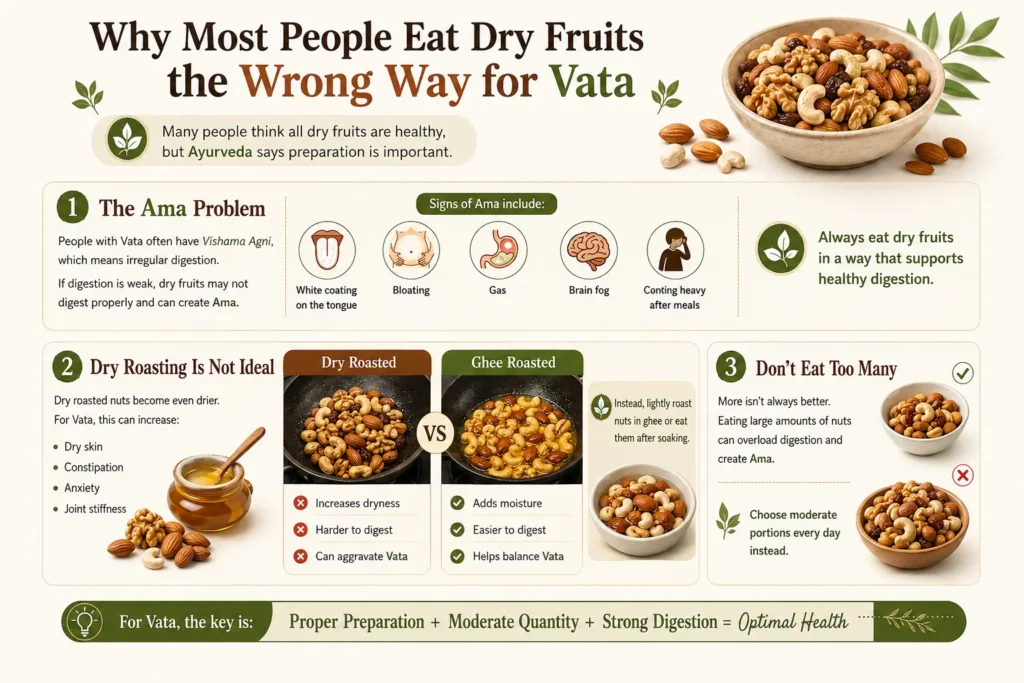
Many people think all dry fruits are healthy, but Ayurveda says preparation is important.
The Ama Problem
People with Vata often have Vishama Agni, which means irregular digestion.
If digestion is weak, dry fruits may not digest properly and can create Ama.
Signs of Ama include:
- White coating on the tongue
- Bloating
- Gas
- Brain fog
- Constipation
- Feeling heavy after meals
Always eat dry fruits in a way that supports healthy digestion.
Dry Roasting Is Not Ideal
Dry roasted nuts become even drier.
For Vata, this can increase:
- Dry skin
- Constipation
- Anxiety
- Joint stiffness
Instead, lightly roast nuts in ghee or eat them after soaking.
| Dry Roasted | Ghee Roasted |
| Increases dryness | Adds moisture |
| Harder to digest | Easier to digest |
| Can aggravate Vata | Helps balance Vata |
Don’t Eat Too Many
More isn’t always better.
Eating large amounts of nuts can overload digestion and create Ama.
Choose moderate portions every day instead.
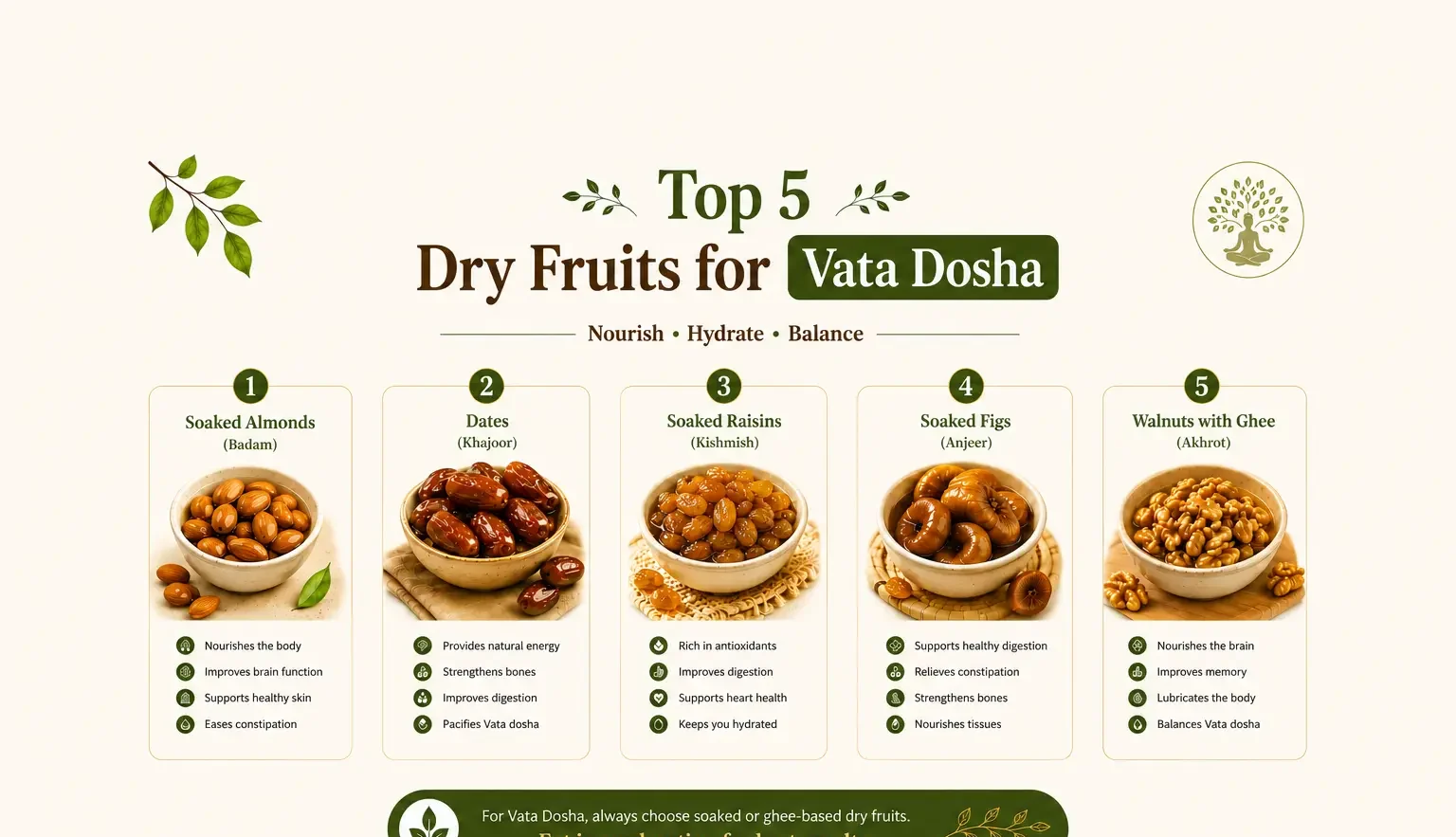
Top 5 Dry Fruits for Vata Dosha
1. Soaked Almonds (Badam)
Soaked almonds are one of the best Vata-pacifying dry fruits.
Soaked almonds are known to be one of the best dry fruits for Vata dosha as they are very helpful in reducing the dryness and nourishing the body because they contain nutrients like healthy fats, protein and the good amount of vitamin E
According to Ayurveda, their Snigdha (unctuous), Guru (nourishing), and mild Ushna (warming) are very helpful in balancing the vata dosha, help in strengthening the nervous system, and support healthy digestion.
Benefits
- Supports dry skin
- Improves brain function
- Nourishes body tissues
- Helps constipation
- Boosts energy
How to Eat
- Soak for 8 hours
- Remove the skin
- Eat with warm ghee or warm milk
Quantity: 5-10 almonds daily.
2. Dates (Khajoor)
Dates, also known as Kharjura, are one of the most nourishing ayurvedic dry fruits for vata and also they are sweet in nature. If taken in moderation, they helps in building ojas(vital energy), support healthy digestion, reduces vata related dryness and improvement in stamina
Benefits
- Relieves constipation
- Boosts energy
- Supports healthy blood
- Nourishes dry tissues
How to Eat
Soak 2-4 dates in warm water or milk.
Quantity: 2-4 daily.
3. Soaked Raisins (Kishmish)
Soaked raisins are one of the best dry fruits for vata balance due to they have fibre and antioxidants they feel gentle on the stomach and are good in providing the hydration because of this they help in supporting healthy digestion, improved bowel movements, and calming to the nervous system without putting stress on the agni.
Benefits
- Supports healthy digestion
- Helps in keeping good hydration
- Provides iron, a very important trace mineral
- Calms the nervous system
How to Eat
Soak for 4-6 hours.
Eat 5-10 raisins every morning.
4. Soaked Figs (Anjeer)
Soaked figs are known to be an excellent ayurvedic food for vata constipation as they have soluble fibre in rich quantities. They help in relieving commonly associated vata imbalance issues as they help in improving digestion, keep the intestines hydrated, nourish body tissues, and naturally reduce the dryness.
Benefits
- Relieves constipation
- Supports digestion
- Improves skin hydration
- Nourishes body tissues
How to Eat
Soak 2-3 figs overnight.
Eat them in the morning.
5. Walnuts with Ghee (Akhrot)
Walnuts with the goodness of omega-3 fatty acids are known to be the best nuts for vata dosha as these are helpful in nourishing the brain and nervous system. To get the full benefits from walnuts it is recommended to soak them and combine with ghee are helpful in improving the digestion, reduces stress, and helps in calming the anxiety while support overall vata balance
Benefits
- Helps anxiety
- Improves memory
- Supports brain health
- Reduces dryness
How to Eat
Soak walnuts for 4 hours.
Mix with ½ teaspoon ghee and a pinch of black pepper.
Quantity: 2 walnuts daily.
How to Prepare Dry Fruits for Vata
Follow these simple steps every day.
- Always soak dry fruits before eating.
- Peel soaked almonds.
- Eat them at room temperature.
- Add a little ghee whenever possible.
- Drink warm milk or warm water afterward.
- Chew slowly.
Soaking Time Guide
| Dry Fruit | Soaking Time |
| Almonds | 8 hours |
| Raisins | 4-6 hours |
| Dates | 2-4 hours |
| Figs | 6-8 hours |
| Walnuts | 4 hours |
Ghee Roasting vs Dry Roasting
| Dosha | Best Method |
| Vata | Soaked or roasted in ghee |
| Pitta | Soaked |
| Kapha | Dry roasted in moderation |
Best Spices to Eat with Dry Fruits
Adding warming spices improves digestion.
Try:
- Cardamom
- Ginger
- Cinnamon
These spices help reduce gas and bloating.
Easy Morning Dry Fruit Recipe for Vata
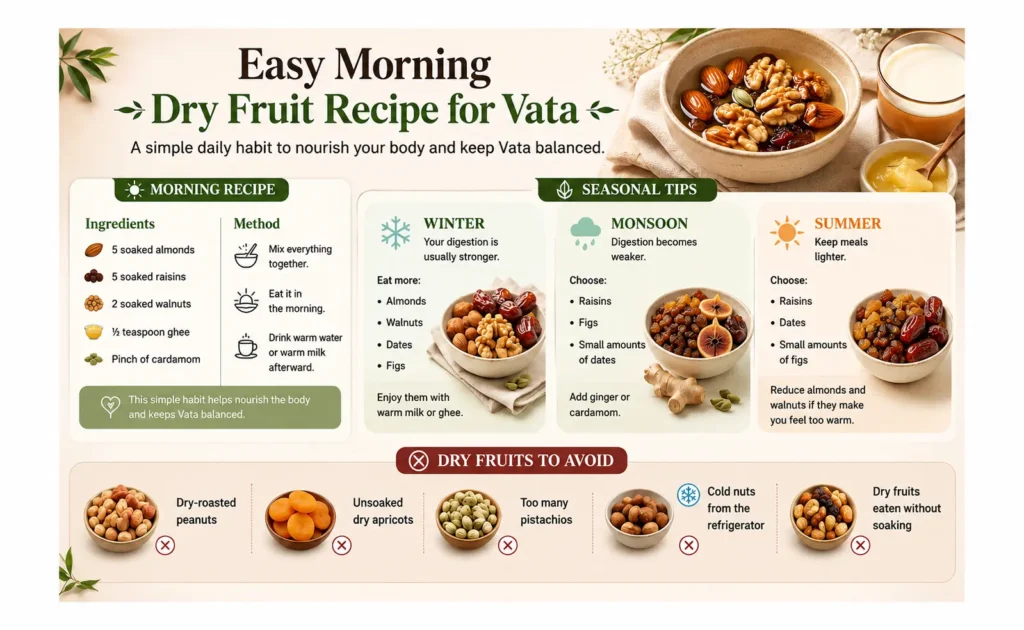
Ingredients
- 5 soaked almonds
- 5 soaked raisins
- 2 soaked walnuts
- ½ teaspoon ghee
- Pinch of cardamom
Method
Mix everything together.
Eat it in the morning.
Drink warm water or warm milk afterward.
This simple habit helps nourish the body and keeps Vata balanced.
Seasonal Tips
Winter
Your digestion is usually stronger.
Eat more:
- Almonds
- Walnuts
- Dates
- Figs
Enjoy them with warm milk or ghee.
Monsoon
Digestion becomes weaker.
Choose:
- Raisins
- Figs
- Small amounts of dates
Add ginger or cardamom.
Summer
Keep meals lighter.
Choose:
- Raisins
- Dates
- Small amounts of figs
Reduce almonds and walnuts if they make you feel too warm.
Dry Fruits to Avoid
Limit these foods if you have high Vata:
- Dry-roasted peanuts
- Unsoaked dry apricots
- Too many pistachios
- Cold nuts from the refrigerator
- Dry fruits eaten without soaking
Frequently Asked Questions
Can Vata eat dry fruits every day?
Yes. Eating soaked dry fruits every day in moderate amounts, with proper preparation can provide the best results.
How many almonds should Vata eat?
About 5-10 soaked almonds daily can be eaten.
Are walnuts good for Vata?
Yes. Eating 2 soaked walnuts with ghee can provide good results .
What is the best time to eat dry fruits?
Morning is the best time to have dry fruits for vata dosha.
Can Vata eat dry fruits with milk?
Yes. Warm milk with soaked almonds or dates is a great Ayurvedic combination.
Which dry fruit is best for dry skin?
Soaked almonds are one of the best choices of dry fruits for dry skin.
Can Vata eat cashews?
Yes, but only occasionally and in small amounts. Soak them first.
What happens if Vata eats unsoaked dry fruits?
They may cause gas, bloating, constipation, and poor digestion.
Which dry fruits should Vata avoid?
Avoid dry-roasted peanuts, too many pistachios, refrigerated nuts, and unsoaked dry fruits.
Can dry fruits help with constipation?
Yes. Soaked figs, raisins, dates, and almonds can help improve bowel movements.
Quick Summary Table
| Dry Fruit | Daily Quantity | Preparation | Best Time |
| Almonds | 5-10 | Soak 8 hours | Morning |
| Dates | 2-4 | Soak 2-4 hours | Morning |
| Raisins | 5-10 | Soak 4-6 hours | Morning |
| Figs | 2-3 | Soak overnight | Morning |
| Walnuts | 2 | Soak + Ghee | Breakfast |
Conclusion
To support your health naturally you should choose the best dry fruits as they are the simple but a very effective way to do it. In moderation with the right preparation and quantity, as they are helpful in balancing vata, improve digestion, reduce dryness, support healthy movements, and provide long-lasting energy and those dry fruits are soaked almonds, dates, raisins, figs and walnuts. Healthy agni(digestive fire), reducing the risk of Ama (Digestive toxins), and strengthening the body are also some benefits provided by these dry fruits.
To get the maximum benefits, you should use the combinations daily like soaked dry fruits with ghee, warm milk, or digestive spices like cardamom, ginger, and cinnamon. Eating them consistently with moderation, fresh and high-quality dry fruits as per the season can further improve the ayurvedic benefits and also the small consistent habits have a greater impact on health.
Always keep in mind that ayurveda does not follow strict rules but it is about creating balance. By Following proper preparation methods and listening to your body needs you can naturally support healthy digestion, calmer energy, better skin, improved overall well-being, and long-term Vata balance by using these best dry fruits for vata.
Shop Premium Dry Fruits
Looking for fresh, high-quality dry fruits?
Choose naturally sourced almonds, walnuts, raisins, dates, and figs from 2020 Dry Fruits to enjoy better taste, nutrition, and Ayurvedic benefits. Quality ingredients make it easier to build healthy daily habits and support your overall well-being.
About the Author
2020 Dry Fruits Editorial Team
This article is written by the 2020 Dry Fruits Editorial Team, they include a group of nutrition writers and wellness researchers, they are dedicated to providing the right knowledge that are based on research. Our content combines the modern nutrition with ayurvedic principle to provide the easy knowledge for the readers to make practical food choices.
Disclaimer: This article is intended for educational purposes only and should not be considered medical advice. Consult a qualified healthcare professional before making significant dietary changes or if you have concerns about testosterone levels or hormonal health.