Ayurveda and Dry Fruits offer a timeless combination of natural nourishment and therapeutic benefits, making them perfect for modern healthy living. In a world of fad diets and fast fixes, Ayurveda reminds us of something deeply grounding — that health is personal. It doesn’t begin with calories or carbs. It begins with understanding your prakriti (constitution) and living in tune with your body’s unique needs.
One timeless element of the Ayurvedic diet? Dry fruits. Simple, potent, and healing — when consumed correctly, they do more than just nourish; they balance.
In this blog, let’s explore how Ayurveda views dry fruits, how they align with Vata, Pitta, and Kapha doshas, and how modern households can integrate this ancient wisdom into everyday life.
Understanding Doshas: Vata, Pitta, and Kapha
Before we dive into dry fruits, here’s a quick refresher on the three doshas — energies that govern our physical and mental makeup:
- Vata (Air + Space): Cold, dry, light, mobile. Imbalanced Vata causes anxiety, dryness, and irregular digestion.
- Pitta (Fire + Water): Hot, sharp, intense. Excess Pitta shows up as acidity, irritability, and inflammation.
- Kapha (Earth + Water): Heavy, slow, moist, stable. When out of balance, it leads to lethargy, congestion, and weight gain.
Each person has a unique ratio of these doshas. Ayurveda’s approach to food, including dry fruits, is to restore harmony between them.
Why Ayurveda Loves Dry Fruits
Dry fruits aren’t just tasty — they are considered sattvic (pure, energy-enhancing) in Ayurveda. When soaked, roasted in ghee, or combined with herbs, they become even more potent, easy to digest, and aligned with your dosha.
Let’s look at the top dry fruits and how they influence different constitutions.
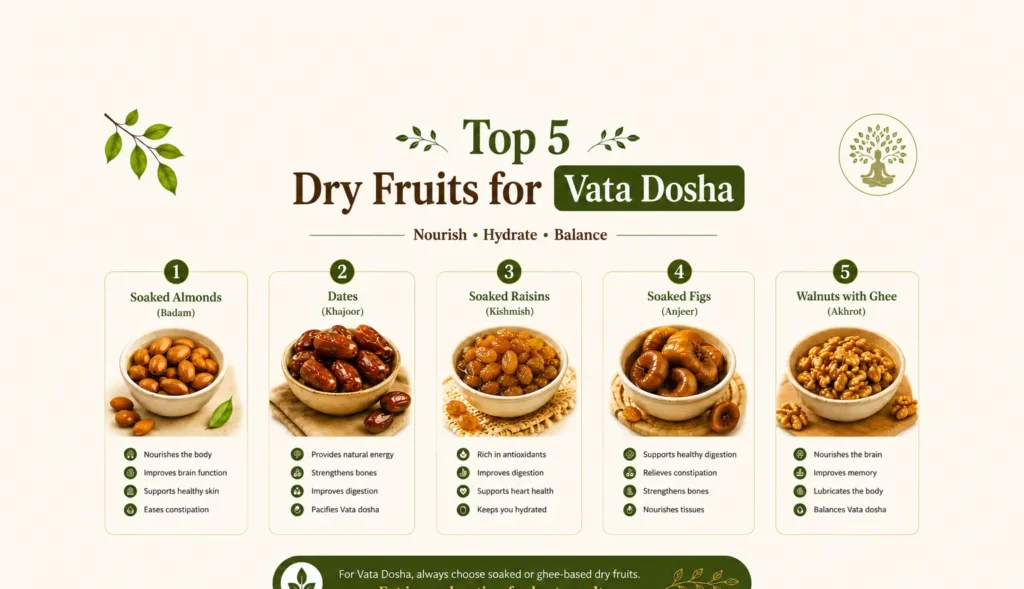
1. Almonds: The Balancer for Vata & Pitta
Almonds are revered in Ayurveda for building ojas — the subtle energy of vitality and immunity. Rich in good fats, protein, and warmth, almonds are especially beneficial for Vata types who tend to feel cold, dry, and scattered.
- For Vata: Soak 4–5 almonds overnight, peel them, and eat in the morning. It supports brain health and strengthens nerves.
- For Pitta: Consumed in moderation, soaked almonds can cool the intensity of Pitta when paired with dates or milk.
- Kapha types should eat almonds sparingly and preferably dry roasted — avoid excess ghee or milk with them.
2. Cashews: Nourishing but Kapha-Heavy
Cashews are grounding, creamy, and sweet — qualities that nourish Vata and Pitta but may aggravate Kapha if overdone.
- For Vata: Lightly roast cashews in ghee with a pinch of rock salt for a warming snack.
- For Pitta: Pair with fennel seeds or cardamom to reduce heating quality.
- Kapha: Should limit cashew intake or use it only in small amounts, as it’s heavy and can dull digestion.
3. Raisins: Cooling and Sweet
Raisins are deeply cooling and hydrating, making them ideal for Pitta imbalances — think burning sensations, ulcers, or excess heat.
- For Pitta: Soak 5–7 raisins overnight and consume on an empty stomach to reduce heat and acidity.
- Vata: Can have raisins with warm milk or cinnamon.
- Kapha: Should use raisins moderately and avoid soaking them, as they can be mucus-forming.
4. Figs: The Digestive Aid
Dried figs are fiber-rich and slightly heating, making them great for sluggish digestion and mild constipation — common in Vata and Kapha types.
- For Vata: Soaked figs ease dryness and improve elimination.
- Kapha: Can benefit from figs with warm water or ginger.
- Pitta: Should use figs cautiously, especially if prone to loose motions.
5. Walnuts: Brain Food with Heat
Walnuts are oily, slightly bitter, and warming — suitable for Vata and Kapha when used wisely.
- For Vata: Boosts focus and balances dryness. Have 1–2 walnuts with dates in the evening.
- Kapha: Can benefit from dry roasted walnuts in small portions.
- Pitta: Might find walnuts too heating — balance with cooling herbs like fennel or mint.
Ayurvedic Ways to Consume Dry Fruits
Just throwing a mix of dry fruits into your morning oats isn’t Ayurvedic. The method of preparation matters. Here’s how Ayurveda recommends including them:
1. Soaked and Peeled
Soaking softens the texture, reduces heat, and enhances digestibility — especially for almonds, raisins, and figs.
2. Roasted in Ghee
Dry fruits roasted in a small amount of desi ghee are nourishing for Vata and perfect in winter. Try ghee-roasted cashews or makhanas with herbs.
3. With Warm Milk
Soaked almonds or dates in warm milk before bed calm Vata and support deep sleep. Pitta types can add saffron; Kapha types should prefer turmeric or cinnamon.
A Note on Quantity and Timing
Even in Ayurveda, moderation is key. Dry fruits are nutrient-dense, so don’t overdo them.
- Ideal time: Morning (soaked and on an empty stomach) or evening (as a small snack)
- Ideal quantity: 4–5 soaked almonds, 1–2 walnuts, 2–3 cashews, or a small fistful of raisins or figs — depending on your body type and season.
Final Thoughts
Ayurveda doesn’t treat food as good or bad. It treats food as medicine — one that must match your nature and your imbalances.
Soaked almonds may uplift a tired, cold Vata; ghee-roasted cashews may comfort a fiery Pitta in moderation; a few dry figs may get Kapha’s digestion moving again.
And the beauty? These ingredients are easy to find, easy to prepare, and deeply rooted in our culture. That’s ancient wisdom — made modern.