Table of Contents
Summary
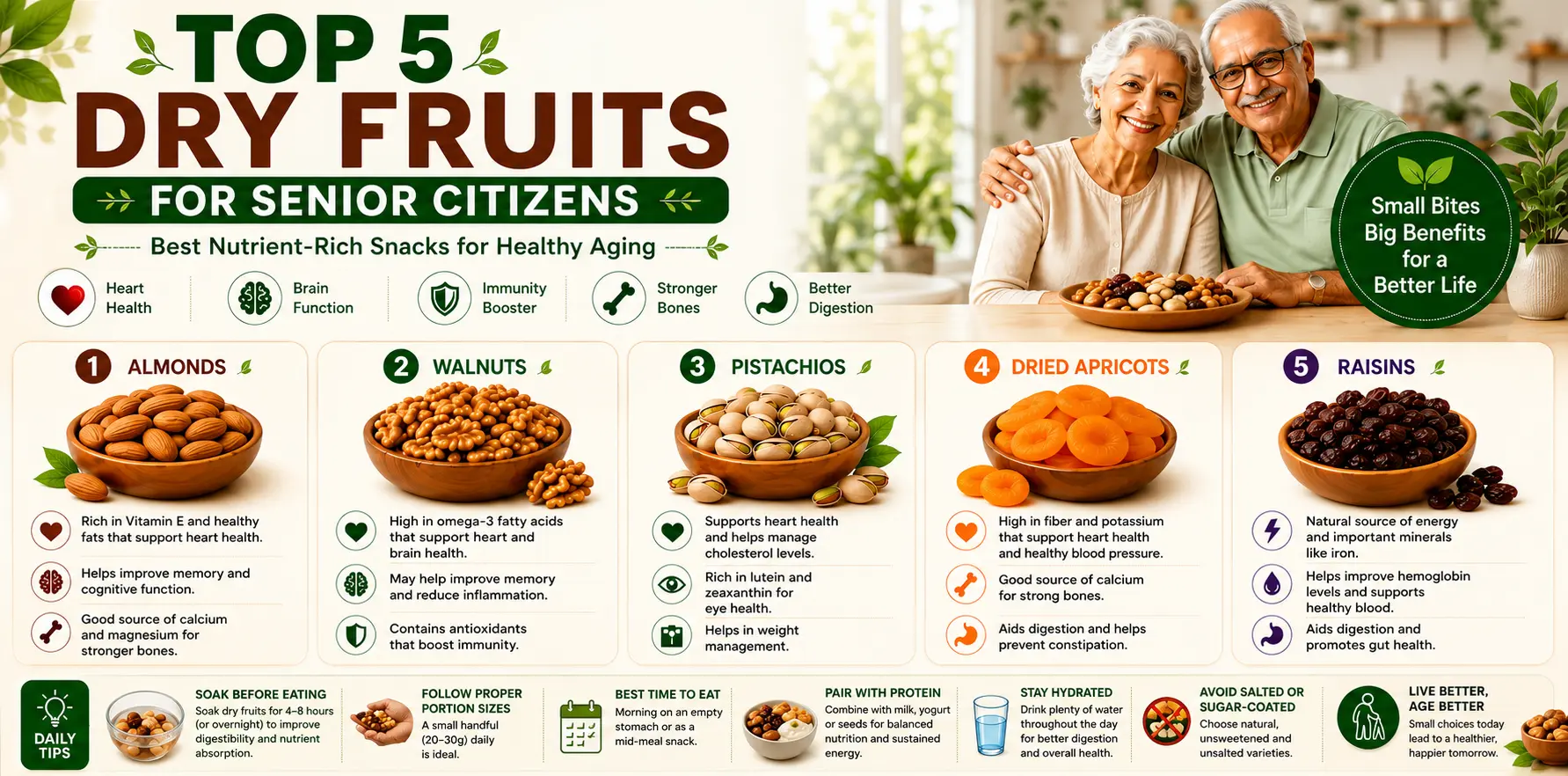
Choosing the right dry fruits can play a major role in supporting healthy aging and improving overall wellness in senior citizens. Nutrient-rich options like almonds, walnuts, pistachios, dried apricots, and raisins provide essential vitamins, minerals, antioxidants, healthy fats, and dietary fiber that help maintain energy, digestion, immunity, heart health, and cognitive function.
Unlike processed snacks, dry fruits offer natural nutrition in small portions, making them ideal for older adults with reduced appetite or increased nutritional needs. Including moderate quantities of dry fruits as part of a balanced elderly diet may help support bone strength, memory, digestion, and overall quality of life.
This guide highlights the best dry fruits for senior citizens, their nutritional benefits, safe consumption tips, and how they contribute to healthy aging naturally.
Key Takeaways
- Dry fruits are nutrient-dense snacks that support healthy aging in senior citizens.
- Almonds help strengthen bones and support heart health due to their calcium and vitamin E content.
- Walnuts are rich in omega-3 fatty acids that support brain function and memory.
- Pistachios provide protein, antioxidants, and potassium that benefit heart and eye health.
- Dried apricots contain iron, fiber, and vitamin A that help improve immunity and digestion.
- Raisins provide natural energy, antioxidants, and digestive support for older adults.
- Soaking dry fruits can improve digestion and make them easier for seniors to chew.
- Portion control is important because dry fruits are calorie-dense and naturally high in sugars.
- Seniors should avoid heavily salted or sugar-coated dry fruits.
- A balanced diet combined with healthy lifestyle habits is essential for maintaining strength, immunity, and wellness in old age.
Introduction
As people age, maintaining proper nutrition becomes more important than ever. Senior citizens often experience changes in metabolism, digestion, immunity, bone strength, and cognitive function, making it essential to choose foods that are both nutrient-dense and easy to consume. Unfortunately, many older adults face nutritional deficiencies due to reduced appetite, weaker digestion, medication side effects, or difficulty chewing certain foods.
This is where dry fruits and nuts can play an important role in a healthy elderly diet. Packed with essential nutrients like calcium, protein, dietary fiber, antioxidants, omega-3 fatty acids, vitamin E, iron, and potassium, dry fruits provide natural support for healthy aging. They can help improve digestion, strengthen bones, support heart health, boost immunity, and maintain brain function in older adults.
According to Michael Greger, whole plant foods such as nuts and dry fruits provide antioxidants and anti-inflammatory compounds that may support brain function, heart health, and healthy aging when included as part of a balanced diet.
Unlike processed snacks that are high in unhealthy fats, refined sugar, and preservatives, dry fruits are natural nutrient-rich snacks that offer long-lasting energy and multiple health benefits. From almonds for bone health to walnuts for brain support and raisins for digestion, the right dry fruits can become a valuable addition to a senior citizen’s daily diet.
In this guide, we’ll explore the best dry fruits for senior citizens, their nutritional benefits, serving tips, precautions, and how they support overall wellness and healthy aging.
Why Dry Fruits Are Important for Seniors
Dry fruits and nuts are packed with essential nutrients like:
- Dietary fiber
- Calcium & magnesium
- Omega-3 fatty acids
- Antioxidants
- Polyphenols
- Vitamin E
- Potassium
- Iron
These nutrients help improve:
- Bone density
- Heart health
- Cognitive function
- Digestion
- Immunity
- Energy levels
- Muscle strength
For seniors, choosing the right dry fruits can help reduce the risk of osteoporosis, constipation, memory decline, fatigue, and cardiovascular problems.
Top 5 Dry Fruits for Senior Citizens: Best Nutrient-Rich Snacks for Healthy Aging
1. Almonds – Best for Bone Strength & Heart Health
Almonds are one of the best dry fruit for senior citizens as they are packed with the goodness of calcium, magnesium, healthy fats and vitamin E
Benefits of Almonds for Seniors
Supports Bone Density
Almonds contain a good amount of calcium and magnesium, which help reduce the risk of osteoporosis and help maintain strong bones.
Improves Heart Health
It contains healthy polyunsaturated and monounsaturated fats which may helps in reducing bad cholesterol and support cardiovascular health
Boosts Brain Function
Contains vitamin E and antioxidants that may support cognitive function in older senior citizens.
Provides Long-Lasting Energy
With the combination of protein, fiber and healthy fats helps senior people to stay energized all the day
Best Way to Consume
- Soak 4-5 almonds overnight
- Add sliced almonds to oatmeal or smoothies
- Consume as a healthy evening snack
Precautions
- Avoid overeating due to high calories
- Seniors with nut allergies should avoid almonds
2. Walnuts – Best Dry Fruit for Brain Health
Walnuts contains plant-based omega-3 fatty acids and polyphenols that makes them one of the best dry fruits to increase memory in old age.
Benefits of Walnuts for Older Adults
Supports Cognitive Health
Omega-3 fatty acids may help in decline in memory due to age increasing and helps in improving brain function.
Promotes Heart Health
Walnuts help in circulating the blood and may increase in healthy HDL cholesterol and reduces LDL bad cholesterol.
Reduces Inflammation
Walnut contains anti-inflammatory properties that may help in reducing inflammation in seniors and lowers the risk of arthritis and joint discomfort.
Supports Healthy Aging
Antioxidants helps in reduction of free radicals, reduces oxidative stress and repairs cellular damage
Best Way to Consume
- Eat 4-6 walnuts daily
- Add chopped walnuts to porridge or salads
- Use walnut butter for easier chewing
Precautions
- Portion control is important
- Consult a doctor if taking blood-thinning medication
3. Pistachios – Best for Heart & Eye Health
Pistachios are nutrient-rich dry fruits loaded with protein, fiber, antioxidants, and healthy fats that benefit senior citizens.
Benefits of Pistachios for Seniors
Supports Eye Health
Pistachios contain lutein and zeaxanthin which helps in protecting the ageing of eyes
Improves Heart Function
Healthy fats and antioxidants that help support healthy blood pressure and cholesterol.
Helps Weight Management
Also contains Protein and fiber to increase satiety and reducing junk snacking.
Supports Muscle Health
Pistachios provide plant protein that are important for important for aging muscles.
Best Way to Consume
- Eat a small handful of pistachios daily
- Choose unsalted pistachios
- Add to yogurt or healthy trail mix
Precautions
- Avoid salted pistachios for seniors with hypertension
- Consume in moderation
4. Dried Apricots – Iron & Immunity Booster
Dried apricots are a rich source of iron, potassium, fiber and antioxidants that becomes the excellent choice for senior citizens.
Benefits of Dried Apricots for Seniors
Supports Eye Health
Dried apricots contain Beta-carotene and vitamin A that helps in maintaining healthy eye-vision.
Helps Prevent Anemia
It also has a good amount of Iron content and supports healthy hemoglobin levels.
Improves Digestion
The Fiber present in dried apricots promotes bowel regularity and gut health.
Strengthens Immunity
Dried apricots have antioxidants that help protect cells from aging-related damage.
Best Way to Consume
- Soak before eating for softer texture
- Add to cereals or salads
- Pair with nuts for balanced nutrition
Precautions
- Monitor portions in diabetes
- Choose unsweetened dried apricots
5. Raisins – Natural Energy & Digestive Support
Raisins are among the most popular dry fruits for elderly people because they provide quick energy, fiber, potassium, and antioxidants.
Benefits of Raisins for Seniors
Boosts Energy Naturally
Natural sugars provide instant energy for older adults with low appetite.
Supports Digestive Health
Raisins contain Fiber that helps improve bowel regularity and digestion.
Helps Brain Function
Polyphenols may support cognitive performance and memory.
Maintains Blood Pressure
It also has Potassium that helps support healthy blood pressure levels.
Best Way to Consume
- Eat 1 small handful daily
- Soak overnight for better digestion
- Mix with almonds or walnuts
Precautions
- Sticky texture may affect dental health
- Avoid excessive intake due to natural sugar content
Why Seniors Need Special Nutrition
As the age increases, senior citizen’s nutritional requirements also change significantly. Old people need more nutrition-dense diets to maintain their energy, strength, stability and overall health. As they experience slow metabolism and reduced appetite, that make harder for them to meet their daily nutritional needs
It’s been noticed that senior citizens experience bone-density loss, due to this they are more prone to the health conditions like osteoporosis and fractures as they lack in calcium and vitamin D levels. Nutrition absorption hinders due to the weak digestion and slower gut absorption in senior citizens
In addition, aging may weaken the immune system, making older adults more prone to infections and illness. Memory decline and reduced cognitive function are also common concerns associated with aging.
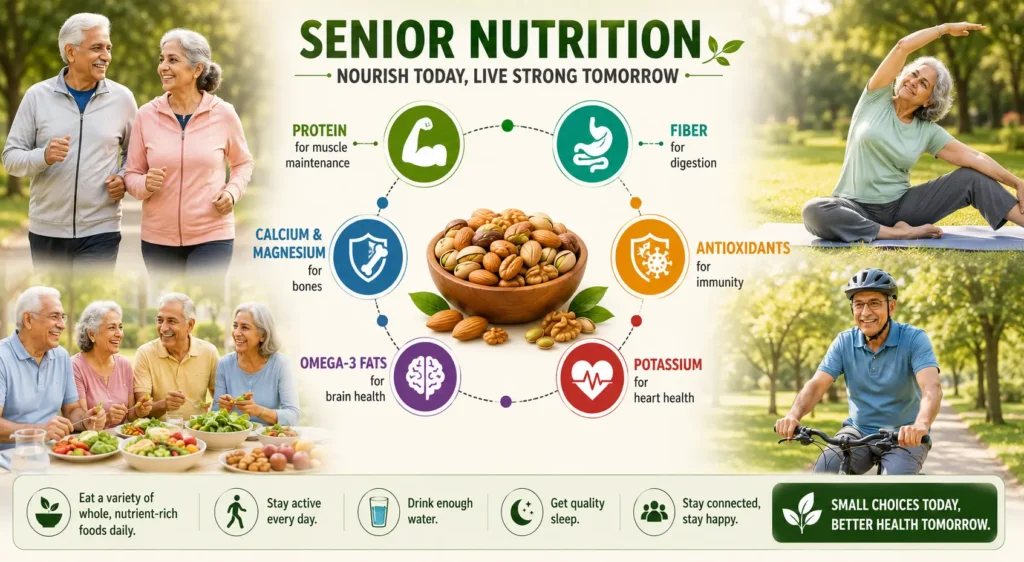
This is why senior nutrition should focus on foods rich in:
- Protein for muscle maintenance
- Fiber for digestion
- Calcium and magnesium for bones
- Antioxidants for immunity
- Omega-3 fats for brain health
- Potassium for heart health
Dry fruits are ideal because they are compact, nutrient-dense, easy to store, and can provide multiple health benefits in small portions.
Nutritional Requirements for Senior Citizens
A balanced elderly diet should include essential nutrients that support healthy aging and help prevent age-related health issues.
Calcium
Calcium is important for maintaining strong bones and reducing the risk of osteoporosis. Almonds and pistachios are excellent calcium-rich dry fruits for seniors.
Protein
Protein helps preserve muscle mass and strength in older adults. Nuts like almonds and pistachios provide plant-based protein for healthy aging.
Dietary Fiber
Fiber supports digestion, gut health, and bowel regularity. Raisins and dried apricots are good sources of fiber for seniors.
Omega-3 Fatty Acids
Omega-3 fats help support memory, brain health, and heart function. Walnuts are one of the best plant-based omega-3 sources for older adults.
Vitamin E
Vitamin E acts as a powerful antioxidant that helps protect cells from aging-related damage. Almonds are especially rich in vitamin E.
Potassium
Potassium supports healthy blood pressure and heart health. Raisins, apricots, and pistachios contain good amounts of potassium.
Iron
Iron helps maintain healthy hemoglobin levels and supports energy production. Dried apricots and raisins can help seniors meet iron needs naturally.
Antioxidants
Antioxidants help reduce oxidative stress and support immunity. Most dry fruits contain polyphenols and antioxidants beneficial for healthy aging.
How to Consume Dry Fruits Safely for Seniors
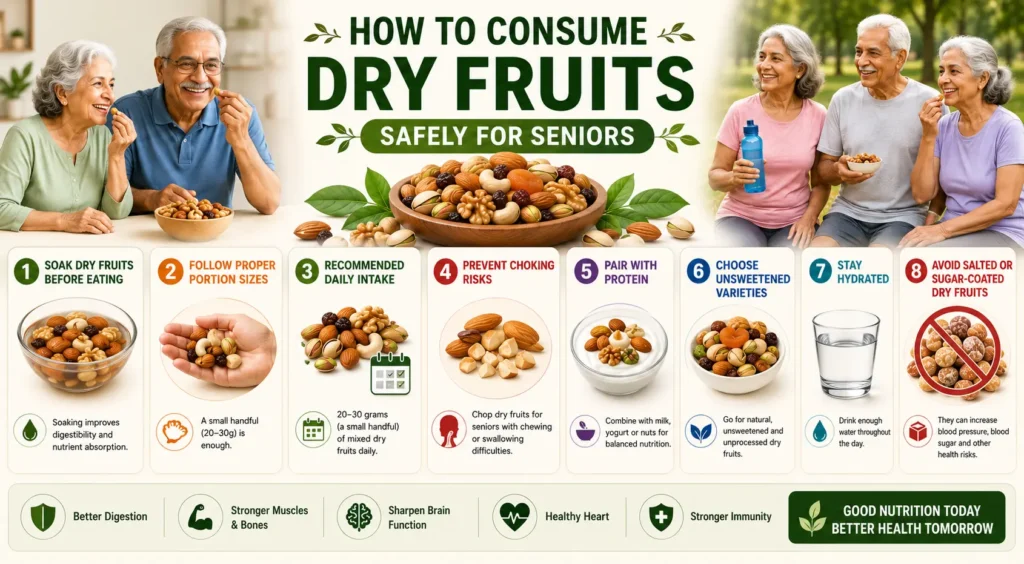
While dry fruits are highly nutritious, seniors should consume them carefully to maximize benefits and avoid digestive discomfort.
Soak Dry Fruits Before Eating
Soaking almonds, raisins, and dried apricots overnight softens their texture, making them easier to chew and digest. It may also improve nutrient absorption.
Follow Proper Portion Sizes
Dry fruits are calorie-dense, so moderation is important. Eating excessive quantities may lead to unwanted weight gain or blood sugar spikes.
Recommended Daily Intake
- Almonds: 5 -10 pieces
- Walnuts: 4 – 6 halves
- Pistachios: 15 – 20 pieces
- Raisins: 1 small handful
- Dried Apricots: 3 – 5 pieces
Prevent Choking Risks
Older adults with chewing difficulties should consume chopped, soaked, or blended dry fruits. Nut butters can also be a safer alternative.
Pair With Protein
Combine dry fruits with yogurt, milk, or nuts to reduce blood sugar spikes.
Choose Unsweetened Varieties
Avoid sugar-coated or processed dry fruits.
Stay Hydrated
Fiber-rich dry fruits work best when combined with adequate water intake. Hydration helps improve digestion and prevent constipation.
Avoid Salted or Sugar-Coated Dry Fruits
Seniors should avoid processed dry fruits that contain excess salt, sugar, or preservatives, especially those with diabetes or hypertension.
Comparison Table: Best Dry Fruits for Senior Citizens
| Dry Fruit | Main Benefit | Key Nutrients | Best For |
| Almonds | Bone & heart health | Calcium, vitamin E | Bone strength & energy |
| Walnuts | Brain support | Omega-3 fats | Memory & cognition |
| Pistachios | Eye & heart support | Protein, antioxidants | Heart & eye health |
| Dried Apricots | Immunity & iron | Iron, vitamin A | Eye health & anemia |
| Raisins | Energy & digestion | Potassium, fiber | Digestion & low energy |
Best Daily Serving for Seniors
- Almonds: 5 -10 pieces
- Walnuts: 4 – 6 halves
- Pistachios: 15 – 20 pieces
- Dried Apricots: 3 – 5 pieces
- Raisins: 1 small handful
Frequently Asked Questions (FAQs)
1. Which dry fruit is best for senior citizens?
Almonds, walnuts, pistachios, dried apricots, and raisins are among the best dry fruits for senior citizens because they provide essential nutrients like calcium, fiber, antioxidants, omega-3 fats, iron, and healthy fats that support healthy aging.
2. Are dry fruits good for elderly people?
Yes, dry fruits are highly beneficial for elderly people when consumed in moderation. They help support digestion, immunity, bone strength, heart health, memory, and energy levels due to their nutrient-rich profile.
3. Which dry fruit is best for brain health in seniors?
Walnuts are considered one of the best dry fruits for brain health because they are rich in omega-3 fatty acids and antioxidants that may support memory and cognitive function in older adults.
4. Can senior citizens eat dry fruits daily?
Yes, senior citizens can eat dry fruits daily in moderate portions. A small handful of mixed dry fruits and nuts can provide important nutrients without excessive calorie intake.
5. Which dry fruits help improve digestion in elderly adults?
Raisins and dried apricots are rich in dietary fiber and may help improve digestion and bowel regularity in seniors. Soaking them overnight can make them easier to digest.
6. Are dry fruits safe for diabetic seniors?
Dry fruits can be included in a diabetic-friendly diet if consumed in controlled portions. Seniors with diabetes should choose unsweetened dry fruits and avoid overeating high-sugar varieties.
7. What is the best time for seniors to eat dry fruits?
The best time to eat dry fruits is usually in the morning or as an evening snack. Eating soaked dry fruits on an empty stomach may improve digestion and nutrient absorption.
8. Should seniors soak dry fruits before eating them?
Yes, soaking dry fruits like almonds, raisins, and dried apricots can soften their texture, improve digestion, and make chewing easier for older adults.
9. Which dry fruits are best for bone health in old age?
Almonds and pistachios are excellent for bone health because they contain calcium, magnesium, and protein that help support bone density and muscle strength in seniors.
10. Can dry fruits help improve immunity in seniors?
Yes, many dry fruits contain antioxidants, vitamin E, iron, and other nutrients that help strengthen immunity and protect the body from age-related oxidative stress and weakness.
About Author
2020 Dry Fruits is dedicated to promoting healthy living through premium-quality dry fruits, nuts, seeds, and nutritious snack options. With a strong focus on wellness, nutrition, and natural foods, the brand aims to help individuals and families make healthier dietary choices every day.
The content published by 2020 Dry Fruits is carefully researched and created to provide practical, informative, and easy-to-understand guidance on nutrition, healthy eating habits, and the benefits of natural superfoods. From senior nutrition and immunity-boosting foods to healthy lifestyle tips, the goal is to make wellness accessible for everyone.
By combining quality products with educational health content, 2020 Dry Fruits strives to encourage balanced nutrition, healthy aging, and overall well-being through nature-powered foods.
Conclusion
The addition of dry fruits in daily diet can give small but good benefits to senior citizens that helps them last longer when consumed in moderation and prepared properly. Dry fruits like almonds, dried apricots, walnut, pistachios and raisins are nutrition rich and provide essential vitamins, minerals, antioxidants, fiber and healthy fats that helps support healthy aging
From providing immense benefits like improving digestion and boosting immunity to support heart health, bone strength, mental health and brain function to senior citizens it is also recommended to control portion size, stay hydrated, and choose raw unsweetened varieties for safer consumption.
Nutritional needs vary for every senior citizen, for those who just want to maintain their health and especially for those who want to manage conditions like high blood pressure, diabetes and digestive issues. Consult a doctor or a registered dietitian to create the most suitable healthy diet plan.
Including the right dry fruits as part of a daily balanced nutrition lifestyle can help seniors maintain energy, wellness, and overall quality of life naturally.