Table of Contents
Summary
If you grew up in an Indian household, chances are there was always a tin of almonds, cashews, or dates tucked away somewhere – the kind your mom or nani would hand you with a “eat this, it’s good for you” and no further explanation. Turns out, she wasn’t wrong. She just didn’t have the biology lecture to back it up.
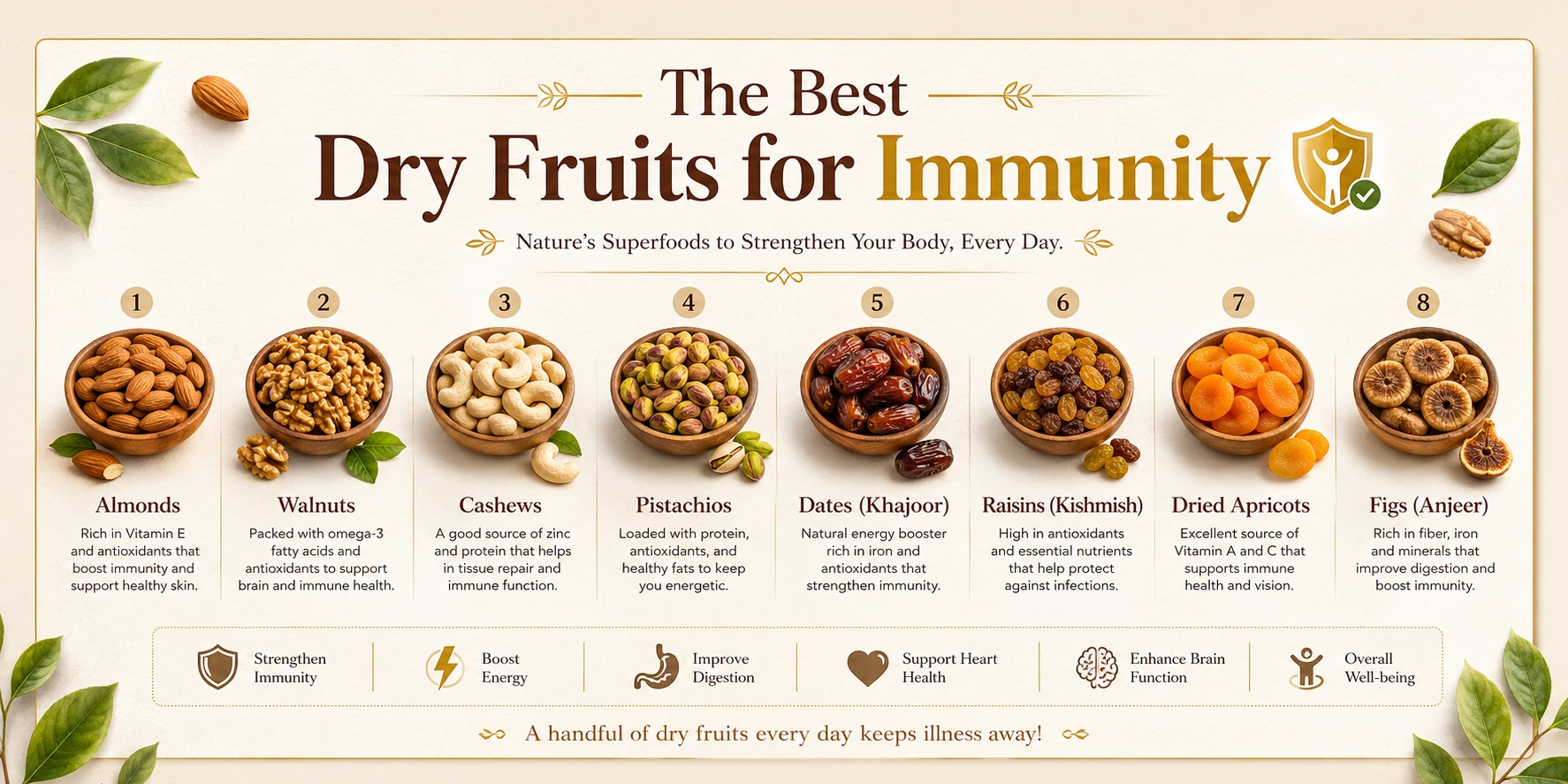
Dry fruits aren’t a trend, a hack, or a “superfood” marketing term. They’re one of the simplest, most reliable ways to give your immune system the raw materials it actually needs to function. Almonds, walnuts, cashews, pistachios, dates, raisins, dried apricots, and figs – between them, they cover zinc, vitamin E, selenium, iron, and healthy fats, all of which your immune cells depend on to grow, multiply, and do their job properly.
This isn’t about vague “boosting.” It’s about giving your body the actual building blocks it needs. Let’s get into what that looks like, how much to eat, when to eat it, and who should go easy.
Key Takeaways
- Almonds, walnuts, cashews, pistachios, dates, raisins, dried apricots, and figs are the heavy hitters for immunity.
- Vitamin E (mostly from almo nds) protects your immune cells and helps your body make natural killer cells.
- Zinc – found in cashews and pistachios – is essential for T-cell development. Skimp on zinc, and your immune response weakens.
- About 70% of your immune cells actually live in your gut, so the fibre in dates, figs, and raisins matters more than people realize.
- Soaking nuts overnight makes their minerals easier for your body to absorb.
- A small handful a day is genuinely enough. More isn’t automatically better, and if you have diabetes, kidney issues, or nut allergies, you’ll want to be more careful than most.
- Dry fruits work with a balanced diet – they’re not a substitute for one.
Introduction
Nowadays we have forget what our parents and grandfather eat to stay healthy every day for longer period of time, dry are one of the foods that are the powerhouse of nutrients, we are not aware today that what benefits we can reap from dry fruits if we eat them daily, but now we are following new trends for health like skipping breakfast and the in-between meals which are not good for our health
It sounds too simple to matter. But your immune system doesn’t need anything fancy — it needs zinc, vitamin E, iron, selenium, and a steady supply of healthy fats to keep producing and powering the cells that fight off whatever you’re exposed to. Almonds, walnuts, cashews, pistachios, dates, raisins, dried apricots, and figs happen to be some of the most concentrated, natural sources of exactly those nutrients.
This guide breaks down which ones matter most, why they work the way they do, how much you actually need, and the mistakes that quietly cancel out the benefits.
Your Immune System Never Clocks Out
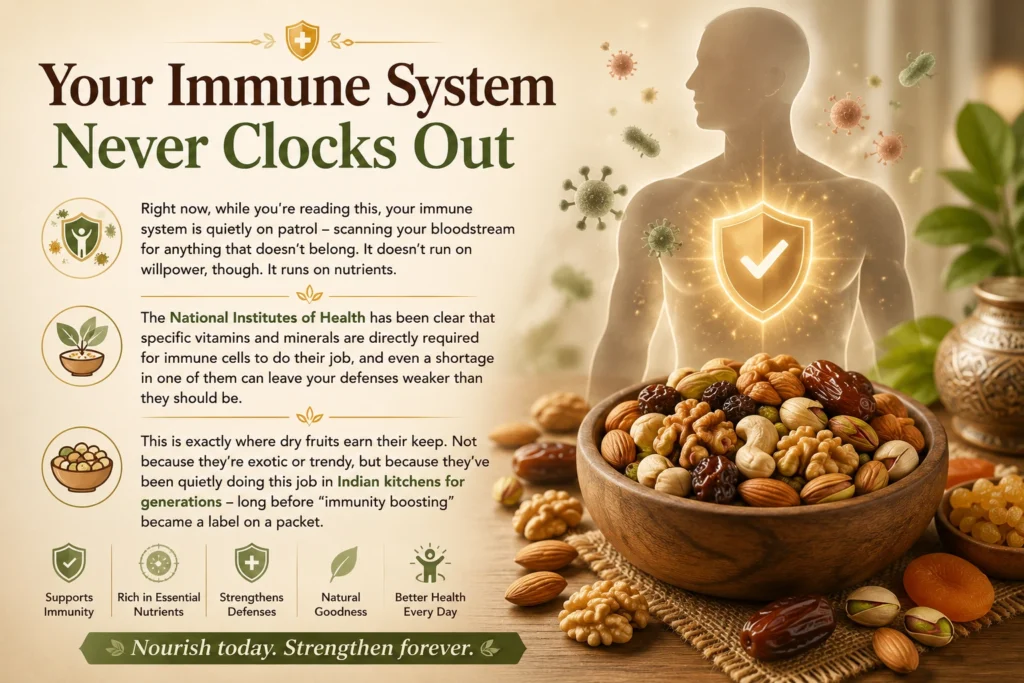
Right now, while you’re reading this, your immune system is quietly on patrol – scanning your bloodstream for anything that doesn’t belong. It doesn’t run on willpower, though. It runs on nutrients. The National Institutes of Health has been clear that specific vitamins and minerals are directly required for immune cells to do their job, and even a shortage in one of them can leave your defenses weaker than they should be.
This is exactly where dry fruits earn their keep. Not because they’re exotic or trendy, but because they’ve been quietly doing this job in Indian kitchens for generations – long before “immunity boosting” became a label on a packet.
The Actual Science (Not Just the Marketing)
Fighting Free Radicals
Your body produces molecules called free radicals every single day, just as a byproduct of normal life – digesting food, breathing, existing. In small doses, harmless. But stress, pollution, poor sleep, and a diet full of processed food let them pile up, and that buildup – oxidative stress – starts damaging healthy cells and dragging down your immune response.
Here’s where dry fruits step in. The drying process actually concentrates plant compounds like polyphenols and flavonoids, which act almost like a protective coating, neutralizing free radicals before they cause damage. Think of it as a kind of rust-proofing for your cells.
The Gut Connection Nobody Talks About Enough
Here’s a fact that surprises most people: roughly 70% of your immune cells live in your gut. The trillions of bacteria down there aren’t just passengers – they directly influence how well your body fights off infection.
Dates, figs, and raisins are loaded with dietary fibre, which acts as fuel for those good bacteria. Feed them well, and they help keep your entire immune response balanced.
The Nutrients Doing the Real Work
A handful of nutrients do most of the heavy lifting, and dry fruits happen to be excellent sources of nearly all of them:
- Zinc – essential for developing T-lymphocytes, the white blood cells that go after infected cells directly. Even a mild deficiency weakens your response.
- Selenium – a strong antioxidant that protects your cells from damage.
- Vitamin E – protects the membranes of immune cells and helps your body produce natural killer cells.
- Vitamin A – keeps the mucosal linings in your nose, throat, and gut strong, which matters because those linings are your first physical barrier against viruses and bacteria.
- Vitamin B6 – helps your body produce white blood cells and supports your lymphatic system.
- Omega-3 fatty acids – keep chronic, low-grade inflammation in check so your immune system responds properly instead of overreacting or underperforming.
The 8 Best Dry Fruits for Immunity
1. Almonds
Almonds are one of the richest natural sources of vitamin E – a fat-soluble antioxidant that protects immune cells and helps your body produce natural killer cells. Around 23 almonds gets you roughly half your daily vitamin E.
Most people find soaked almonds easier on the stomach, and soaking also helps your body absorb the nutrients better. If you can find Mamra almonds, they tend to have a higher oil content than the standard California variety – which translates to more vitamin E per nut.
Daily amount: 10-15 almonds
2. Walnuts
Walnuts are one of the best plant-based sources of Omega-3 fatty acids (specifically ALA), which matters because chronic inflammation slowly wears down your immune system over time. Keeping that inflammation in check is half the battle. They’re good for your heart and brain too, so you’re getting more than one benefit per handful.
Daily amount: 4-7 walnuts
3. Cashews
If zinc is what you’re after, cashews are hard to beat. Zinc plays a starring role in developing T-cells – the white blood cells that attack infected cells directly and help coordinate your broader immune response. A 30-gram serving covers around 15-20% of your daily zinc needs, which is a solid return for a simple snack.
Daily amount: 15-20 cashews
4. Pistachios
Pistachios bring a good dose of vitamin B6, which your body needs to produce white blood cells and keep your lymphatic system running smoothly. B6 also helps your body make interleukin-2, a protein that directs white blood cell activity during an infection. Add in a healthy mix of antioxidants and good fats, and pistachios end up being one of the more well-rounded picks on this list.
Daily amount: 20-25 pistachios
5. Dates (Khajoor)
Dates give you quick, natural energy along with iron, magnesium, and B-vitamins that fuel immune cell activity. But their real strength is fibre – and that fibre feeds the good bacteria in your gut, tying straight back to that gut-immunity link mentioned earlier. Two dates a day is a solid, moderate portion – enough to get the benefit without piling on natural sugar.
Daily amount: 2-4 dates
6. Raisins (Kishmish)
Small, but they punch above their weight. Raisins bring iron – which your body needs to carry oxygen to immune cells – along with resveratrol, the same antioxidant found in red wine, known for fighting oxidative damage.
One thing worth knowing: the iron in raisins is plant-based (“non-heme”), which your body doesn’t absorb as efficiently as iron from animal sources. Pair raisins with something rich in vitamin C – a squeeze of lemon, a few strawberries – and you can boost that absorption noticeably.
Daily amount: A small handful, around 15-20 raisins
7. Dried Apricots
Dried apricots are rich in beta-carotene, which your body converts into vitamin A – essential for keeping the mucosal linings in your nose, throat, and gut healthy. Those linings are your body’s first line of defence, so keeping them well-nourished makes it genuinely harder for viruses and bacteria to get a foothold.
Daily amount: 3-4 dried apricots
8. Figs (Anjeer)
Figs don’t get talked about nearly enough in this conversation, but they deserve a spot. They bring potassium, fibre, calcium, and antioxidants to the table, and that fibre content also feeds the gut bacteria connected to a healthy immune response. Figs are also linked to better respiratory health, making them especially useful when the seasons start shifting.
Daily amount: 2-3 dried figs
Quick Nutrient Comparison (per 100g)
| Dry Fruit | Zinc | Vitamin E | Iron | Key Strength |
| Almonds | Moderate | Very High | Moderate | Vitamin E, cell protection |
| Walnuts | Low | Moderate | Moderate | Omega-3, anti-inflammatory |
| Cashews | High | Low | Moderate | Zinc, T-cell support |
| Pistachios | Moderate | Moderate | Moderate | Vitamin B6, antibody production |
| Dates | Low | Low | Moderate | Fibre, gut health |
| Raisins | Low | Low | High | Iron, antioxidants |
| Dried Apricots | Low | Low | Moderate | Vitamin A, mucosal health |
| Figs | Low | Low | Moderate | Fibre, potassium |
No single dry fruit does everything on its own – but eat a mix of them regularly, and together they cover almost every nutrient your immune system relies on.
Eating Them Is Only Half the Job
How you prepare and combine dry fruits changes how much of the goodness actually gets absorbed.
Soaking matters more than people think. Raw nuts contain phytic acid and enzyme inhibitors – compounds that protect the nut in nature but block absorption of minerals like iron, zinc, and calcium once inside your digestive system. Soaking breaks these down, which is why soaked almonds and walnuts digest more easily and give your body better access to their nutrients. Soak almonds 8-12 hours, walnuts 4-8 hours.
Pair smart. Iron-rich raisins, dates, or apricots absorb better alongside a vitamin C source. And since vitamins A and E are fat-soluble, eating vitamin A-rich apricots alongside fat-rich walnuts helps your body actually use what you’re eating instead of letting it pass through.
When Should You Actually Eat Them?
Morning, on an empty stomach, tends to work best – especially if you’ve soaked your nuts overnight, since your body absorbs nutrients more efficiently during active hours. A small afternoon portion works well too, for steady energy without piling on calories late in the day.
How Much Dry Fruits You Should Take, By Age
| Age Group | Nuts (almonds, walnuts, cashews, pistachios) | Dried Fruits (dates, apricots, raisins, figs) |
| Kids (3-6 years) | 2-3 soaked almonds, supervised | Small portion of raisins |
| Adults | ~30 grams (a small handful) | ~40 grams |
| Seniors | 20-25 grams, softer or soaked | 30-35 grams |
For young kids, whole nuts are a genuine choking hazard – soak, crush, or turn them into a paste instead.
Does the Season Matter?
In India, dry fruits have always been treated a little differently depending on the time of year, and there’s real logic to it. Winter calls for the concentrated energy and warmth they provide, which is exactly why they show up so often in laddoos and warm milk. Monsoon season, when infections tend to spike, is where vitamin A and antioxidant-rich picks like apricots and almonds earn their keep. Come summer, soaking them overnight makes them lighter, easier to digest, and gives them a naturally cooling effect.
Bottom line: dry fruits aren’t a winter-only thing. Just adjust how you eat them as the seasons change.
Mistakes That Quietly Undo the Benefits
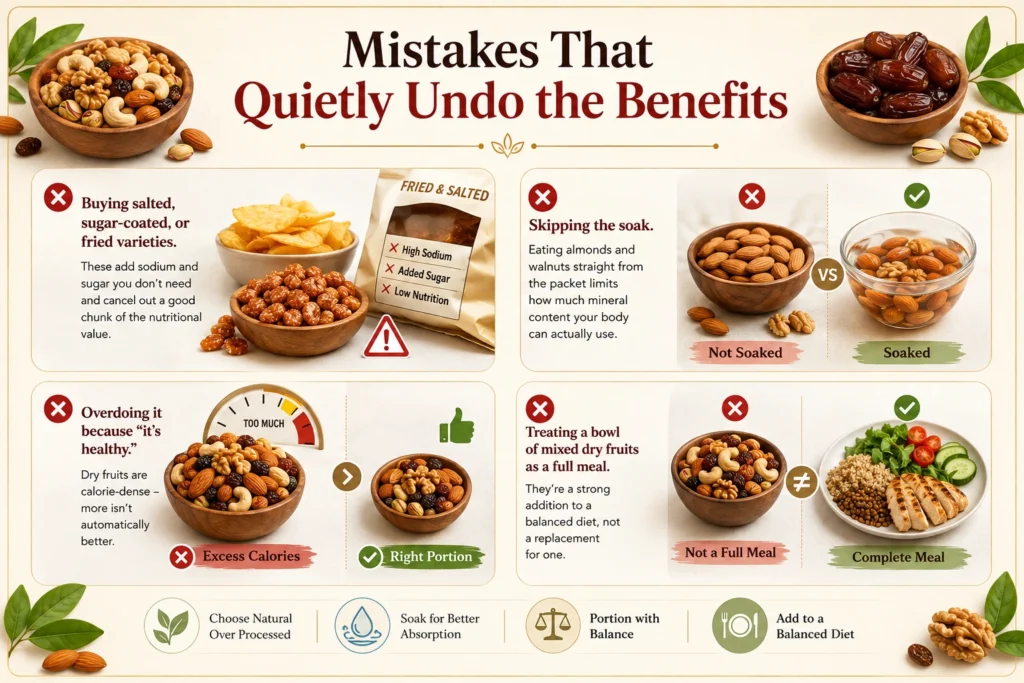
- Buying salted, sugar-coated, or fried varieties. These add sodium and sugar you don’t need and cancel out a good chunk of the nutritional value.
- Skipping the soak. Eating almonds and walnuts straight from the packet limits how much mineral content your body can actually use.
- Overdoing it because “it’s healthy.” Dry fruits are calorie-dense – more isn’t automatically better.
- Treating a bowl of mixed dry fruits as a full meal. They’re a strong addition to a balanced diet, not a replacement for one.
Who Needs to Be Careful
Dry fruits are healthy for most people, but not risk-free for everyone.
- Diabetics should stick to unsweetened, low-glycemic options like almonds and walnuts, and skip candied or sugar-coated dried fruits entirely.
- People with kidney disease should watch high-potassium options like apricots and raisins, since impaired kidneys have a harder time filtering excess potassium.
- Anyone on blood-thinning medication (like Warfarin) should know figs and prunes are relatively high in vitamin K, which affects clotting. The key here is consistency – don’t suddenly add or drop large amounts, and keep your doctor in the loop.
- People with pollen allergies may notice an itchy mouth or mild throat irritation from raw almonds or other nuts – a reaction called Oral Allergy Syndrome. Roasting usually resolves it.
This article is for general information only and isn’t a substitute for professional medical advice. If you have a specific health condition or take medication, talk to your doctor before making major changes to your diet.
Dry Fruits or Supplements – Which Wins?
| Factor | Dry Fruits | Supplements |
| Nutrient variety | High – multiple vitamins and minerals together | Limited to what’s on the label |
| Fibre content | Yes | No |
| Natural food matrix | Yes, nutrients work together naturally | No |
| Convenience | Moderate | High |
| Risk of overconsumption | Low | Higher |
Supplements definitely have their place, especially once a specific deficiency has actually been diagnosed. But for most people, whole foods like dry fruits should come first – supplements are there to fill genuine gaps, not replace real food.
The Honest Takeaway
Dry fruits are a genuinely powerful addition to your diet, but they’re not a standalone fix. Pair them with good sleep, regular movement, hydration, and a balanced diet, and you’ll get far more out of them than eating them in isolation ever could.
Frequently Asked Questions
Which dry fruit is best for immunity?
There isn’t really a single “best” one – almonds, walnuts, cashews, and dates each bring something different to the table. Eating a mix gives you broader coverage than relying on just one.
Can dry fruits prevent cold and flu?
No single food prevents illness outright. But the zinc, vitamin E, vitamin A, and antioxidants in dry fruits give your immune system what it needs to respond more effectively when you’re exposed to a virus.
How many dry fruits should I eat daily for immunity?
A small handful – roughly 30 grams of nuts and 40 grams of dried fruits – is a solid daily target for most adults.
Are soaked dry fruits better than raw?
For most people, yes. Soaking removes compounds that block mineral absorption, making nuts easier to digest and more nutritionally available.
What’s the best time to eat dry fruits for immunity?
Morning, ideally after soaking overnight, tends to work best since your body absorbs nutrients more efficiently during active hours.
Do dry fruits help boost immunity in winter?
Yes – they provide concentrated energy and warmth, which is exactly why they’re such a traditional part of winter diets across India.
Are dry fruits good for kids’ immunity?
Yes, in age-appropriate portions. Soak, crush, or mash nuts for younger children to avoid choking hazards, and start small to rule out allergies.
What are the side effects of eating too many dry fruits?
Overeating can mean excess calories and sugar, digestive discomfort, and in some cases mineral imbalances for people with existing conditions like kidney disease.
Which nuts are highest in zinc?
Cashews and pistachios lead the pack among commonly eaten dry fruits.
Is anjeer (fig) good for immunity?
Yes. Figs are rich in fibre, potassium, and antioxidants, and support both gut health and respiratory wellness.
About the Author
At 20-20 Dry Fruits, we’ve been in the business of good, honest nutrition for years now, sourcing almonds, walnuts, cashews, and everything in between straight from the source and getting them onto your kitchen shelf without the middleman markup or the marketing fluff.
This piece was put together by our in-house content and nutrition team, the same people who spend their days reading up on the latest research so you don’t have to. We’re not doctors, and we don’t pretend to be. But we do know dry fruits inside out, from what makes a Mamra almond different from a California one, to why your nani’s habit of soaking almonds overnight was onto something long before anyone called it “bioavailability.”
Conclusion
The best dry fruits for immunity aren’t exotic or expensive – they’re the almonds, walnuts, cashews, dates, and figs most of us already have sitting at home. What actually matters is understanding why they work, eating the right amounts, preparing them properly, and knowing when to be cautious. Build a small daily habit around a mix of these, and you’re giving your immune system real, consistent support – not just a seasonal boost.
None of this requires a diet overhaul or a trip to a specialty store. It’s a handful of almonds soaked overnight, a couple of dates after lunch, some walnuts mixed into your morning routine. The science behind why these work is solid, but the habit itself is what makes the difference — not eating a lot at once, just eating a little, consistently.
Disclaimer: This article is intended for educational purposes only and should not be considered medical advice. Consult a qualified healthcare professional before making significant dietary changes.