Dry fruits in Indian recipes have been a part of our kitchens for centuries, adding not just taste but also health benefits to everyday meals. Walk into any traditional Indian kitchen, and you’ll find a quiet treasure trove — steel containers stacked with almonds, cashews, pistachios, raisins, figs, and dates. Not always on display, but always there — waiting to add richness, energy, and heritage to our meals.
Dry fruits have been an essential part of Indian cooking for centuries. Not just as toppings or garnishes, but as ingredients woven deep into the fabric of festive sweets, royal curries, wedding chutneys, and nourishing snacks. But somewhere along the way, many of these traditional recipes have faded into the background — replaced by ready-made mixes and modern shortcuts.
This blog is a tribute to those lost gems — a gentle nudge to bring back the magic of dry fruits in Indian recipes, not just for their taste, but for the memories they carry.
The Sweetness of Tradition: Sweets Made with Dry Fruits
There was a time when every Indian household had a season for halwas, laddoos, and barfis — all made from scratch, slowly simmered, and generously enriched with nuts.
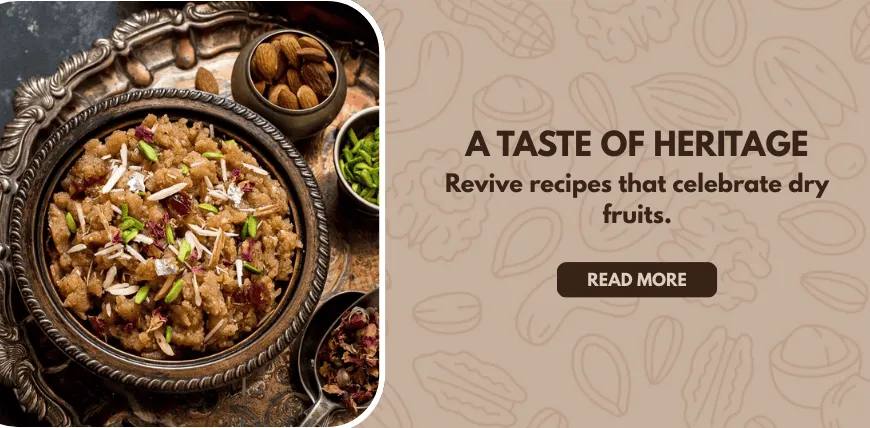
Badam Halwa (Almond Halwa)
A rich, velvety dessert made with soaked almonds, ghee, milk, and a touch of saffron. It wasn’t just a sweet dish — it was a labour of love. Ground almonds cooked patiently until the aroma fills the house. Often made during winter or for special guests.
One spoon of this halwa, and you’re instantly transported to old family gatherings and cozy evenings with copper pans and laughter in the kitchen.
Anjeer Barfi (Fig Barfi)
Figs, cashews, almonds, and dates — all naturally sweet and bound together without a hint of sugar. This sweet is energy-packed, nutrient-rich, and once a favourite in festive thalis. Soft, chewy, and fragrant, it was especially made for new mothers or elders during fasting seasons.
Savoury Surprises: When Nuts Went into the Curry Pot
Dry fruits weren’t always meant for desserts. In royal kitchens and home kitchens alike, they often found their way into gravies, rice dishes, and even rotis.
Kaju Curry (Cashew Curry)
Before cream-based curries became restaurant staples, kaju curry was the real star at wedding feasts. A mildly spiced, creamy curry made with whole cashews — soft yet slightly crisp — cooked in tomato-onion gravy with a hint of sweetness. Served with soft phulkas or jeera rice, it felt regal.
Today, this dish is rare in home kitchens — but deserves a revival for its texture and richness.
Dry Fruit Pulao
No festival feast was complete without a fragrant pulao — made with basmati rice, ghee, saffron, and dry fruits like raisins, almonds, and fried cashews. Often cooked on dum (slow-cooked), it wasn’t just a side — it was the pride of the table. Every spoonful was a burst of sweetness and spice, balanced perfectly.
Chutneys & Pickles: A Tangy Take on Dry Fruits
Dry fruits weren’t only for sweets or curries. Many regional kitchens, especially in Rajasthan, Gujarat, and Maharashtra, used figs, dates, and raisins in chutneys, pickles, and snacks.
Anjeer-Dates Chutney
A thick, jam-like chutney made with dried figs, dates, tamarind, and jaggery — spicy, sweet, and tangy all at once. Served with khakhras or samosas or used in chaats, this chutney was the secret behind many flavour-packed meals.
It was also high in iron and fiber, often recommended for kids and women as a natural supplement.
Sweet Dry Fruit Pickle
In some Gujarati homes, a festive pickle was made with crushed cashews, raisins, dried mango bits, and sugar syrup — flavoured with cinnamon and cloves. It was stored in glass jars and opened during festivals like Diwali or weddings.
Forgotten Snacks & Power Bites
Before protein bars and granola became popular, Indian kitchens had their own version of nutritious, on-the-go snacks.
Dry Fruit Panjiri
A Punjabi staple made with dry fruits, whole wheat flour, ghee, and powdered sugar — meant to boost immunity and energy during winters. Mothers would make it in bulk and store in tins for the family.
Panjiri was also made for new moms post-delivery — not just for recovery, but also as a gesture of warmth and care.
Makhana Mix with Dry Fruits
Lightly roasted fox nuts tossed with almonds, cashews, and black pepper — a common evening snack in many North Indian homes. High in protein, easy to digest, and perfect for kids and elders alike.
Why These Recipes Deserve a Comeback
In the rush of modern life, convenience often wins. But reviving these old recipes is about more than nostalgia. It’s about:
- Cooking with intention — knowing what goes into your food
- Passing on culture — sharing stories and tastes with the next generation
- Rediscovering balance — realising that nutrition and flavour once lived in harmony
Dry fruits add depth, texture, and warmth to Indian food. Their presence isn’t just physical — it’s emotional. A bowl of badam halwa or kaju curry isn’t just a dish; it’s a memory served warm.
Let’s Bring These Recipes Back to the Table
You don’t need to cook elaborate meals every day. But even reviving one old recipe each season can reconnect you to your roots. Let almonds simmer in ghee, let raisins bloom in pulao, let figs blend into chutneys — and let the aroma tell stories.
So next time you see that dry fruit box in your kitchen, don’t just top your cereal with it. Cook with it. Share it. Celebrate it.