Table of Contents
Summary
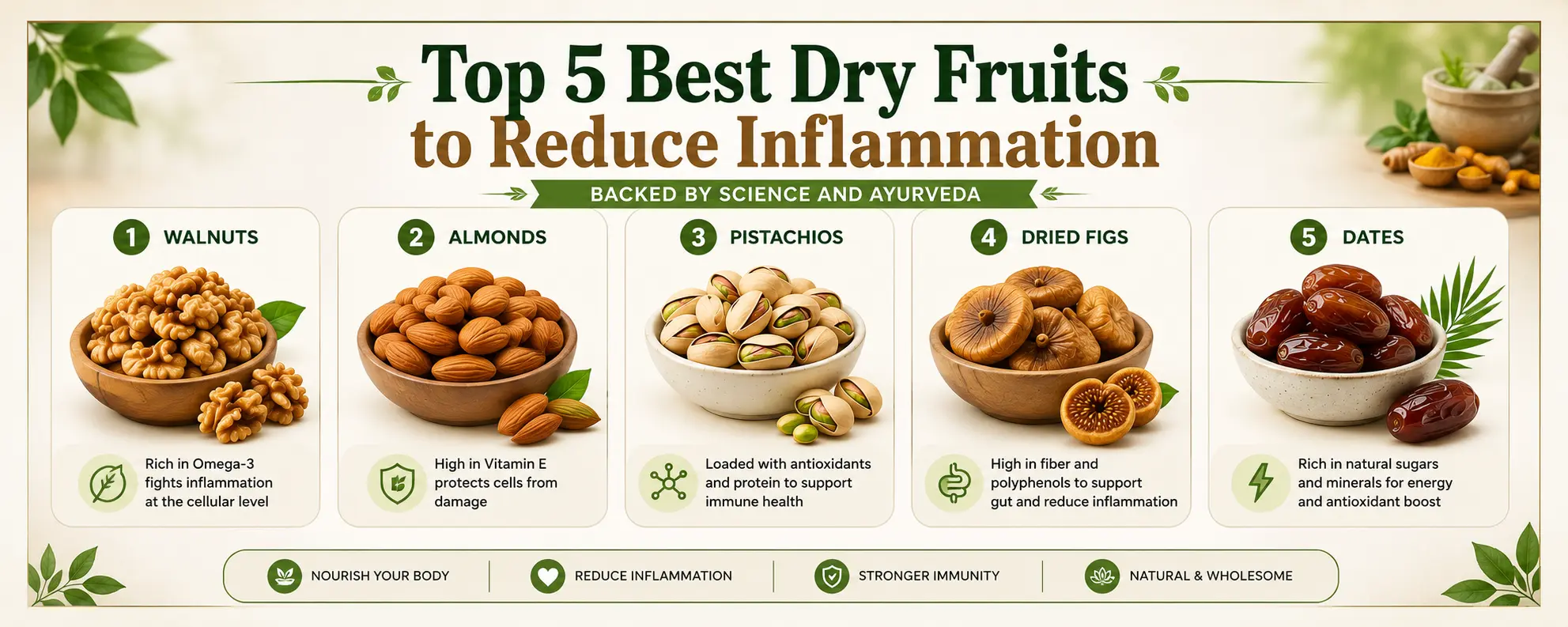
This guide breaks down the top 5 dry fruits that genuinely help fight inflammation, backed by real nutrition science and time-tested Ayurvedic wisdom, not just wellness trends. There are some dry fruits that works very well in this but one should keep it in mind that not only a day or a week would show the benefits but it takes consistency to show the results, with this keep the track of what you eat this doesn’t work with sugary foods, portion control, timing are also some other factors that should be considered. Dry fruits like walnuts, almonds, dried figs, pistachios and dates some of the best to reduce inflammation because of the nutrients present in them like antioxidants, omega-3 fatty acids, fiber and polyphenols etc.
Key Takeaways
- Chronic inflammation builds up slowly through diet, stress, and lifestyle habits, so it eases the same gradual way, not overnight.
- Walnuts are your top pick for omega-3s, and 4-5 halves a day is enough to get the benefit.
- Almonds bring vitamin E and antioxidants to the table, and soaking them overnight makes them easier to digest.
- Pistachios combine antioxidants and protein, making them a smart, satisfying afternoon snack when you go for the unsalted variety.
- Dried figs support gut health through fiber and polyphenols, and a healthy gut plays a direct role in keeping inflammation in check.
- Dates work as a natural sugar replacement while still delivering magnesium and potassium, best kept to 2-3 pieces a day.
- Mixing different dry fruits together, like in a homemade trail mix, covers more nutritional ground than betting on just one favorite.
- Cutting back on refined sugar, deep fried food, and processed snacks matters just as much as adding the good stuff.
- Soaked nuts digest easier for most people, but raw nuts still hold real nutritional value if soaking isn’t practical for you.
- Results take a few consistent weeks to show, so patience and daily habit beat any quick fix, and anyone with allergies, diabetes, or a chronic condition should check with a doctor first.
Introduction
In recent times, the trend excess eating of junk food increased so much as content creators also promote this on social media because of their paid partnerships and people blindly follows them without knowing the bad impact of the food they are having that is with zero nutrition, reused oil, frozen meal, excessive refined flour and sugar. Alongside the side effects like always feeling tired, dull skin and stiffing are now become common and no one giving attention to all of this but we thinks this is for bad night sleep these are the signals for the inflammation for the body and that’s why people nowadays are taking diet plans from nutritionists.
Here’s the part that actually matters: what you eat every day can genuinely change this. Dry fruits, in particular, punch way above their weight when it comes to fighting inflammation naturally, and this isn’t just anecdotal, studies consistently link nuts and dried fruits rich in omega-3s, antioxidants, and polyphenols to lower inflammation markers over time. In this guide, we’re breaking down the top 5 dry fruits that actually help, why they work according to both modern research and Ayurveda, a system that was making these same connections centuries before any lab confirmed them.
What Is Inflammation, Really?
Inflammation is the body’s alarm system. It comes when there is something that needs to be repaired it shows that our immune system is working to fix the injuries. If a cut happens in the finger it gets inflamed on that part of the finger it shows that our immune system is working.
So, Inflammation is not the enemy or the problem its good for our body but the trouble part comes when it never stops being inflamed even if there is nothing to worry about and if continuous for more than years it could bring more big problems like diabetes, heart disease, arthritis, fatty liver, and even cognitive decline
Interestingly, Ayurveda was talking about this idea centuries before “inflammation” became a wellness buzzword. They called it Ama, toxin buildup caused by weak digestion and lifestyle imbalance. Different vocabulary, same core idea. Food matters, and it matters every single day, not just when something hurts.
The Science Bit (Stay With Us, It’s Quick)
Doctors have a way of actually measuring inflammation in your blood. It’s called C-reactive protein, or CRP. Higher CRP usually means more inflammation happening somewhere in your body, and here’s the interesting part: what you eat can move that number.
Dry fruits are loaded with antioxidants, flavonoids, and polyphenols. Think of these as your body’s cleanup crew. They go around neutralizing free radicals (the troublemakers that damage cells and trigger inflammation) before things spiral.
Quick fact worth remembering: people who consistently eat antioxidant-rich foods like nuts and dried fruits tend to show lower CRP levels over time. Not overnight. Over time. That distinction matters a lot, and we’ll come back to it.
A Quick Look Before We Dive In
| Dry Fruit | What It Brings | Best Time | How Much |
| Walnuts | Omega-3 (ALA) | Morning or evening | 4-5 halves |
| Almonds | Vitamin E, antioxidants | Morning, empty stomach | 15-20 pieces |
| Pistachios | Flavonoids, protein | Afternoon | 25-30 pieces |
| Dried Figs | Polyphenols, fiber | Evening | 2-3 pieces |
| Dates | Magnesium, potassium | Post-meal or pre-workout | 2-3 pieces |
Top 5 Best Dry Fruits to Reduce Inflammation
1. Walnuts, and Yes They Actually Deserve the Hype
Walnuts are one of the best dry fruits when it comes to inflammation as they have the anti inflammatory properties and goodness of omega-3 fatty acids, it is also known to be the best plant sources of ALA and omega-3 fatty acids, that’s why they are recommended by the doctor mostly in the cases of general inflammation
Ayurveda calls walnuts a warming food, useful for balancing Vata, the energy tied to movement and often blamed for that dry, stiff feeling in joints. It makes sense why people reach for walnuts more in winter.
Toss 4-5 halves into your morning oats or evening bowl. If your stomach’s a little sensitive, soak them first, easier to digest that way.
2. Almonds, the Vitamin E Workhorse
Almonds are one of the best sources of vitamin E, which is a very fat soluble antioxidant that helps prevent from free radicals and they are very helpful in reducing the inflammation
That habit of soaking almonds overnight and eating them first thing in the morning? Not just a nani-ke-nuskhe thing. Turns out soaking makes them easier to digest and may help your body pull out the nutrients better.
Soak 15-20 almonds overnight, eat on an empty stomach. Simple, boring, works.
3. Pistachios, the Underrated One
Pistachios don’t get talked about enough. They combine antioxidants, flavonoids, and a solid dose of plant protein, which makes them genuinely useful if joint stiffness or early arthritis symptoms are a concern.
Stick to unsalted ones though. All that extra sodium in flavored or roasted pistachios can actually work against you here.
A small handful, 25-30 pieces, makes a great afternoon snack when the 4pm cravings hit.
4. Dried Figs, the Gut Health Secret
Figs are considered to be one of the best dry fruits as it helps in clearing the gut and keep the immune system calm because of the polyphenols and fiber present in it. Gut health plays an important part when it comes to immunity and inflammation.
Ayurveda treats figs as a nourishing, grounding food, often used to calm Vata imbalance. Gentle food, but don’t underestimate it.
2-3 figs in the evening, or chopped into your oats, works well. Pair with a few nuts and it slows down sugar absorption too.
5. Dates, Sugar’s Better Cousin
Dates bring magnesium and potassium to the table, both linked to better inflammation control and healthier blood pressure. They’re also a smart way to cut back on refined sugar, which, let’s be honest, is probably the single biggest dietary trigger for inflammation in most modern diets.
There’s an old Ayurvedic home remedy involving soaked dates for joint pain relief, usually combined with other warming ingredients. Turns out the science backs this one up too.
2-3 dates after a meal or before a workout. Stuff them with almonds or walnuts and you’ve basically made a mini anti-inflammatory snack.
One more worth a quick mention: cashews. Not in the top 5, but their magnesium and copper content genuinely helps your body’s antioxidant defenses. Don’t skip them entirely.
A Trail Mix You Can Actually Make Tonight
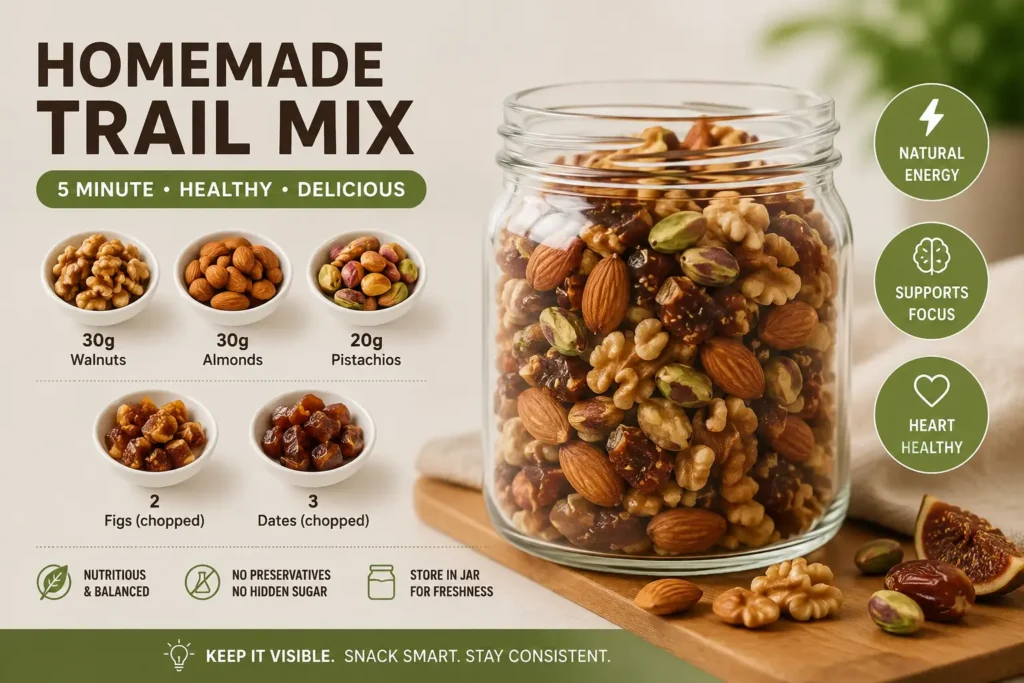
It takes less than five minutes. No fancy equipment, no measuring spoons you had to go buy specially.
30g walnuts, 30g almonds, 20g pistachios, 2 chopped figs, 3 chopped dates. Dump it all in a bowl, mix, transfer to an airtight jar. Done. That’s about 4-5 servings, so you’re sorted for the next couple of days without touching it again.
The proportions aren’t random, by the way. Walnuts and almonds get the biggest share because they’re doing the heavy lifting here, omega-3 and vitamin E respectively. Pistachios add crunch and a bit of protein without piling on calories. Figs and dates are kept smaller on purpose, they’re sweeter and more calorie-dense, so this way you get the flavor hit without accidentally turning your “healthy snack” into a dessert.
Here’s the honest comparison though. Store-bought trail mixes look convenient, but a lot of them quietly sneak in sugar-coated nuts, extra salt, or preservatives just to keep things shelf-stable longer. When you make it yourself, there’s zero guesswork. What’s in the jar is exactly what’s going into your body, nothing hiding behind a label you didn’t bother reading. And it costs way less too, which is just a nice bonus.
Two small tips that actually make a difference. If you’re somewhere humid, keep the jar in the fridge, stopping the nuts from going soft or slightly off. And try to stick with raw or lightly roasted nuts instead of the oil-roasted, heavily salted kind, otherwise you’re undoing half the benefit with extra sodium.
Keep this jar sitting on your desk or kitchen counter, not tucked away in a cupboard. That’s really the trick. When it’s visible and easy to grab, it naturally becomes your default instead of reaching for chips or biscuits at 7pm. Nothing dramatic about it, just a small habit that quietly adds up over weeks.
When and How You Eat Them Matters Too
Soaking nuts isn’t just an old habit passed down from your nani, there’s actual reasoning behind it. Soaked nuts tend to digest easier, and your body may absorb minerals like magnesium and zinc a bit better this way, since soaking breaks down some of the natural compounds that otherwise make digestion harder. That said, if soaking every night isn’t realistic for you, raw nuts are still genuinely good. Don’t let this become one more thing you stress about, the difference is helpful, not make-or-break.
Ayurveda adds an interesting layer to this that’s easy to overlook. Winter is when you lean into warming dry fruits, walnuts and dates in their natural form, since the body needs a bit more support when it’s cold and joints tend to feel stiffer anyway. Come summer, the advice flips a little, soaked almonds and raisins are considered more cooling and easier on the system when the heat is already taxing your digestion. It’s a small seasonal shift, but one that’s been followed for generations, and it lines up surprisingly well with what we now understand about digestion and inflammation.
On quantity, keep it simple. Somewhere around 20-30g of nuts and 10-20g of dried fruit a day is a sensible daily target for most people. That’s roughly a small handful of each, enough to actually get the anti-inflammatory benefit without quietly turning into a calorie overload by the end of the week. Dry fruits are good for you, but portion size still matters more than people expect, more isn’t automatically better here.
What’s Working Against You
Adding the good stuff only gets you halfway. The other half is cutting back on what’s actively feeding inflammation.
Sugary drinks and desserts
Refined flour, white bread, packaged bakery stuff
Deep fried food, anything with trans fats
Processed meats and packaged snacks
Too much alcohol
Don’t think of restriction, think swap. Reaching for chips at 7pm? Swap it for a handful of walnuts and a couple of dates instead. Same ritual, better outcome.
Let’s Clear Up a Few Myths
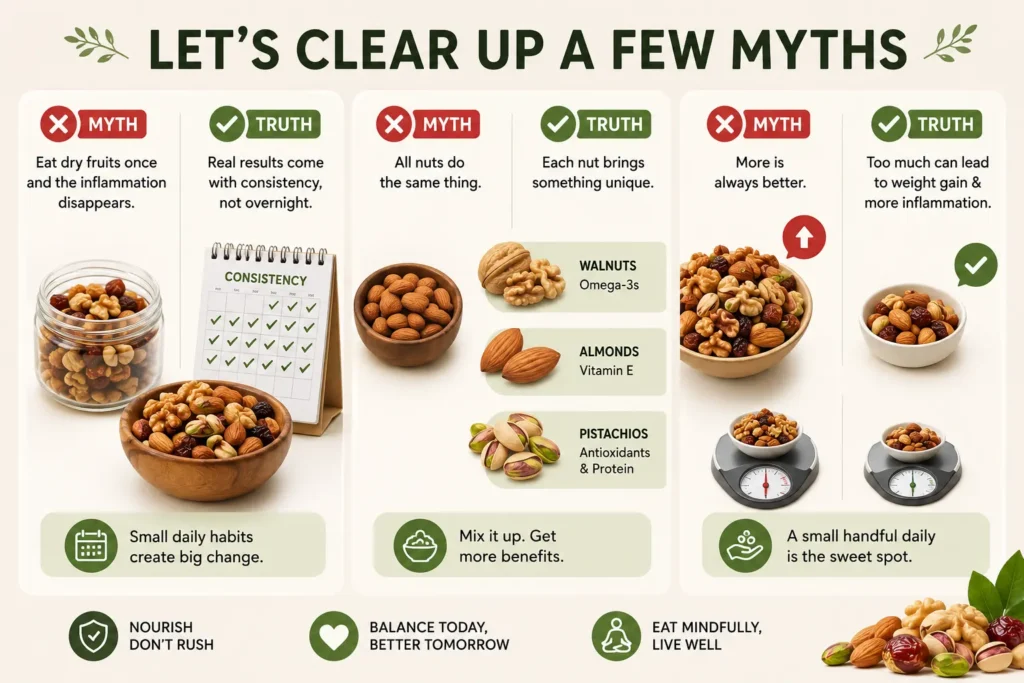
“Eat dry fruits once and the inflammation disappears.” If only it worked that fast. Inflammation doesn’t build up overnight, it develops over months and years of diet, stress, and lifestyle habits stacking up quietly. So it makes sense that it eases the same slow way too. Nutrition experts are pretty consistent on this point, chronic inflammation responds to steady, long-term dietary patterns, not a single “superfood” meal. Think of it less like a magic pill and more like brushing your teeth, the benefit comes from doing it daily, not doing it once really well.
“All nuts do the same thing.” This one trips up a lot of people, but each nut actually brings something different to the table. Walnuts lead with omega-3s, almonds bring vitamin E, pistachios bring a strong dose of antioxidants and protein. Relying on just one means you’re missing out on what the others offer. Mixing a few together, like in that trail mix, covers more ground than betting everything on your one favorite nut.
“More is always better.” This is probably the myth that backfires the most. Dry fruits are calorie-dense by nature, a small handful adds up fast. Overdoing it can lead to weight gain, and extra weight itself is linked to higher inflammation levels, which means you’d actually be working against the very goal you started with. Portion control isn’t a nice-to-have suggestion here, it’s genuinely the difference between these foods helping you or quietly working against you. A small handful daily does far more good than a big bowl eaten once in a while.
A Quick Word of Caution
Let’s be real for a second. Most people can add these dry fruits to their daily routine without any issue and only see benefits over time. But a few situations genuinely call for more care, and it’s worth being upfront about that instead of pretending these foods work the same for everyone.
If you have nut allergies, this one’s obvious, skip the nuts entirely. Allergies aren’t something you slowly build tolerance to, so don’t experiment here. If you’re managing diabetes, or keeping a close eye on your calorie intake, you don’t need to cut dry fruits out completely, just be more thoughtful about which ones and how much. Dates, figs, and raisins are naturally concentrated sources of sugar, which is exactly why nutritionists usually recommend smaller portions of these specific ones if blood sugar is something you’re tracking.
And if you’re already on medication for a chronic condition, don’t just take a blog’s word for it and dive in. A quick conversation with your doctor before making any real dietary change is always the smarter move, not because dry fruits are dangerous, but because your doctor actually knows your medical history, your medication interactions, and your specific situation in a way no article ever can. Five minutes of asking someone qualified beats weeks of guessing on your own.
This isn’t about being overly cautious for the sake of it. It’s just honest advice, the kind you’d actually want someone to give you before you change what you eat every day.
FAQ’s
Which dry fruit reduces inflammation the fastest?
Walnuts usually get the most credit thanks to their omega-3 content, but “fastest” isn’t really the right way to think about it. Consistent daily intake matters more than speed.
How many walnuts per day are good for inflammation?
About 4-5 halves a day works for most adults.
Are dates good for inflammation or do they raise blood sugar?
Both, honestly. They bring anti-inflammatory minerals but are naturally high in sugar too. 2-3 pieces a day is the sweet spot if you’re watching blood sugar.
Can dry fruits help with arthritis and joint pain?
They can help ease stiffness over time, especially walnuts, almonds, and pistachios, but they work best alongside a proper diet and your doctor’s guidance, not as a replacement for treatment.
Is soaking nuts better than eating them raw for inflammation?
Soaking can make digestion and mineral absorption a bit easier for some people. Raw nuts are still nutritious though, so pick whatever you’ll actually stick with.
What foods should I avoid alongside eating anti-inflammatory dry fruits?
Refined sugar, deep fried food, trans fats, and processed snacks. These work directly against whatever good the dry fruits are doing.
Can I eat these dry fruits every single day, or should I take breaks?
Daily is actually fine, and honestly recommended. These aren’t medicines that need cycling on and off, they’re food. Your body benefits more from a small consistent amount eaten daily than an occasional large serving. Just stick to the portion guide, that’s really the only thing to watch.
Do roasted or salted dry fruits still help with inflammation?
Not as much, unfortunately. Heavy roasting, especially oil roasting, can break down some of the beneficial fats and antioxidants, and added salt works against the anti-inflammatory goal altogether. Raw or lightly roasted, unsalted versions give you the full benefit these foods are known for.
Which is better for inflammation, almonds or walnuts?
It’s not really an either-or situation. Almonds lead with vitamin E and antioxidants, walnuts lead with omega-3 fats, and both work on inflammation through different pathways in the body. Eating a mix of both gets you further than picking a favorite and sticking to just one.
How long before I notice a real difference in inflammation?
There’s no fixed timeline, and anyone who promises one is oversimplifying it. Since inflammation builds up over months and years, most people need at least a few weeks of consistent intake before noticing real changes, and factors like sleep, stress, and overall diet play a role too. Give it a fair few weeks before deciding whether it’s working for you.
Conclusion
Remember that tired, stiff, slightly-off feeling we talked about at the start? That’s usually not random. It’s your body asking for something small and consistent, not a dramatic fix.
That’s really what this whole guide comes down to. Walnuts for their omega-3s, almonds for vitamin E, pistachios for their antioxidants, figs for your gut, dates instead of sugar. None of these foods work like a switch you flip once. They work like a habit you build, quietly, meal after meal, week after week.
So don’t aim for perfection. Aim for one small change you can actually keep up. Soak a handful of almonds tonight. Keep that trail mix jar where you’ll actually see it. Swap one processed snack this week for a couple of dates. That’s it. That’s the whole starting point.
Give your body a few consistent weeks before you judge whether it’s working. Inflammation took years to build, and it responds the same patient way it built up, slowly, but it does respond. Stay consistent, and the rest takes care of itself.
About the Author
This article is brought to you by the team at 20-20 Dry Fruits, a brand built on decades of expertise in sourcing and curating premium quality dry fruits and nuts for Indian households. Backed by our parent company’s legacy since 1964 and a state-of-the-art HACCP, ISO, and FSSAI certified facility in Ahmedabad, we’ve spent years understanding what goes into every seed, nut, and dried fruit before it reaches your kitchen.
Our content is put together by people who genuinely care about food quality and everyday nutrition, not just sales. We work closely with sourcing experts and quality teams who handle these products daily, which means the advice you read here comes from real, hands-on experience with dry fruits, not just internet research.
At 20-20 Dry Fruits, we believe good health doesn’t need to be complicated. It starts with simple, honest choices, and we’re here to help you make sense of them, one blog at a time.